Dining out is a fun experience to share with friends and family, but it often presents a true challenge when you’re trying to maintain a healthy diet. With an abundance of tempting options, oversized portions, and hidden ingredients, making nutritious choices can be tricky. To save you from worrying, here are seven easier ways to make healthier choices when dining out!
Table of Contents
Start With Salad when Dining Out
Consuming a salad at the beginning of your meal is a simple yet powerful strategy for creating healthier eating habits. There are actually scientific principles behind eating a salad first, and I have listed them all below.
Appetite Control and Satiety
Salad is packed with fiber, which skyrockets satiety by slowing down the digestive process. It is bulky but still low in calories, helping you to create a feeling of fullness. Salad has high volume and low energy density, meaning it provides fewer calories per gram.
Nutrient Intake
Salads are a terrific fount of different vitamins (especially A, C, and K) and minerals (like potassium and magnesium). They are all vital for various bodily functions but primarily boost the immune system. Most vegetables contain antioxidants, as well, helping your body to combat oxidative stress and inflammation.
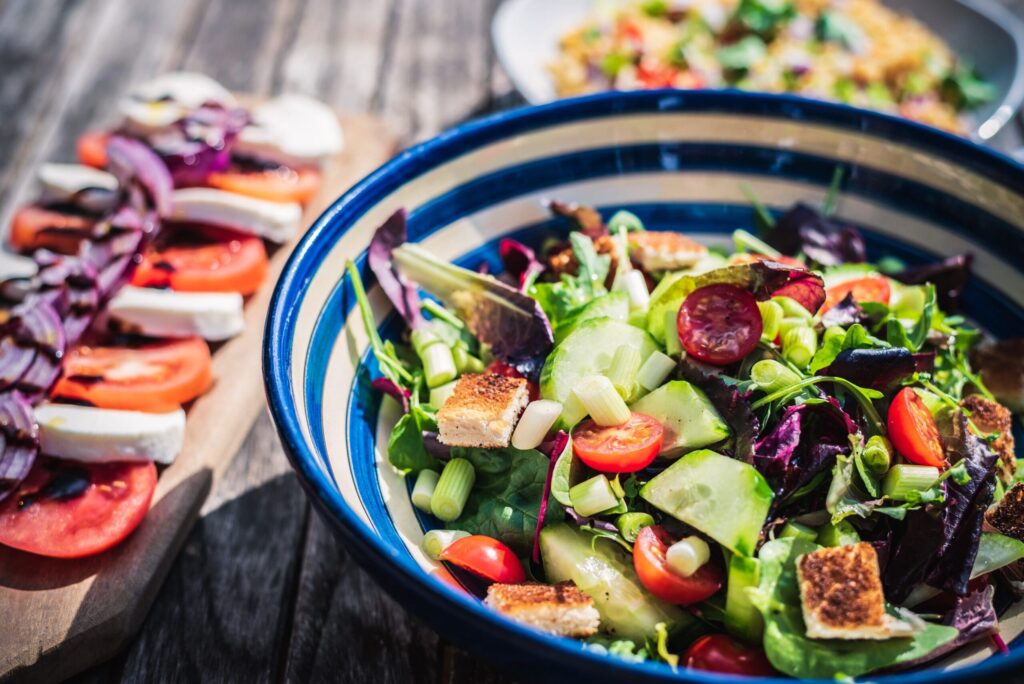
If you want to enrich your salad even more, opt for one with a source of healthy fat, like avocado or nuts. They intensify nutrient absorption, especially fat-soluble vitamins A, D, E, and K, plus improve satiety.
Psychological Aspect
Starting your dinner with a healthy tone will most likely create a positive feedback loop. This means a healthy choice at the beginning will make you continue with healthy (or more nutritious) options throughout the meal. This phenomenon is famous as the “halo effect”!
What’s more, starting with a salad encourages slower, more mindful eating. This goes hand in hand with better digestion, increased satisfaction, and more prominent satiety cues.
Practical Tips
Always aim for a colorful mix of vegetables to ensure a broad range of nutrients. Ask for leafy greens (spinach, kale, arugula, salad) base and add anything you fancy: tomatoes, cucumbers, bell peppers, carrots, red cabbage…
If there is an option, go for the addition of healthy fats: avocado, walnuts, or sunflower seeds for even more crunch. When it comes to dressing, the best option is to ask for an unseasoned salad and add some olive oil, vinegar (balsamic or apple cider), lemon juice, and herbs on your own.
Or, ask for dressing on the side so you can control the amount you eat.
Salad Examples
- Classic Garden Salad: mixed greens (lettuce, spinach), tomatoes, cucumbers, carrots, radishes + light vinaigrette with olive oil and balsamic vinegar
- Mediterranean Salad: Romaine lettuce, cherry tomatoes, cucumbers, red onions, olives, feta cheese + olive oil, lemon juice, and oregano
Practice Mindful Eating
Practicing mindful eating means chewing your food thoroughly and truly savoring each bite. It also means paying attention to your body’s cues and the content of your meals. If you are aware of what you are eating and why you are eating, it is less likely that your dining will lead to overeating.
While eating out, it’s hard to avoid all distractions, but you can try to avoid eating while talking or listening to others, or while watching a movie; instead, eat only during the breaks in between. This will help you listen to your body, know when it’s enough, or even when your body is rejecting some food. This is a step towards a healthier relationship with food, aiding in weight management and overall well-being.
Listen to Your Hunger Cues
It is super important to understand and differentiate physical and emotional hunger cues. Physical signs include stomach growling, feeling light-headed, or a lack of energy, but emotional hunger is driven by stress, boredom, or happiness.

Steps to Listen to Your Hunger Cues
Before Dining Out: Before you go out, rate your hunger on a ladder from 1-10 (1 being not even remotely hungry and 10 being extremely hungry). Aim to start your meal when you are at a moderate level of hunger (between 4-6), because if you’re too hungry, you will probably overeat.
During the Meal: Begin the meal with a glass of water, as people tend to eat much more when thirsty. For an appetizer, go for a salad or a broth-based soup to kick-start with nutrients. Eat the food slowly to alow your body time to register the initial intake of food.
Make sure to take small bites and chew each thoroughly, as it aids digestion and gives your brain time to receive fullness signals. The smart trick is to take a small pause halfway through your meal to estimate your hunger. Rate your fullness and stop eating when you are at 7-8, which is comfortably satisfied but not overly full.
How to Reduce Hunger While Dieting
Choose Wisely
Sometimes, it is easier said than done, so here are specific examples of what are better options to order in a restaurant!
American Cuisine
Burger: Opt for a grilled chicken sandwich or a veggie burger in place of a beef burger. Skip the fries or choose a side salad without dressing.
Steakhouse: Choose a lean cut of meat like sirloin or filet mignon. The best is to order it grilled without added butter or sauce. For the side, go for steamed vegetables or baked potato (without sour cream and butter).
Italian Cuisine
Pasta Dishes: Pick out tomato-based sauces (like marinara) instead of cream-based sauces (like Alfredo) that are loaded with fat. If available, order whole wheat pasta.
Pizzas: The best option is a thin-crust pizza with vegetable toppings and limited cheese. When choosing cheese, mozzarella and burrata are top-notch options. Also, consider a salad or a side of roasted vegetables to avoid insulin spikes due to carbs.

Mexican Cuisine
Tacos and Burritos: Settle on for soft corn tortillas over fried ones. For a filling, choose grilled chicken, fish, or beans instead of ground beef or pork. Definitely skip the sour cream and cheese as additions; instead, ask for salsa or guacamole.
Rice and Beans: Black or pinto beans are far better options than refried beans. On the other side, order brown rice if available or go light on the white variety.
Asian Cuisine
Chinese Food: Look for steamed, stir-fried, or grilled options and avoid dishes labeled as “crispy” and “fried.”
Japanese Food: Sashimi and nigiri sushi are the finest options, as rolls with lots of added sauces and fried ingredients have loads of unnecessary calories. Pick miso soup or a seaweed salad as starters.
Thai Food: Pick out dishes with lots of vegetables and lean proteins like tofu or chicken. You can always ask for less oil and steamed rice instead of fried.
Indian Cuisine
Curries: Tomato-based or lentil-based curries are better alternatives than creamy ones like korma or tikka masala. Opt for tandoori or grilled dishes.
Breads: The tastiest breads come from India, so it is a shame to skip them. But choose whole grain roti over naan, which usually contains refined flour and tons of butter.
Mediterranean Cuisine
Kebabs and Grills: Kebabs are super tasty, but choose grilled fish, chicken, or vegetable kebabs. Skip dishes that come with heavy sauces.
Dips and Bread: Of course, pita bread is a must-try, but pair it with hummus, tzatziki, and vegetable sticks.
Fast Food
Burges: They are hard to resist, but you don’t have to! Instead, order smaller burgers without extra cheese and bacon. Ask for extra veggies like lettuce, tomato, and pickles.
Sides: Skip fries and choose a salad, apple slices, or yogurt to soothe blood sugar levels.
Be Saucy Smart
Sauces and dressings significantly affect the nutritional value of your meal. Many of them are loaded with calories, fats, sugars, and sodium, but the trick is to know your sauces!
Cream-Based Sauces: These are packed with fat and calories, such as Alfredo, ranch, and blue cheese dressing. Instead, choose tomato sauces—marinara, pomodoro, or salsa.
Oil-Based Sauces: While healthier fats, they can still be calorie-dense, e.g., Vinaigrettes and pesto. For salads, opt for Greek yogurt-based sauces or herb and spice blends.
Soy-Based Sauces: They are usually high in sodium, e.g., soy sauce and teriyaki. Always pair them with fresh vegetables to balance it out.
Request sauces and dressing on the side, as that allows you to control your portions, preventing overconsumption. Use a fork-dipping method: dip a fork into the sauce first and then pick up your food, not vice-versa.
This way, you’ll get all the flavor with much less sauce.
Mind Your Sides and Extras
Some meals don’t require side dishes at all, but you don’t need to cut them out completely. Here are some alternatives for the most popular sides:
- Instead of fries with a burger or steak, order a salad or steamed, roasted, or grilled vegetables.
- Instead of white bread, request a whole-wheat bun or breadsticks instead.
- Instead of white rice, order brown rice, quinoa, barley, or lentils
- Healthier potato options are baked sweet potato, roasted potatoes, and mashed cauliflower.
- Instead of garlic bread, go for whole-grain bread with a light spread of olive oil or hummus.
Always ask for specific preparation methods, like steaming, grilling, and roasting over frying or sautéing in heavy oils.
Drink Smart
Drinks are founts of hidden calories and sugars, so they are the easiest thing to forget about. But here are some tips to drink smarter, not less:
Stay Hydrated: Prioritize water, still or sparkling, over any other drink. If you want some flavor, ask for a slice of citrus fruit or cucumber.
Choose Healthier Alternatives: When drinking tea or coffee, don’t add any sweetener, and be mindful of artificial sweetness as well. Even though they have 0 calories, it doesn’t mean they are healthy.
Limit Sodas: Skip regular high-sugar sodas and go for straight, cold-pressed fruit juice. Also, you can dilute regular soda with some water for a healthier version.
Be Mindful of Alcohol: Choose light beer, wine, or spirits married with soda water or a splash of juice. Alternate them with water to stay hydrated and sober.