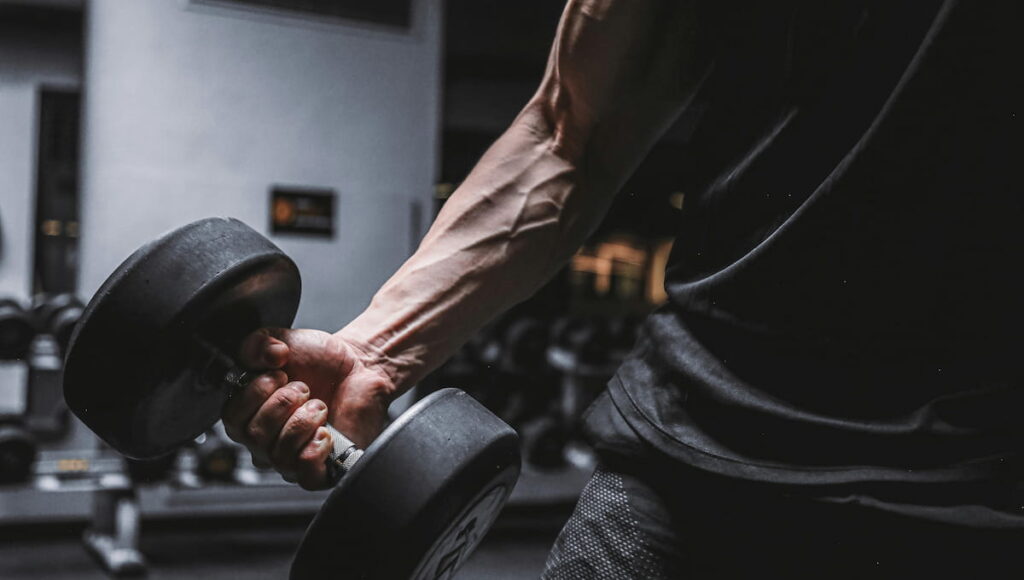
Building the ideal physique requires a combination of resistance training, progressive overload, and optimal exercise selection. The right exercises engage multiple muscle groups, stimulate hypertrophy, and improve overall strength and endurance.
Research has shown that compound movements lead to greater muscle activation and metabolic stress, which are key for muscle growth and fat loss (Schoenfeld, 2010). Below are seven scientifically backed exercises essential for achieving the body of your dreams.
1. Squat
The squat is one of the most effective full-body exercises, targeting the quadriceps, hamstrings, glutes, core, and lower back. A study published in the Journal of Strength and Conditioning Research found that squats generate higher muscle activation compared to leg presses, leading to superior hypertrophy (Escamilla et al., 2001). Additionally, squatting improves bone density and joint stability, making it crucial for long-term fitness.
How to Perform:
- Stand with feet shoulder-width apart.
- Keep your chest up and engage your core.
- Lower your hips until your thighs are parallel to the floor.
- Drive through your heels to return to the starting position.
2. Deadlift
The deadlift is a fundamental movement that enhances posterior chain strength, involving the hamstrings, glutes, lower back, traps, and grip strength. A study in the Journal of Strength and Conditioning Research highlighted that deadlifts recruit more muscle fibres than other lower-body exercises, making them highly efficient for muscle growth and fat loss (Hales, 2010).
How to Perform:
- Stand with feet hip-width apart and grip the barbell shoulder-width.
- Keep your back neutral and engage your core.
- Drive through your heels and lift the bar to hip level.
- Lower the weight in a controlled manner.
3. Bench Press
A key movement for upper-body development, the bench press primarily targets the pectoral muscles, triceps, and anterior deltoids. Research indicates that free-weight bench presses lead to greater muscle activation compared to machine presses, making them superior for hypertrophy (Schick et al., 2010).
How to Perform:
- Lie flat on a bench with feet planted firmly on the ground.
- Grip the bar slightly wider than shoulder-width.
- Lower the bar to your chest while keeping elbows at a 45-degree angle.
- Press the weight back up while engaging your chest.
4. Pull-Ups
Pull-ups are a powerful bodyweight exercise that builds back, biceps, and core strength. A study in the Journal of Applied Biomechanics found that pull-ups engage more upper-body muscles compared to lat pulldowns, making them an excellent choice for strength development (Youdas et al., 2010).
How to Perform:
- Grip a pull-up bar with hands slightly wider than shoulder-width.
- Engage your core and pull your chin above the bar.
- Lower yourself in a controlled manner.
5. Overhead Press
The overhead press targets the shoulders, triceps, and core, promoting upper-body strength and stability. Research has shown that standing overhead presses engage more stabilising muscles than seated presses, leading to better functional strength (Lehman et al., 2006).
How to Perform:
- Stand with feet hip-width apart and grip the barbell at shoulder height.
- Press the bar overhead while keeping your core tight.
- Lower the bar in a controlled manner to the starting position.
6. Romanian Deadlift
This variation of the deadlift is excellent for posterior chain development, particularly the hamstrings and glutes. A study in the Journal of Strength and Conditioning Research found that Romanian deadlifts provide superior hamstring activation compared to leg curls (McAllister et al., 2014).
How to Perform:
- Hold a barbell at hip level with a shoulder-width grip.
- Keep a slight bend in your knees and hinge at the hips.
- Lower the bar to mid-shin while keeping your back neutral.
- Drive through your hips to return to the starting position.
7. Farmer’s Walk
A functional exercise that builds grip strength, core stability, and overall endurance, the farmer’s walk has been found to improve posture and reduce injury risk (Anderson & Behm, 2005).
How to Perform:
- Hold a heavy dumbbell or kettlebell in each hand.
- Walk with controlled steps while keeping your core engaged.
- Maintain an upright posture throughout the movement.
Key Takeaways
| Exercise | Primary Muscles Worked | Benefits |
|---|---|---|
| Squat | Quads, glutes, hamstrings, core | Improves strength, mobility, and hypertrophy |
| Deadlift | Hamstrings, glutes, lower back, traps | Enhances posterior chain development |
| Bench Press | Chest, triceps, shoulders | Increases upper body pushing strength |
| Pull-Ups | Lats, biceps, core | Develops upper body and grip strength |
| Overhead Press | Shoulders, triceps, core | Builds pressing strength and stability |
| Romanian Deadlift | Hamstrings, glutes, lower back | Targets posterior chain and reduces injury risk |
| Farmer’s Walk | Grip, core, shoulders, legs | Improves endurance and functional strength |
References
Anderson, K. and Behm, D.G. (2005). The impact of instability resistance training on balance and stability. Journal of Strength and Conditioning Research, 19(3), pp. 554-561.
Escamilla, R.F., Fleisig, G.S., Lowry, T.M., Barrentine, S.W. and Andrews, J.R. (2001). A three-dimensional biomechanical analysis of the squat during varying stance widths. Medicine and Science in Sports and Exercise, 33(6), pp. 984-998.
Hales, M.E. (2010). Improving the deadlift: Understanding biomechanical constraints and physiological adaptations. Journal of Strength and Conditioning Research, 24(10), pp. 2843-2852.
Lehman, G.J., McGill, S.M. and Ciriello, V.M. (2006). The effect of varying stance width on lower back and leg muscle activity during the squat. Journal of Strength and Conditioning Research, 20(3), pp. 556-562.
McAllister, M.J., Hammond, K.G., Schilling, B.K., Ferreria, L.C., Reed, J.P. and Weiss, L.W. (2014). Muscle activation during various hamstring exercises. Journal of Strength and Conditioning Research, 28(6), pp. 1573-1580.
Schick, E.E., Coburn, J.W., Brown, L.E., Judelson, D.A., Khamoui, A.V., Tran, T.T. and Uribe, B.P. (2010). A comparison of muscle activation between a Smith machine and free weight bench press. Journal of Strength and Conditioning Research, 24(3), pp. 779-784.
Schoenfeld, B.J. (2010). The mechanisms of muscle hypertrophy and their application to resistance training. Journal of Strength and Conditioning Research, 24(10), pp. 2857-2872.
Youdas, J.W., Amundson, C.L., Cicero, K.S., Hahn, J.J. and Harezlak, D.T. (2010). Surface electromyographic analysis of three upper-body exercises: A pilot study. Journal of Applied Biomechanics, 26(1), pp. 41-46.