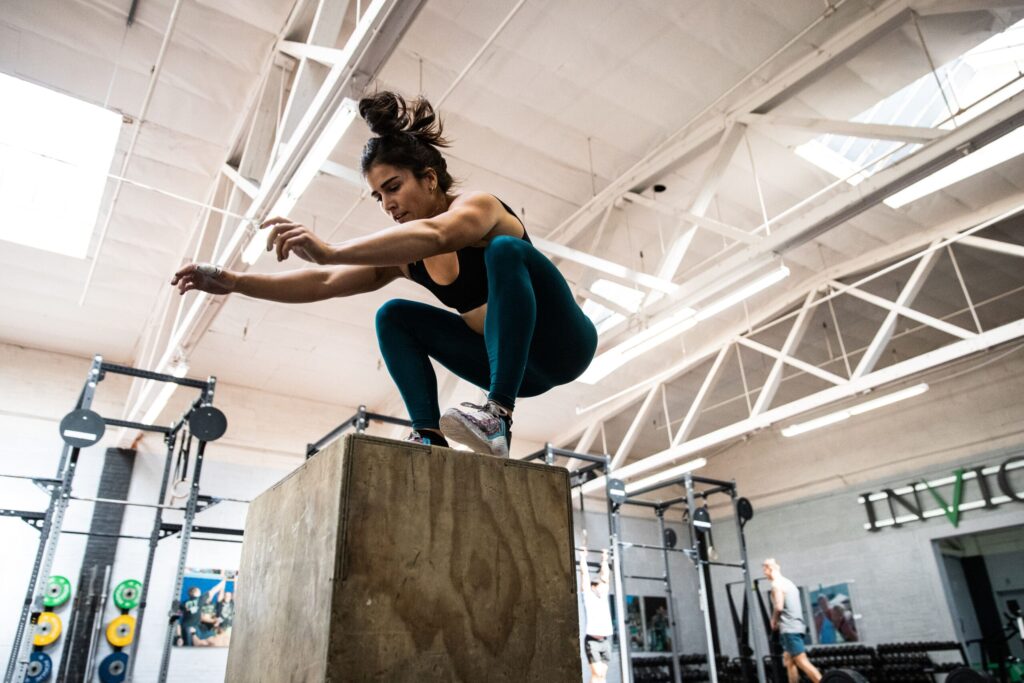
Having strong core and well-defined six-pack abs is more than just about aesthetics.
A strong core is essential for overall stability, balance, and proper posture. It acts as the powerhouse for almost every movement we make, whether it’s lifting groceries, playing sports, or simply sitting up straight at your desk.

Moreover, a visible set of six-pack abs is often associated with fitness, health, and vitality. It’s a visible marker of dedication to one’s health and fitness journey, and it can boost confidence and self-esteem.
Traditional ab exercises like crunches and sit-ups are effective for building core strength, but sometimes they’re not challenging enough to elicit significant growth and definition. This is where weighted ab exercises come into play.
By adding resistance to your ab workouts, you increase the intensity, which in turn stimulates muscle growth and development. Weighted ab exercises target not only the superficial rectus abdominis muscles but also the deeper stabilizing muscles, resulting in a stronger, more functional core.
The purpose of this article is to introduce you to seven of the best weighted ab exercises that will help you build a powerful six-pack and develop a stronger core overall. These exercises have been carefully selected based on their effectiveness, safety, and ability to target different areas of the core.
Whether you’re a beginner looking to strengthen your core or an experienced fitness enthusiast seeking to take your ab workouts to the next level, these exercises will provide you with the tools you need to achieve your goals.
Each exercise will be thoroughly explained, including proper form, benefits, variations, and progressions, so you can incorporate them into your routine with confidence and maximize your results.
1. Weighted Russian Twists
Weighted Russian twists are a dynamic core exercise that targets the obliques, rectus abdominis, and transverse abdominis muscles.
To perform this exercise:
- Sit on the floor with your knees bent and feet elevated slightly off the ground.
- Hold a weight plate, dumbbell, or medicine ball with both hands in front of your chest.
- Lean back slightly to engage your core muscles.
- Twist your torso to one side, bringing the weight towards the floor beside your hip.
- Return to the center, then twist to the opposite side, bringing the weight towards the other hip.
- Repeat this twisting motion in a controlled manner, alternating sides.
Benefits of Weighted Russian Twists
Weighted Russian twists offer several benefits:
Strengthening the obliques: By twisting the torso from side to side, this exercise targets the oblique muscles, helping to define and strengthen the sides of the core.
Improving rotational stability: Russian twists improve rotational strength and stability, which is essential for sports and everyday activities that involve twisting movements.
Engaging the entire core: While primarily targeting the obliques, weighted Russian twists also engage the rectus abdominis and transverse abdominis muscles, providing a comprehensive core workout.
Tips for Proper Form
To perform weighted Russian twists safely and effectively, keep the following tips in mind:
- Maintain a straight back and upright posture throughout the exercise.
- Engage your core muscles to stabilize your spine and pelvis.
- Keep your feet elevated off the ground to increase the challenge and activate the core muscles.
- Use controlled movements and avoid swinging or jerking the weight.
- Exhale as you twist to engage your core muscles fully.
Variations and Progressions
Once you have mastered the basic weighted Russian twist, you can try the following variations and progressions to further challenge your core:
- Increase the weight: Gradually increase the weight of the dumbbell, weight plate, or medicine ball to make the exercise more challenging.
- Extend your arms: Instead of holding the weight close to your chest, fully extend your arms in front of you while performing the twists.
- Elevate your feet higher off the ground: Elevate your feet to a higher position to increase the lever arm and make the exercise more difficult.
- Add a twist pause: Pause briefly at each end of the twist to increase time under tension and further engage the core muscles.
By incorporating weighted Russian twists into your routine and progressively challenging yourself, you can strengthen your core and develop a powerful set of six-pack abs.
2. Weighted Decline Sit-Ups
Weighted decline sit-ups are an advanced variation of the traditional sit-up exercise that targets the entire abdominal region, including the upper and lower abs.
To do this exercise:
- Secure your feet at the decline bench, ensuring that your knees are bent at a comfortable angle.
- Hold a weight plate, dumbbell, or medicine ball against your chest or behind your head.
- Lie back on the decline bench with your arms crossed over your chest or holding the weight.
- Engage your core muscles and slowly lift your torso off the bench, curling upwards towards your thighs.
- Keep your lower back pressed firmly against the bench throughout the movement.
- Lower your torso back down under control until your shoulder blades touch the bench, then repeat the movement.
Benefits of Weighted Decline Sit-Ups
Weighted decline sit-ups offer several benefits:
- Targeting the entire abdominal region: By performing sit-ups on a decline bench with added weight, you engage both the upper and lower abdominal muscles, helping to develop a more balanced and defined six-pack.
- Increasing resistance: Adding weight to the sit-up exercise increases the resistance placed on the abdominal muscles, leading to greater muscle activation and growth.
- Improving core strength: Decline sit-ups require significant core strength and stability to maintain proper form throughout the movement, resulting in improved overall core strength and stability.
Tips for Proper Form
To perform weighted decline sit-ups safely and effectively, follow these tips:
- Keep your feet securely anchored on the decline bench throughout the exercise.
- Engage your core muscles and avoid using momentum to lift your torso off the bench.
- Maintain a neutral spine position throughout the movement, avoiding excessive arching or rounding of the lower back.
- Exhale as you lift your torso off the bench and inhale as you lower back down.
- Use a controlled and deliberate motion, focusing on squeezing your abdominal muscles as you lift.
Variations and Progressions
Once you have mastered the basic weighted decline sit-up, you can try the following variations and progressions:
- Increase the weight: Gradually increase the weight used during the exercise to continue challenging your abdominal muscles.
- Extend your arms: Instead of holding the weight against your chest, fully extend your arms overhead while performing the sit-up.
- Perform weighted decline sit-ups with a twist: Add a twisting motion to the sit-up by rotating your torso to one side as you lift, alternating sides with each repetition.
- Use a decline bench with a greater angle: Increase the angle of the decline bench to further engage the lower abdominal muscles and increase the difficulty of the exercise.
Incorporating weighted decline sit-ups into your routine can help you build a stronger and more defined core, leading to improved athletic performance and overall functional strength.
3. Weighted Cable Crunches
Weighted cable crunches are an effective isolation exercise that targets the rectus abdominis, commonly known as the “six-pack” muscles. This exercise involves using a cable machine to provide resistance as you perform a crunching motion.
Here’s how to do it:
- Attach a rope or handle to a high pulley on a cable machine.
- Kneel down facing the cable machine and grab the rope or handle with both hands, positioning them next to your head.
- Keep your hips stationary and contract your abdominal muscles to crunch your torso downward, bringing your elbows towards your knees.
- Pause briefly at the bottom of the movement to squeeze your abs.
- Slowly return to the starting position, allowing your torso to extend back up while maintaining tension on the abs.
Benefits of Weighted Cable Crunches
Weighted cable crunches offer several benefits:
- Targeting the rectus abdominis: This exercise isolates and effectively targets the rectus abdominis, helping to develop a stronger and more defined six-pack.
- Adjustable resistance: Cable machines allow you to easily adjust the weight, providing a customizable level of resistance to suit your fitness level and goals.
- Range of motion: Unlike traditional crunches performed on the floor, cable crunches allow for a greater range of motion, resulting in increased muscle activation and growth.
- Core stability: Keeping your body stable while performing cable crunches requires significant core stability, helping to improve overall core strength and balance.
Tips for Proper Form
To perform weighted cable crunches with proper form, follow these tips:
- Keep your back straight and chest lifted throughout the movement to avoid rounding the spine.
- Focus on using your abdominal muscles to initiate the crunching motion, rather than pulling with your arms.
- Exhale as you crunch down and inhale as you return to the starting position.
- Avoid using momentum to swing the weight, and instead focus on controlled, deliberate movements.
- Keep your neck in a neutral position, avoiding excessive strain by looking straight ahead or slightly upward.
Variations and Progressions
Once you have mastered the basic weighted cable crunch, you can try the following variations and progressions:
- Single-arm cable crunches: Perform cable crunches using only one arm at a time to increase the challenge and unilateral strength development.
- Reverse cable crunches: Instead of crunching downward, face away from the cable machine and pull the weight upward, targeting the lower portion of the rectus abdominis.
- Increase the weight: Gradually increase the weight used on the cable machine to continue challenging your abdominal muscles and promoting growth.
- Perform supersets or drop sets: Increase the intensity of your workout by incorporating supersets (performing two exercises back-to-back) or drop sets (performing multiple sets with decreasing weight and increasing repetitions).
Incorporating weighted cable crunches into your routine can help you build a stronger, more defined core, leading to improved athletic performance and overall functional strength.
4. Weighted Leg Raises
Weighted leg raises are an excellent exercise for targeting the lower abdominal muscles, including the rectus abdominis and hip flexors.
Adding resistance to leg raises increases the challenge and helps to build strength and definition in the lower abs.
Here’s how to perform weighted leg raises:
- Lie flat on your back on a mat or bench, with your legs extended and your arms resting by your sides.
- Hold a weight plate or dumbbell between your feet, ensuring that it is secure and balanced.
- Engage your core muscles to stabilize your lower back and pelvis.
- Keeping your legs straight, lift them upward towards the ceiling while maintaining control.
- Pause briefly at the top of the movement, then slowly lower your legs back down to the starting position without letting them touch the ground.
- Repeat for the desired number of repetitions.
Benefits of Weighted Leg Raises
Weighted leg raises offer several benefits:
- Targeting the lower abs: This exercise primarily targets the lower portion of the rectus abdominis, helping to strengthen and define the lower abs.
- Hip flexor engagement: Weighted leg raises also engage the hip flexor muscles, which play a key role in lifting the legs and stabilizing the pelvis.
- Increased resistance: Adding weight to leg raises increases the resistance placed on the abdominal muscles, resulting in greater muscle activation and growth.
- Improved core stability: Performing leg raises with added weight requires significant core stability to maintain proper form, leading to improved overall core strength and stability.
Tips for Proper Form
To perform weighted leg raises with proper form, follow these tips:
- Keep your lower back pressed firmly against the mat or bench throughout the exercise to avoid arching.
- Focus on using your abdominal muscles to lift your legs, rather than relying solely on momentum.
- Maintain control throughout the movement, especially when lowering your legs back down to the starting position.
- Keep your legs straight and avoid bending at the knees to ensure proper engagement of the lower abs.
- Breathe steadily throughout the exercise, exhaling as you lift your legs and inhaling as you lower them back down.
Variations and Progressions
Once you have mastered the basic weighted leg raise, you can try the following variations and progressions:
- Hanging leg raises: Perform leg raises hanging from a pull-up bar or dip station to increase the challenge and engage the stabilizing muscles of the upper body.
- Flutter kicks with weight: Hold a weight plate or dumbbell between your feet while performing flutter kicks, alternating rapid movements of the legs.
- Increase the weight: Gradually increase the weight used between your feet to continue challenging your lower abs and hip flexors.
- Perform slow negatives: Focus on lowering your legs back down to the starting position slowly and under control to increase time under tension and promote muscle growth.
Incorporating weighted leg raises into your routine can help you build a stronger and more defined lower abs, leading to improved athletic performance and overall core strength.
5. Weighted Planks
Weighted planks are a challenging core exercise that targets the entire core, including the rectus abdominis, obliques, and transverse abdominis.
Adding weight to the plank increases the intensity and helps to further strengthen and stabilize the core muscles.
Here’s how to perform weighted planks:
- Start in a plank position with your forearms on the ground, elbows directly beneath your shoulders, and toes tucked under, forming a straight line from your head to your heels.
- Place a weight plate or dumbbell on your upper back, between your shoulder blades, ensuring that it is secure and balanced.
- Engage your core muscles and hold the plank position, keeping your body straight and avoiding any sagging or arching.
- Hold the plank for the desired amount of time, focusing on maintaining proper form and breathing steadily.
- Lower yourself back down to the starting position and repeat for additional sets.
Benefits of Weighted Planks
Weighted planks offer several benefits:
- Comprehensive core activation: Planks are one of the best exercises for targeting the entire core, including the deep stabilizing muscles. Adding weight to the plank increases the challenge and ensures that all core muscles are engaged.
- Improved core strength and stability: Holding a plank with added weight requires significant core strength and stability to maintain proper form, leading to improved overall core strength and stability.
- Spinal alignment and posture: Weighted planks help to promote proper spinal alignment and posture by strengthening the muscles that support the spine and pelvis.
- Increased endurance: Holding a plank for an extended period with added weight helps to improve muscular endurance, which is beneficial for various athletic activities and everyday movements.
Tips for Proper Form
To perform weighted planks with proper form, follow these tips:
- Keep your body in a straight line from your head to your heels throughout the exercise, avoiding any sagging or arching of the back.
- Engage your core muscles by pulling your belly button towards your spine and squeezing your glutes.
- Keep your shoulders relaxed and away from your ears, and maintain a neutral neck position by looking at the ground a few inches in front of you.
- Breathe steadily throughout the exercise, inhaling through your nose and exhaling through your mouth.
- If you feel any discomfort or strain in your lower back, lower yourself down and rest before attempting another set.
Variations and Progressions
Once you have mastered the basic weighted plank, you can try the following variations and progressions:
- Side plank with weight: Perform a side plank with a weight on your hip or holding a weight in your top hand to target the obliques and lateral core muscles.
- Elevated plank: Place your feet on an elevated surface, such as a bench or stability ball, to increase the difficulty and engage the stabilizing muscles of the shoulders and core.
- Dynamic plank movements: Incorporate dynamic movements, such as plank rows or plank jacks, while holding a weight to challenge stability and coordination.
- Increase the weight: Gradually increase the weight used on your upper back to continue challenging your core muscles and promoting strength gains.
Incorporating weighted planks into your routine can help you build a stronger and more stable core, leading to improved athletic performance and reduced risk of injury during physical activities.
6. Weighted Side Planks
Weighted side planks are a challenging variation of the traditional side plank exercise, targeting the obliques, quadratus lumborum, and deep core stabilizers.
Adding weight to the side plank increases the intensity, helping to strengthen and tone the muscles along the side of the body.
Here’s how to perform weighted side planks:
- Start by lying on your side with your legs extended and your body in a straight line.
- Prop yourself up on your forearm, elbow directly beneath your shoulder, and lift your hips off the ground, forming a straight line from your head to your heels.
- Place a weight on your top hip or hold a weight in your top hand, ensuring that it is secure and balanced.
- Engage your core muscles and hold the side plank position, keeping your body straight and avoiding any sagging or rotating of the hips.
- Hold the plank for the desired amount of time, focusing on maintaining proper form and breathing steadily.
- Lower yourself back down to the starting position and repeat on the opposite side.
Benefits of Weighted Side Planks
Targeting the obliques: Side planks are an effective exercise for targeting the oblique muscles, which are responsible for side bending and rotation of the trunk. Adding weight to the side plank increases the challenge and helps to further strengthen and tone the obliques.
Improved core stability: Holding a side plank with added weight requires significant core stability to maintain proper form, leading to improved overall core strength and stability.
Spinal alignment and posture: Weighted side planks help to promote proper spinal alignment and posture by strengthening the muscles that support the spine and pelvis.
Enhanced balance and coordination: Performing weighted side planks requires coordination and balance, helping to improve overall body awareness and proprioception.
Tips for Proper Form
Keep your body in a straight line from your head to your heels throughout the exercise, avoiding any sagging or rotating of the hips.
Engage your core muscles by pulling your belly button towards your spine and squeezing your glutes.
Keep your shoulders stacked directly above your elbow or hand, and maintain a neutral neck position by looking straight ahead or slightly upward.
Breathe steadily throughout the exercise, inhaling through your nose and exhaling through your mouth.
If you feel any discomfort or strain in your shoulder or hip, lower yourself down and rest before attempting another set.
Variations and Progressions
Once you have mastered the basic weighted side plank, you can try the following variations and progressions:
- Extended arm side plank: Perform a side plank with your top arm extended overhead to increase the challenge and engage the stabilizing muscles of the shoulder and core.
- Dynamic side plank movements: Incorporate dynamic movements, such as hip dips or leg lifts, while holding a weight to challenge stability and coordination.
- Increase the weight: Gradually increase the weight used on your top hip or in your top hand to continue challenging your oblique muscles and promoting strength gains.
Incorporating weighted side planks into your routine can help you build a stronger and more stable core, leading to improved athletic performance and reduced risk of injury during physical activities.
7. Weighted Bicycle Crunches
Weighted bicycle crunches are a dynamic core exercise that targets the rectus abdominis, obliques, and hip flexors.
This exercise involves mimicking the motion of pedaling a bicycle while incorporating a twisting motion to engage the obliques. Adding weight to the bicycle crunch increases the intensity and helps to further strengthen and tone the abdominal muscles. Here’s how to perform weighted bicycle crunches:
- Lie flat on your back on a mat with your lower back pressed firmly into the floor.
- Hold a weight plate or dumbbell behind your head with both hands, elbows bent and wide.
- Lift your shoulders and head slightly off the ground, engaging your core muscles.
- Bring your right knee towards your chest while simultaneously twisting your torso to bring your left elbow towards your right knee.
- Straighten your right leg while bringing your left knee towards your chest and twisting your torso to bring your right elbow towards your left knee.
- Continue alternating sides in a smooth, pedaling motion while keeping your core engaged.
- Repeat for the desired number of repetitions.
Benefits of Weighted Bicycle Crunches
- Comprehensive core activation: Bicycle crunches target multiple muscle groups in the core, including the rectus abdominis, obliques, and hip flexors, providing a comprehensive abdominal workout.
- Increased intensity: Adding weight to the bicycle crunch increases the resistance placed on the abdominal muscles, leading to greater muscle activation and growth.
- Improved coordination and balance: Performing bicycle crunches requires coordination and balance as you alternate twisting motions and leg movements, helping to improve overall body awareness and proprioception.
- Functional strength: Bicycle crunches mimic the motion of pedaling a bicycle, making them a functional exercise that translates well to everyday activities and sports that involve rotational movements.
Tips for Proper Form
To perform weighted bicycle crunches with proper form, follow these tips:
- Keep your lower back pressed firmly into the mat throughout the exercise to avoid arching.
- Focus on using your abdominal muscles to initiate the twisting motion, rather than pulling with your neck or shoulders.
- Keep your elbows wide and your hands lightly supporting your head, avoiding pulling on your neck.
- Maintain a steady, controlled pace throughout the exercise, focusing on squeezing your abs as you twist.
- Breathe steadily throughout the exercise, exhaling as you twist and inhaling as you return to the starting position.
Variations and Progressions
Once you have mastered the basic weighted bicycle crunch, you can try the following variations and progressions:
- Increase the weight: Gradually increase the weight used behind your head to continue challenging your abdominal muscles and promoting strength gains.
- Slow down the tempo: Perform bicycle crunches at a slower tempo, focusing on controlled movements and maximum muscle contraction.
- Add a pause: Pause briefly at each end of the twisting motion to increase time under tension and further engage the core muscles.
- Perform reverse bicycle crunches: Instead of bringing your elbows towards your knees, bring your knees towards your elbows while keeping your legs straight, targeting the lower abs.
Incorporating weighted bicycle crunches into your routine can help you build a stronger and more defined core, leading to improved athletic performance and reduced risk of injury during physical activities.
Conclusion
Incorporating weighted ab exercises into your workout routine can yield numerous benefits for your core strength, stability, and definition.
By adding resistance to traditional ab exercises, you engage your core muscles more intensely, leading to greater muscle activation and growth.
Weighted ab exercises target various muscle groups within the core, including the rectus abdominis, obliques, and deeper stabilizing muscles, resulting in a stronger and more balanced core overall.
These exercises also promote functional strength, improve posture, and enhance athletic performance.
While weighted ab exercises can be highly effective, it’s crucial to prioritize proper form and progression to avoid injury and maximize results.
Maintaining proper form ensures that you’re targeting the intended muscles and reducing the risk of strain or overuse injuries.
Additionally, progressing gradually by increasing the weight, repetitions, or difficulty of the exercises over time allows you to continue challenging your muscles and stimulating growth. Remember to listen to your body and adjust the intensity of your workouts accordingly to avoid overtraining.
In conclusion, weighted ab exercises offer a versatile and effective way to strengthen and sculpt your core muscles. Whether you’re aiming to build a six-pack, improve athletic performance, or enhance overall core strength and stability, incorporating weighted ab exercises into your routine can help you achieve your fitness goals.
By combining proper form, progression, and consistency, you can develop a stronger, more defined core that supports you in all aspects of your active lifestyle. So, don’t hesitate to add some weight to your ab workouts and take your core training to the next level. Your stronger, more defined abs will thank you for it!
Learn More
Unbelievably Effective Science-Backed Arm Exercises You’ve Never Seen Before
The Diet that Will Transform Your Body in 100 Days
What Happens to Your Body When You Try the Anti-Ageing Diet for 90 Days?
The Ozempic Problem – The Literal Easiest Way to Lose Fat
Try This Effective 200 Reps Workout for Your Biceps
Studies
Study: “The Effect of Core Stability Training on Functional Movement Patterns in Collegiate Athletes”
Authors: William E. Cholewicki, Anand M. Patel, and Paul M. Logan
Published in: The Journal of Strength and Conditioning Research
Summary: This study investigated the impact of core stability training on functional movement patterns in collegiate athletes.
The authors examined how a structured core stability program influenced athletes’ ability to perform various functional movements. Results showed that core stability training led to improvements in movement patterns, suggesting its importance in enhancing athletic performance and reducing injury risk.
Study: “Effects of Core Stability Training on Core Muscle Strength and Endurance in Sedentary Adults”
Authors: Emily N. Haynes, John A. Sheppard, and Jennifer L. Dickin
Published in: Journal of Sports Science & Medicine
Summary: This study aimed to evaluate the effects of core stability training on core muscle strength and endurance in sedentary adults. The researchers implemented a core stability program consisting of specific exercises targeting the core muscles.
Results indicated significant improvements in both core muscle strength and endurance following the training intervention, highlighting the efficacy of core stability exercises for individuals with a sedentary lifestyle.
Study: “The Role of Core Stability in Athletic Function”
Authors: Stuart M. McGill, PhD
Published in: Orthopedic Practice
Summary: This study by Stuart McGill, a prominent researcher in the field of spine biomechanics, explored the role of core stability in athletic function.
Through a comprehensive review of existing literature and biomechanical analyses, McGill elucidated the importance of core stability for optimizing athletic performance, preventing injuries, and promoting overall musculoskeletal health. The study provided valuable insights into the significance of core training for athletes across various sports disciplines.