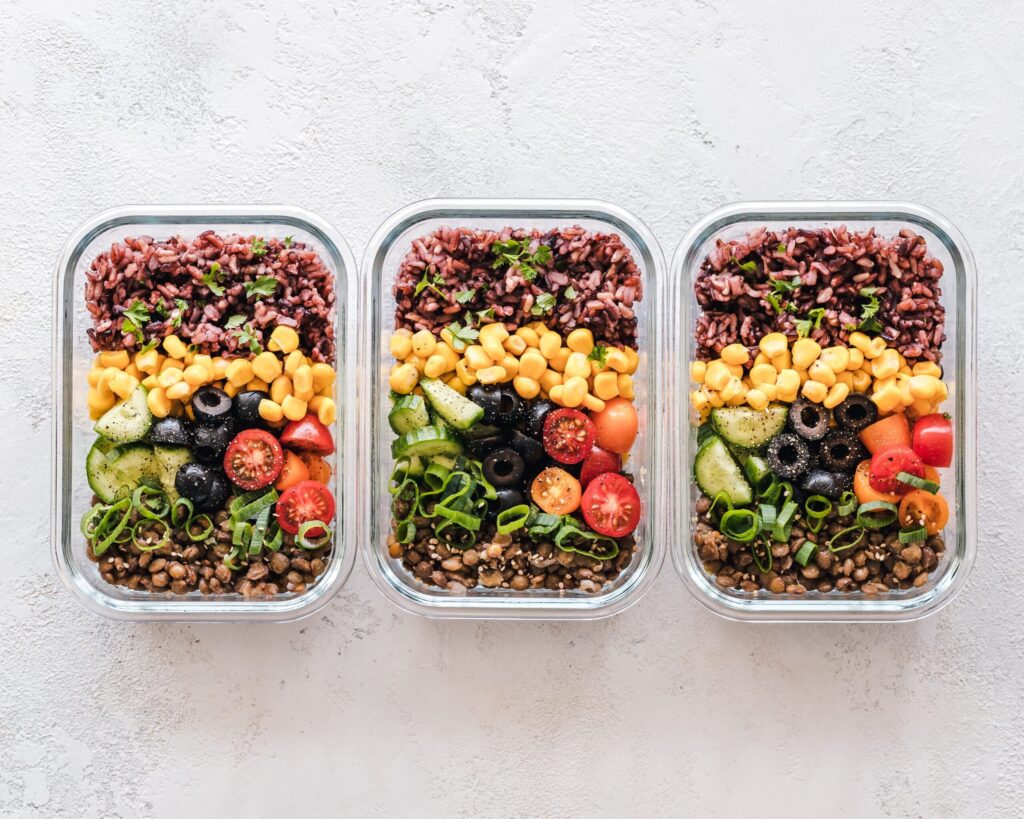
Building muscle requires a consistent blend of resistance training, rest, and, most importantly, nutrition. Without the right fuel, your body lacks the necessary building blocks to repair and grow stronger muscles.
While training provides the stimulus for muscle growth, it’s the nutrients from your diet that ultimately make hypertrophy possible. Below are seven science-backed foods that are essential for optimising muscle growth.
1. Eggs
Eggs are one of the most complete and bioavailable sources of protein available, containing all nine essential amino acids that the body cannot produce on its own. They are particularly rich in leucine, a branched-chain amino acid (BCAA) crucial for muscle protein synthesis. Leucine activates the mTOR pathway, a critical mechanism for muscle growth (Tipton et al., 2009).

In addition to protein, eggs are high in healthy fats, including omega-3 fatty acids, which reduce muscle inflammation and aid recovery. Research shows that consuming whole eggs post-workout stimulates muscle protein synthesis more effectively than just egg whites, likely due to the synergistic effects of fats and micronutrients in the yolk (Van Vliet et al., 2017).
2. Chicken Breast
Chicken breast is a staple in muscle-building diets due to its high protein content and low fat. A 100g serving provides approximately 31g of protein, making it one of the leanest and most efficient sources of protein. The high protein-to-calorie ratio ensures you can meet your protein needs without consuming excessive calories, which is particularly useful during lean bulking phases.
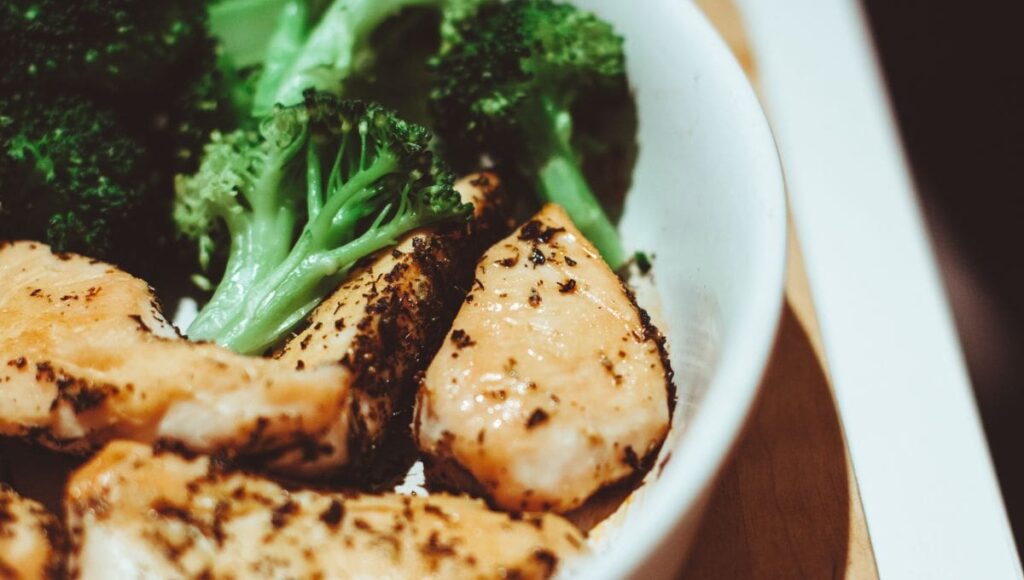
The protein in chicken is rich in essential amino acids, supporting muscle repair and growth. Studies have confirmed that diets high in lean protein sources, like chicken, are effective at promoting hypertrophy when combined with resistance training (Phillips, 2014).
3. Salmon
Salmon is not only a fantastic protein source but also rich in omega-3 fatty acids, specifically eicosapentaenoic acid (EPA) and docosahexaenoic acid (DHA). Omega-3s play a significant role in reducing muscle soreness and improving recovery, enabling consistent performance in the gym.
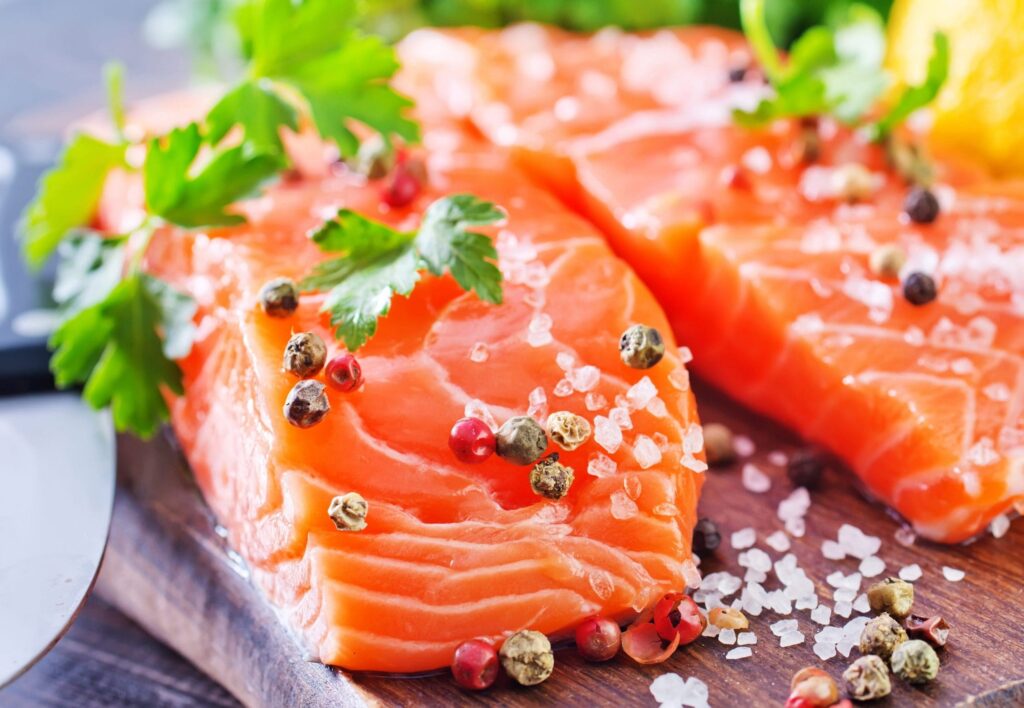
A study published in Clinical Science found that omega-3 supplementation enhanced muscle protein synthesis by increasing the sensitivity of muscle cells to insulin and amino acids (Smith et al., 2011). Additionally, salmon provides a high dose of vitamin D, which has been linked to improved muscle strength and performance (Beaudart et al., 2014).
4. Greek Yoghurt
Greek yoghurt is an excellent source of high-quality protein, particularly casein and whey. These two proteins differ in absorption rates—whey is rapidly digested and ideal for post-workout recovery, while casein is digested slowly, providing a sustained release of amino acids that support muscle repair during sleep (Tang et al., 2009).
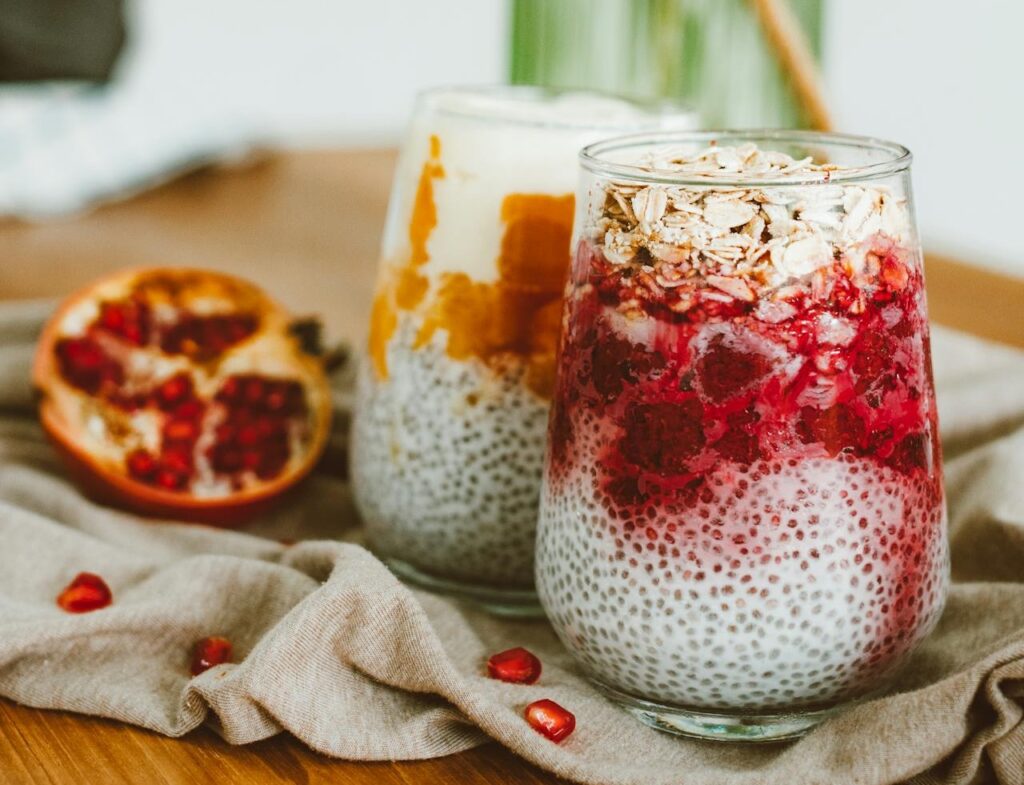
Greek yoghurt also contains calcium, which is essential for muscle contraction and overall skeletal health. Moreover, probiotics in Greek yoghurt may improve gut health, potentially enhancing nutrient absorption and recovery (Lactobacillus GG Research Group, 2014).
5. Quinoa
Carbohydrates are crucial for replenishing glycogen stores and providing energy during intense training. Quinoa is a complex carbohydrate that not only fuels your workouts but also provides a complete protein source, containing all essential amino acids.
Unlike many plant-based proteins, quinoa has a high biological value, making it a valuable addition to vegetarian or vegan diets. It is also rich in magnesium, a mineral that improves muscle contraction and energy production (Volpe, 2015). Research supports the inclusion of complex carbohydrates like quinoa in diets to optimise performance and recovery in athletes (Kerksick et al., 2018).
6. Almonds
Almonds are a nutrient-dense snack that provides healthy fats, protein, and a range of micronutrients essential for muscle growth. They are particularly high in vitamin E, an antioxidant that protects cells from oxidative stress during intense training sessions (Traber & Stevens, 2011).
A handful of almonds (around 28g) provides 6g of protein and 14g of healthy fats, making them an ideal pre- or post-workout snack. Additionally, almonds contain magnesium, which has been shown to enhance muscle recovery and reduce cramping (Dominguez et al., 2017).
7. Beef
Lean cuts of beef are a powerhouse of nutrients that promote muscle growth, including protein, creatine, iron, and zinc. Creatine, in particular, enhances strength and power output, leading to greater performance in resistance training (Cooper et al., 2012).
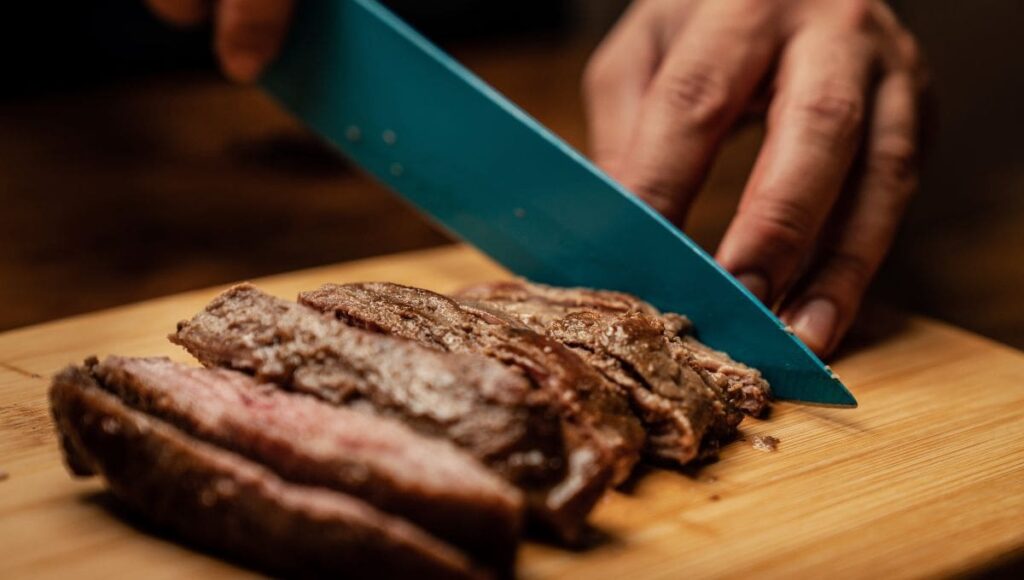
Beef is also rich in conjugated linoleic acid (CLA), which may help reduce body fat and improve lean muscle mass. A study in the American Journal of Clinical Nutrition demonstrated that consuming red meat as part of a balanced diet significantly increases muscle mass and strength in response to resistance training (Mitchell et al., 2017).
Key Takeaways Table
| Food | Key Benefits for Muscle Growth |
|---|---|
| Eggs | Complete protein, high in leucine, promotes muscle synthesis. |
| Chicken Breast | Lean protein source, supports repair and growth. |
| Salmon | Rich in omega-3s and vitamin D, improves recovery. |
| Greek Yoghurt | Casein and whey protein, supports recovery and sustained repair. |
| Quinoa | Complex carbs and complete protein, fuels workouts. |
| Almonds | Healthy fats and vitamin E, reduces oxidative stress. |
| Beef | High protein, creatine, iron, and zinc for enhanced performance. |
Bibliography
Beaudart, C., et al., 2014. “The effects of vitamin D on skeletal muscle strength.” The Journal of Clinical Endocrinology & Metabolism, 99(11), pp. 4336-4344.
Cooper, R., et al., 2012. “Creatine supplementation with specific view to exercise/sports performance: an update.” Journal of the International Society of Sports Nutrition, 9(1), p. 33.
Dominguez, L.J., et al., 2017. “Magnesium and muscle performance in older persons: the InCHIANTI study.” American Journal of Clinical Nutrition, 105(5), pp. 1136-1142.
Kerksick, C.M., et al., 2018. “Nutritional interventions to augment resistance training-induced skeletal muscle hypertrophy.” Journal of the International Society of Sports Nutrition, 15(1), p. 38.
Mitchell, C.J., et al., 2017. “The effect of protein intake on performance adaptations following resistance exercise.” American Journal of Clinical Nutrition, 105(2), pp. 394-403.
Smith, G.I., et al., 2011. “Fish oil-derived n−3 PUFA increase muscle protein synthesis in older adults.” Clinical Science, 121(8), pp. 355-362.
Tang, J.E., et al., 2009. “Ingestion of whey hydrolysate, casein, or soy protein isolate: effects on mixed muscle protein synthesis at rest and following resistance exercise in young men.” Journal of Applied Physiology, 107(3), pp. 987-992.
Tipton, K.D., et al., 2009. “Stimulating muscle protein synthesis in elderly persons after ingestion of a small bolus of essential amino acids.” American Journal of Clinical Nutrition, 90(2), pp. 377-386.
Traber, M.G. and Stevens, J.F., 2011. “Vitamins C and E: beneficial effects from a mechanistic perspective.” Free Radical Biology and Medicine, 51(5), pp. 1000-1013.
Van Vliet, S., et al., 2017. “Consumption of whole eggs promotes greater stimulation of postexercise muscle protein synthesis than consumption of isonitrogenous amounts of egg whites in young men.” American Journal of Clinical Nutrition, 106(6), pp. 1401-1412.
Volpe, S.L., 2015. “Magnesium and the athlete.” Current Sports Medicine Reports, 14(4), pp. 279-283.