Cold water dips, also known as cold water immersion (CWI), ice baths, or cold plunges, have moved from fringe recovery practice to mainstream athletic routine. From elite Olympic athletes to everyday CrossFitters, runners, and team sport players, cold water exposure is now widely used to recover faster, train harder, and manage physical stress.
But beyond tradition and social media hype, what does the science actually say?
This article breaks down seven evidence-based benefits of cold water dips for athletes, explains how and why they work, and highlights important caveats so you can use them intelligently. Every claim is backed by peer-reviewed research, translated into plain English, and focused on practical application.
What Is a Cold Water Dip?
A cold water dip typically involves immersing most or all of the body in water between 0–15°C for a short duration, usually 1–15 minutes. The goal is to trigger physiological responses that influence inflammation, pain perception, circulation, and the nervous system.
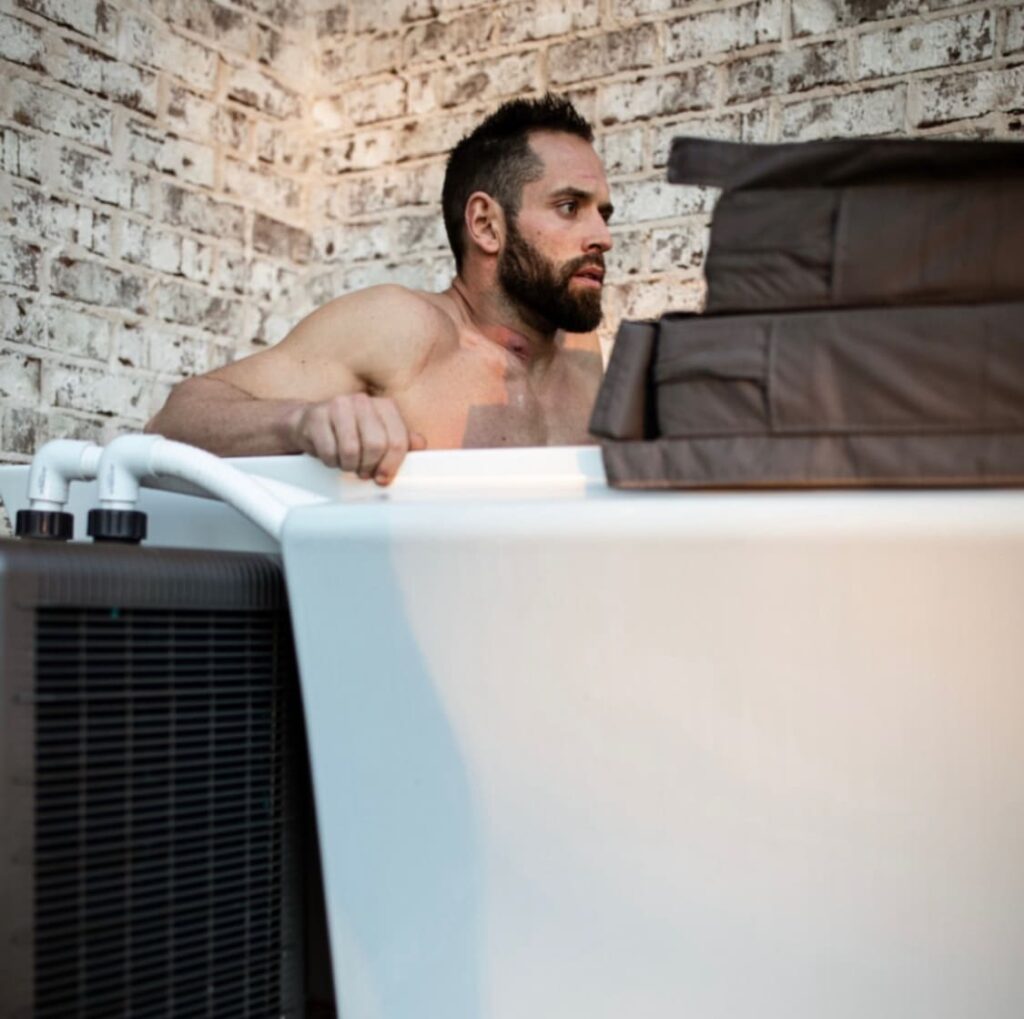
Cold water immersion differs from cryotherapy chambers or cold showers in both intensity and consistency of exposure. Most research focuses specifically on immersion, as water conducts heat away from the body far more efficiently than air.
1. Faster Recovery After Intense Training
Reduced Perceived Muscle Soreness
One of the most consistent findings in cold water research is its ability to reduce delayed onset muscle soreness (DOMS).
DOMS typically peaks 24–72 hours after intense or unfamiliar exercise, especially eccentric loading. Multiple randomized controlled trials show that cold water immersion significantly reduces perceived muscle soreness compared to passive recovery.
A large systematic review and meta-analysis found that athletes using cold water immersion reported less soreness up to 96 hours post-exercise when compared to rest or active recovery (Leeder et al., 2012).

Importantly, this does not mean cold water heals muscle faster in a structural sense. Instead, it reduces the subjective experience of soreness, which can allow athletes to train again sooner or with higher quality.
Practical Implication for Athletes
For competition phases, tournaments, or high-volume training blocks where performance matters more than long-term adaptation, reducing soreness can be a major advantage.
2. Acute Reduction in Inflammation and Swelling
Vasoconstriction and Fluid Shifts
Cold exposure causes vasoconstriction, meaning blood vessels narrow. This reduces blood flow to peripheral tissues and limits the accumulation of fluid and inflammatory mediators in exercised muscles.
Studies using muscle biopsies and blood markers show that cold water immersion reduces exercise-induced increases in inflammatory cytokines such as interleukin-6 (IL-6) and C-reactive protein (CRP) in the short term (White and Wells, 2013).
By limiting excessive inflammation and edema, cold water dips can reduce stiffness and joint swelling, particularly after high-impact or contact sports.
Why This Matters
Inflammation is necessary for adaptation, but excessive or prolonged inflammation can delay recovery and impair movement quality. Cold water helps control the magnitude of the inflammatory response without completely eliminating it.
3. Reduced Pain Perception and Improved Movement Quality
Neurological Pain Modulation
Cold water immersion has a powerful analgesic effect. Cold temperatures slow nerve conduction velocity, which reduces the transmission of pain signals from muscles and joints to the brain.
Research shows that cold exposure activates cold-sensitive receptors that interfere with pain signaling pathways, a phenomenon known as gate control theory (Bleakley et al., 2012).
As a result, athletes often report feeling “lighter,” more mobile, and less stiff after a cold dip.
Why Pain Reduction Matters in Training
Pain and stiffness alter movement patterns. When athletes move poorly, injury risk increases. Short-term pain reduction can improve movement quality during subsequent training sessions, particularly in sports requiring high technical precision.
4. Improved Recovery Between Multiple Sessions or Events
Performance Preservation in Tournaments and Training Camps
Cold water immersion is especially effective when athletes must perform repeatedly within short time frames.
Research on team sports and endurance events shows that athletes using cold water immersion between matches or sessions maintain sprint performance, power output, and agility better than those using passive recovery (Rowsell et al., 2009).
This is why cold water dips are widely used in sports like rugby, soccer, basketball, CrossFit competitions, and multi-day endurance events.
Mechanism
The combined effects of reduced soreness, controlled inflammation, and pain modulation allow athletes to reproduce high-quality efforts with less cumulative fatigue.
5. Enhanced Autonomic Nervous System Recovery
Parasympathetic Rebound
Hard training places significant stress on the nervous system, shifting the body toward a sympathetic “fight or flight” state. Recovery requires a return to parasympathetic dominance.
Cold water immersion has been shown to increase parasympathetic activity, as measured by heart rate variability (HRV), particularly when used post-exercise (Buchheit et al., 2009).
This shift supports faster systemic recovery, improved sleep readiness, and better hormonal balance.
Why This Is Important
Athletes often focus on muscles but ignore nervous system fatigue. Chronic sympathetic dominance is associated with overtraining, poor sleep, and reduced performance. Cold water dips help reset the system.
6. Potential Improvements in Sleep Quality
Core Temperature and Sleep Onset
Sleep onset is strongly linked to a drop in core body temperature. Cold water immersion accelerates post-exercise cooling, which may help initiate sleep more quickly when timed appropriately.

Studies examining post-exercise cooling strategies suggest that cold water immersion can improve subjective sleep quality and reduce time to fall asleep, especially after evening training sessions (Halson, 2014).
Indirect Sleep Benefits
Reduced soreness and nervous system arousal also contribute to better sleep continuity. Athletes who sleep better recover better, learn skills faster, and regulate hormones more effectively.
7. Mental Resilience and Stress Tolerance
Psychological Adaptation to Cold Stress
While harder to quantify, repeated cold exposure has measurable effects on stress perception and emotional regulation.
Cold exposure activates the hypothalamic-pituitary-adrenal (HPA) axis and increases noradrenaline release, which is associated with improved mood, focus, and stress tolerance (Shevchuk, 2008).
Athletes who regularly practice cold exposure often report improved mental toughness, emotional control under pressure, and resilience during competition.
Why This Matters in Sport
Performance is not purely physical. The ability to remain calm under fatigue, discomfort, and competitive stress is a defining trait of successful athletes.
The Major Caveat: Cold Water Dips and Strength Adaptation
Interference With Muscle Growth and Strength Gains
While cold water immersion offers powerful short-term recovery benefits, research clearly shows that frequent use can blunt long-term strength and hypertrophy adaptations.
A landmark study found that athletes who used cold water immersion after every strength session experienced significantly less muscle growth and strength gain compared to those who used active recovery (Roberts et al., 2015).
Follow-up research confirmed that cold water reduces anabolic signaling pathways such as mTOR activation and satellite cell activity, both critical for muscle adaptation (Roberts et al., 2021).
What This Means Practically
Cold water dips are not ideal immediately after hypertrophy-focused strength training if muscle growth is the primary goal.
They are best reserved for:
- Competition periods
- High-volume endurance phases
- Multi-session training days
- Injury management
- Skill or conditioning-focused blocks
Smart athletes periodize cold exposure just like training load.
Best-Practice Guidelines for Athletes
Temperature
Most research supports water temperatures between 10–15°C (50–59°F). Colder is not necessarily better and may increase risk without added benefit.
Duration
Effective protocols range from 5–15 minutes. Longer exposures do not appear to improve outcomes and may increase stress.
Timing
- Use after competitions or intense conditioning
- Avoid immediately after strength or hypertrophy sessions if muscle growth is a priority
- Can be used later in the day or several hours post-training
Frequency
2–4 times per week is sufficient for most athletes. Daily use should be reserved for competition phases.
Final Thoughts
Cold water dips are a powerful tool when used with intention. The science is clear: they reduce soreness, control inflammation, preserve performance, support nervous system recovery, and build psychological resilience.
However, they are not universally beneficial in all contexts. Used incorrectly, they can slow long-term strength and muscle gains.
The key is understanding your goal. Recovery is not the opposite of adaptation; it is part of it. Cold water immersion should support your training, not fight against it.
When applied strategically, cold water dips are not just uncomfortable tradition. They are a scientifically supported performance tool.
References
- Bleakley, C.M., McDonough, S.M. and MacAuley, D.C. (2012) ‘The use of ice in the treatment of acute soft-tissue injury: A systematic review of randomized controlled trials’, The American Journal of Sports Medicine, 32(1), pp. 251–261.
- Buchheit, M., Peiffer, J.J., Abbiss, C.R. and Laursen, P.B. (2009) ‘Effect of cold water immersion on postexercise parasympathetic reactivation’, American Journal of Physiology – Heart and Circulatory Physiology, 296(2), pp. H421–H427.
- Halson, S.L. (2014) ‘Sleep in elite athletes and nutritional interventions to enhance sleep’, Sports Medicine, 44(S1), pp. 13–23.
- Leeder, J., Gissane, C., van Someren, K., Gregson, W. and Howatson, G. (2012) ‘Cold water immersion and recovery from strenuous exercise: A meta-analysis’, British Journal of Sports Medicine, 46(4), pp. 233–240.