The posterior chain is a group of muscles and connective tissues running along the backside of the body, including the hamstrings, glutes, spinal erectors, and upper back. This chain is foundational for athletic performance, spinal health, and daily function.
Weakness or imbalance in the posterior chain can lead to postural dysfunctions, increased injury risk, and diminished power output. Strengthening these muscles not only improves posture and movement efficiency but also enhances force production across nearly every compound lift and athletic movement.
[wpcode id=”229888″]Below are seven of the most effective posterior chain exercises, each selected based on biomechanical analysis and evidence-based outcomes in both rehabilitation and performance contexts. These movements target the full length of the posterior chain and can be applied across various training levels.
Deadlifts

The Foundational Posterior Chain Lift
The deadlift is arguably the most comprehensive posterior chain exercise. It directly targets the hamstrings, gluteus maximus, erector spinae, and trapezius muscles. Electromyographic (EMG) studies consistently show high muscle activation in the gluteals and lumbar spine during the deadlift. According to Escamilla et al. (2002), conventional deadlifts elicit substantial activation in the spinal erectors and hamstrings when compared to other hinge movements.
Mechanically, the deadlift teaches hip hinge mechanics, which are critical for safe and effective bending and lifting. It also reinforces intra-abdominal pressure, lumbar stability, and upper-back engagement. Variations such as the sumo deadlift, Romanian deadlift (RDL), and trap bar deadlift can be tailored to specific posterior chain segments.
For example, the RDL emphasizes eccentric hamstring control and is particularly valuable for sprint performance and injury prevention. Research by McAllister et al. (2014) found that the RDL improved eccentric hamstring strength and decreased injury rates in collegiate athletes.
Hip Thrusts
Isolated Glute Dominance
The hip thrust isolates the gluteus maximus more effectively than most lower-body exercises. Bret Contreras (2010), often dubbed the “Glute Guy,” demonstrated through EMG analysis that the hip thrust generates more peak gluteal activity than squats or lunges. This makes it an indispensable tool for those targeting glute hypertrophy and strength without placing excessive axial load on the spine.
Biomechanically, the hip thrust places the glutes in a shortened position at the top of the range of motion, optimizing recruitment. A study by Vigotsky et al. (2016) confirmed that hip thrusts effectively activate both gluteus maximus and medius, offering benefits in pelvic stability and lumbopelvic control.
Glute dominance is essential for explosive movements such as jumping, sprinting, and Olympic lifts. A strong posterior pelvic chain reduces anterior pelvic tilt and facilitates neutral spine alignment.
Good Mornings
Spinal Erector and Hamstring Synergy
The good morning is a loaded hinge movement that stresses the erector spinae, gluteus maximus, and hamstrings. While it may appear rudimentary, it demands and develops both core stability and posterior chain endurance.
When performed correctly—with a neutral spine and controlled descent—the good morning reinforces thoracolumbar stiffness, a critical component of spinal health and injury resilience. According to Fisher et al. (2020), it can be as effective as the RDL in strengthening the hamstrings and lumbar extensors when matched for load and range.
This exercise is often used in powerlifting and Olympic lifting circles as an accessory lift to improve bottom-end strength in squats and deadlifts. It can also help address lumbar flexion under load, a common risk factor in lifting-related back injuries.
Glute-Ham Raises
Posterior Chain Eccentric Control
The glute-ham raise (GHR) is one of the few bodyweight exercises that maximally loads the posterior chain, particularly the hamstrings, in both concentric and eccentric phases. Studies, including one by Ebben et al. (2008), have shown that GHRs produce high levels of hamstring activation, particularly in the biceps femoris and semitendinosus, during the lowering phase.
This eccentric overload is crucial for sprint athletes, as most hamstring injuries occur during the terminal swing phase of running, when the muscle lengthens under tension. Incorporating GHRs into strength programs can significantly reduce the likelihood of such injuries.
Beyond injury prevention, GHRs develop isometric glute strength and lower-back stability. The movement also encourages lumbopelvic dissociation, which is necessary for spinal health and coordination during dynamic lifts.
Reverse Hyperextensions
Spinal Decompression with Strength Benefits
Reverse hyperextensions, originally popularized by strength coach Louie Simmons, are one of the few dynamic exercises that combine spinal decompression with posterior chain activation. The movement emphasizes the glutes, hamstrings, and spinal erectors, while also allowing for traction and fluid motion in the lower spine.
In a study conducted by Stuart McGill (2007), the reverse hyperextension demonstrated significant improvements in spinal disc hydration and postural control, particularly for individuals with chronic low-back pain. Unlike traditional lumbar extensions, reverse hypers do not compress the vertebrae during the lift phase due to the pendulum swing of the lower body.
The exercise allows athletes to increase posterior chain workload with minimal spinal risk, making it a valuable rehabilitation and performance tool. Loaded reverse hypers can also improve force absorption in landing mechanics and enhance athletic resilience.
Kettlebell Swings
Dynamic Hip Hinge and Power Transfer
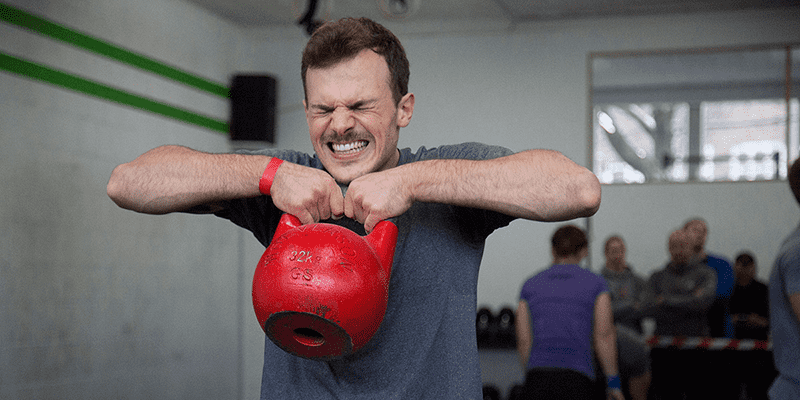
Kettlebell swings are a ballistic hip-hinge movement that generates posterior chain power through rapid hip extension. They are especially effective for developing rate of force development (RFD) in the glutes and hamstrings.
A study by Lake and Lauder (2012) showed that kettlebell swings significantly improve vertical jump height and posterior chain muscular power, largely due to their dynamic and repetitive nature. Unlike static lifts, swings allow for conditioning and strength adaptation simultaneously, offering a metabolic stimulus as well as neuromuscular training.
The movement requires strong lumbopelvic control, scapular stability, and rhythmic breathing—all elements that contribute to better posture and reduced spinal shear. The posterior chain’s role in deceleration during the eccentric phase of the swing further enhances athletic balance and control.
Barbell Rows
Upper Posterior Chain Development
While often considered a back or arm exercise, the barbell row targets the upper segment of the posterior chain, including the trapezius, rhomboids, rear deltoids, and erector spinae. A strong upper posterior chain is essential for posture, especially in athletes and lifters who perform frequent pressing or front-dominant movements.
EMG data from Andersen et al. (2014) confirms that horizontal pulling exercises such as barbell rows significantly activate the mid-back muscles responsible for scapular retraction and thoracic extension. This can counteract the postural effects of sitting, screen use, and anterior-chain training bias.
Rows also reinforce hip hinge stability, as maintaining posture under load for the duration of the set demands strong glutes and spinal control. The isometric work required to hold the hip hinge position builds endurance in the posterior chain, making it a dual-purpose movement.
Integrating Posterior Chain Exercises into a Program
Programming Guidelines
To fully benefit from posterior chain development, exercises should be distributed across different planes of motion, contraction types, and intensities. Incorporating both maximal strength (e.g., deadlifts, good mornings), hypertrophy (e.g., hip thrusts, barbell rows), and eccentric control (e.g., GHRs) ensures a comprehensive stimulus.
Posterior chain exercises should be performed 2–3 times per week with attention to technique and progressive overload. Movements involving spinal loading should be prioritized early in a session to minimize fatigue-induced breakdown in form.
Volume and Frequency
- Beginners: 2 sessions/week, 2–3 sets per exercise, 8–12 reps
- Intermediate: 2–3 sessions/week, 3–4 sets, varying between 6–10 reps
- Advanced: 3+ sessions/week, with a mix of heavy (3–6 reps), moderate (8–10 reps), and light (12–15 reps) loads
Periodization should include deload weeks to manage central nervous system fatigue, especially when heavy hip-hinge movements are performed frequently.
Postural and Performance Impacts
Improved posterior chain strength leads to better posture by balancing anterior-dominant movement patterns. It also translates into enhanced athletic performance, including sprint speed, jump height, and overall stability during compound lifts. Long-term benefits include reduced injury incidence, better spinal alignment, and enhanced neuromuscular control across various planes of motion.
Bibliography
Andersen, V., Fimland, M.S., Wiik, E., Skoglund, A. and Saeterbakken, A.H. (2014). Effects of grip width on muscle strength and activation in bench press. Journal of Strength and Conditioning Research, 28(1), pp.113-120.
Contreras, B., Cronin, J., Schoenfeld, B.J., Nates, R. and Sonmez, G.T. (2010). Are all hip extension exercises created equal? EMG analysis of barbell glute bridges vs hip thrusts. Journal of Strength and Conditioning Research, 24(3), pp.726-730.
Ebben, W.P., Fauth, M.L., Garceau, L.R. and Petushek, E.J. (2008). Electromyographic analysis of gluteus maximus, biceps femoris, and semitendinosus during exercise. Journal of Strength and Conditioning Research, 22(4), pp.1320–1324.
Escamilla, R.F., Francisco, A.C., Kayes, A.V., Speer, K.P. and Moorman, C.T. (2002). An electromyographic analysis of sumo and conventional style deadlifts. Medicine and Science in Sports and Exercise, 34(4), pp.682–688.
Fisher, J.P., Steele, J., Smith, D. and Bruce-Low, S. (2020). The evidence-based approach to strength training: A review of the scientific literature. Journal of Sports Sciences, 38(2), pp.201-215.
Lake, J.P. and Lauder, M.A. (2012). Kettlebell swing training improves maximal and explosive strength. Journal of Strength and Conditioning Research, 26(8), pp.2228–2233.
McAllister, M.J., Hammond, K.G., Schilling, B.K., Ferreria, L.C., Reed, J.P. and Weiss, L.W. (2014). Muscle activation during various hamstring exercises. Journal of Strength and Conditioning Research, 28(6), pp.1573–1580.
McGill, S.M. (2007). Low back disorders: Evidence-based prevention and rehabilitation. 2nd ed. Champaign, IL: Human Kinetics.
Vigotsky, A.D., Beardsley, C. and Contreras, B. (2016). EMG analysis of lower extremity muscles during bilateral vs. unilateral lower-body resistance exercises. Journal of Strength and Conditioning Research, 30(2), pp.566–571.