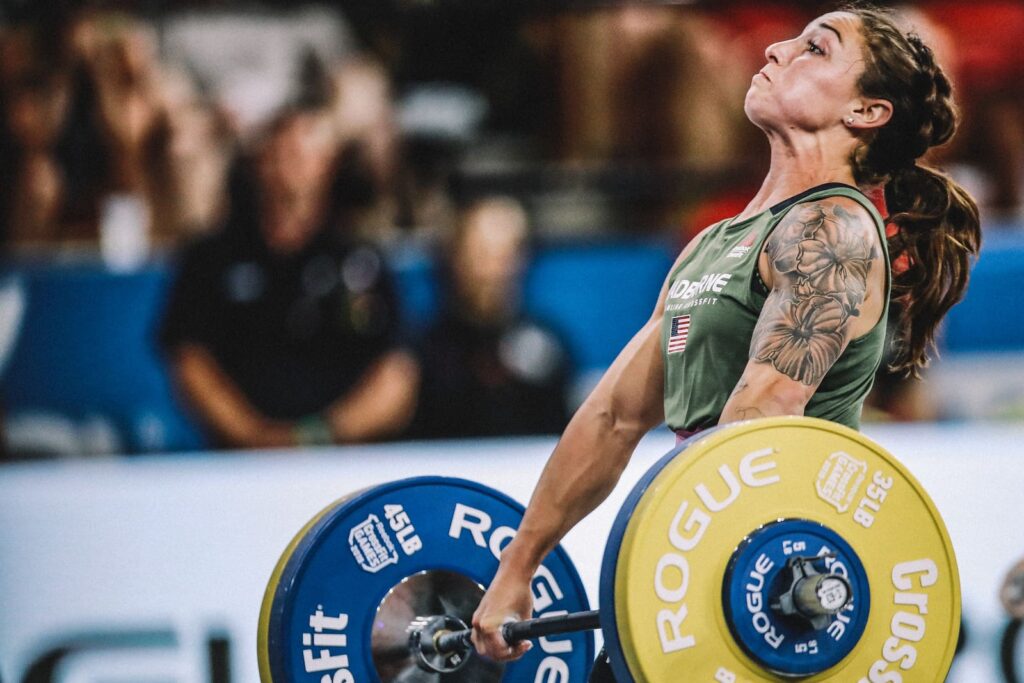
These workout tweaks that maximize muscle growth will help you to maximize results with minimum effort.
Building muscle isn’t just about lifting heavy weights—it’s about training smart. Small adjustments to your workouts can compound over time, significantly improving hypertrophy and strength outcomes.
Backed by exercise science, here are seven tiny but powerful tweaks you can make to maximize muscle growth.
1. Manipulate Tempo for More Time Under Tension
Workout Tweaks That Maximize Muscle Growth: Why Tempo Matters
The tempo of your lifts—the speed at which you raise and lower a weight—directly affects time under tension (TUT), a critical factor for hypertrophy. Increasing eccentric duration (the lowering phase) has been shown to enhance muscle protein synthesis and mechanical stress, both essential for growth.

Workout Tweaks That Maximize Muscle Growth: Scientific Evidence
A study by Schoenfeld et al. (2015) demonstrated that slowing down the eccentric phase to around 3–4 seconds led to significantly greater muscle gains compared to faster lifting, even with the same total training volume. The eccentric phase produces higher force per motor unit, stimulating adaptations that concentric-only lifting cannot fully achieve.
2. Prioritize Training Volume over Load Alone
Workout Tweaks That Maximize Muscle Growth: The Volume Equation
While lifting heavy is important, research consistently shows that total training volume (sets × reps × weight) is a stronger predictor of hypertrophy than intensity alone. Performing additional high-quality sets per muscle group can produce superior muscle gains compared to simply increasing the load.
Scientific Evidence
Schoenfeld, Ogborn, and Krieger (2016) conducted a meta-analysis revealing that higher weekly training volumes per muscle group (10+ sets) produced significantly greater hypertrophy compared to low-volume protocols (<5 sets). Volume serves as the main driver, provided fatigue is managed.
3. Train Muscles More Frequently

Workout Tweaks That Maximize Muscle Growth: Frequency vs. Recovery
Many lifters stick to a “bro split,” training each muscle once per week. However, muscles benefit from being trained more often. Protein synthesis rates return to baseline within 48 hours post-training, suggesting more frequent sessions can optimize growth.
Workout Tweaks That Maximize Muscle Growth: Scientific Evidence
Schoenfeld, Grgic, and Krieger (2019) found that training each muscle group twice per week resulted in greater hypertrophy than once-weekly protocols, when total volume was equated. This suggests spreading sets across multiple sessions may be more effective.
4. Push Close to Failure—but Not Beyond
The Proximity Principle
Training to failure has been debated for decades. The evidence suggests you don’t need to go to absolute failure on every set to maximize growth. Instead, working within 1–3 reps of failure ensures high motor unit recruitment without unnecessary fatigue.
Scientific Evidence
Helms et al. (2018) showed that training close to failure (within 2 reps in reserve) was equally effective for hypertrophy compared to training to failure, while reducing recovery demands. This balance allows for greater training frequency and volume sustainability.
5. Use a Mix of Rep Ranges
Beyond “Heavy for Size”
Hypertrophy is not restricted to heavy, low-rep training. Moderate and even higher rep ranges can effectively stimulate muscle growth as long as sets are performed near failure. Varying rep ranges also ensures different fiber types and metabolic pathways are stressed.
Workout Tweaks That Maximize Muscle Growth: Scientific Evidence
A study by Schoenfeld et al. (2017) found no significant difference in hypertrophy between groups training in low (3–5 reps), moderate (9–11 reps), or high (20–30 reps) rep ranges, provided all sets were taken close to failure. This supports a diverse approach to loading.
6. Control Rest Periods Strategically
Balancing Recovery and Stress
Rest periods between sets influence the balance between recovery and metabolic stress. Short rests (<60s) elevate metabolic stress, while longer rests (2–3 min) allow for heavier loads and higher volume. Both have their place depending on the goal of the session.
Workout Tweaks That Maximize Muscle Growth: Scientific Evidence
Schoenfeld et al. (2016) demonstrated that participants resting 3 minutes between sets experienced greater muscle growth compared to those resting 1 minute, due to the ability to maintain higher training volume. However, shorter rest can still be beneficial for accessory lifts and metabolic conditioning.
7. Optimize Exercise Order
The First-Set Advantage
Exercises performed earlier in a session generally receive greater neural drive and force output. Placing priority movements (e.g., squats, bench press) at the beginning of a workout ensures maximal quality and intensity, leading to greater adaptations.
Scientific Evidence
Simao et al. (2010) found that muscle groups trained earlier in a session showed greater hypertrophy than those trained later, even when total volume was equalized. Prioritization ensures consistent overload of lagging or target muscle groups.
[wpcode id=”229888″]Conclusion
Maximizing muscle growth is not about drastic overhauls, but about consistent application of small, science-backed strategies. By fine-tuning tempo, volume, frequency, proximity to failure, rep ranges, rest periods, and exercise order, you can accelerate your gains while minimizing wasted effort.
Workout Tweaks That Maximize Muscle Growth: Key Takeaways
| Tweak | Why It Works | Supporting Evidence |
|---|---|---|
| Manipulate tempo | Increases time under tension and eccentric stress | Schoenfeld et al. (2015) |
| Prioritize volume | Strongest predictor of hypertrophy | Schoenfeld, Ogborn & Krieger (2016) |
| Train more frequently | Protein synthesis resets within 48h | Schoenfeld, Grgic & Krieger (2019) |
| Train close to failure | Maximizes motor unit recruitment with less fatigue | Helms et al. (2018) |
| Use mixed rep ranges | Engages multiple fiber types | Schoenfeld et al. (2017) |
| Control rest periods | Longer rest maintains volume; short rest boosts stress | Schoenfeld et al. (2016) |
| Optimize exercise order | First exercises get maximal effort | Simao et al. (2010) |
Bibliography
- Helms, E.R., Solstad, T.R., Vigotsky, A.D., Krieger, J.W. and Schoenfeld, B.J., 2018. Reps in reserve: a flexible approach to resistance training. Strength & Conditioning Journal, 40(4), pp.46-54.
- Schoenfeld, B.J., 2015. The mechanisms of muscle hypertrophy and their application to resistance training. Journal of Strength and Conditioning Research, 29(11), pp.2857-2872.
- Schoenfeld, B.J., Grgic, J. and Krieger, J.W., 2019. How many times per week should a muscle be trained to maximize muscle hypertrophy? A systematic review and meta-analysis. Journal of Sports Sciences, 37(11), pp.1286-1295.
- Schoenfeld, B.J., Ogborn, D. and Krieger, J.W., 2016. Dose-response relationship between weekly resistance training volume and increases in muscle mass: A systematic review and meta-analysis. Journal of Sports Sciences, 34(24), pp.2359-2368.
- Schoenfeld, B.J., Ogborn, D., Contreras, B., Campbell, B.I., Wilson, J.M. and Krieger, J.W., 2016. Longer interset rest periods enhance muscle strength and hypertrophy in resistance-trained men. Journal of Strength and Conditioning Research, 30(7), pp.1805-1812.
- Schoenfeld, B.J., Peterson, M.D., Ogborn, D., Contreras, B. and Sonmez, G.T., 2015. Effects of low- vs. high-load resistance training on muscle strength and hypertrophy in well-trained men. Journal of Strength and Conditioning Research, 29(10), pp.2954-2963.
- Schoenfeld, B.J., Grgic, J., Ogborn, D. and Krieger, J.W., 2017. Strength and hypertrophy adaptations between low- vs. high-load resistance training: a systematic review and meta-analysis. Journal of Strength and Conditioning Research, 31(12), pp.3508-3523.
- Simao, R., Spineti, J., de Salles, B.F., Oliveira, L.F., Matta, T., Miranda, F., Miranda, H. and Kraemer, W.J., 2010. Influence of exercise order on maximum strength and muscle volume in nonlinear periodized resistance training. Journal of Strength and Conditioning Research, 24(11), pp.2962-2969.