Muscle imbalances are a common issue faced by athletes, bodybuilders, and casual gym-goers alike. These asymmetries not only hinder performance but also increase the risk of injury. Unilateral exercises—movements that target one side of the body at a time—are among the most effective strategies to correct these imbalances.
This article outlines seven of the most effective unilateral exercises supported by scientific research to help restore symmetry, boost strength, and enhance stability.
[wpcode id=”229888″]Why Muscle Imbalances Occur
Muscle imbalances typically arise due to overuse of one side of the body, poor posture, injury compensation, or improper training habits. Studies have shown that strength asymmetries greater than 15% can significantly increase the risk of injury, especially in the lower limbs (Impellizzeri et al., 2007). Imbalances may not always be visible but can manifest in joint pain, reduced range of motion, or poor performance during bilateral lifts.
Benefits of Unilateral Training
Unilateral training allows for:
- Isolated focus on weaker limbs
- Greater neuromuscular activation
- Improved core stabilization
- Enhanced balance and proprioception
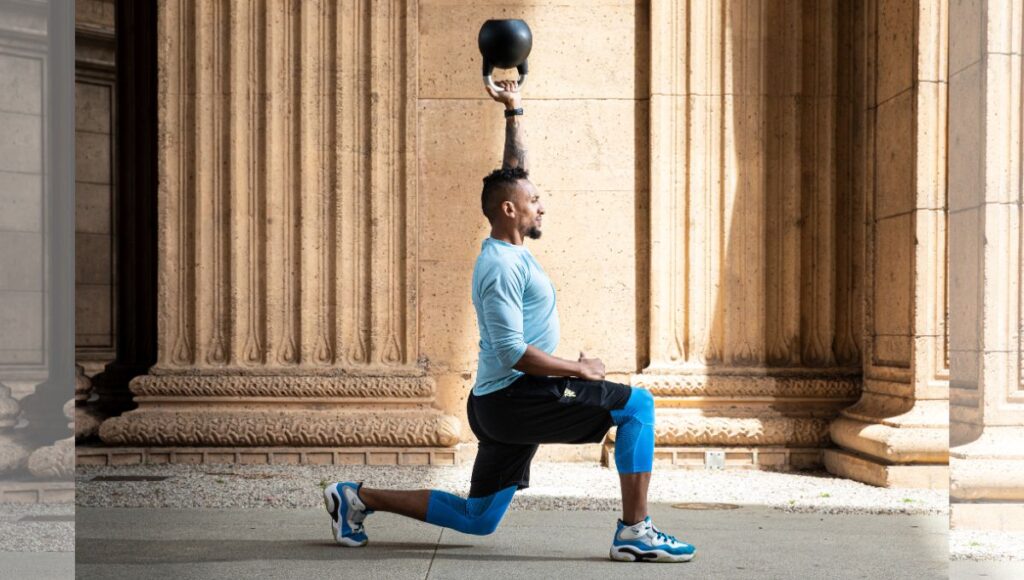
According to Behm and Sale (1993), unilateral training can correct strength discrepancies more efficiently than bilateral work due to the “bilateral deficit,” a phenomenon where the combined strength of both limbs working separately often exceeds that of both limbs working together.
1. Bulgarian Split Squat
Execution
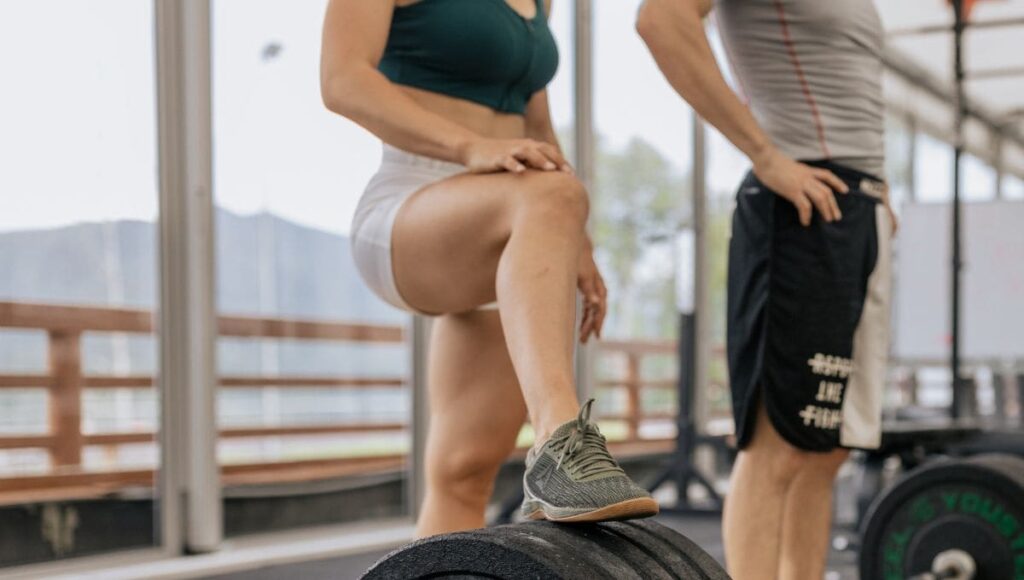
The Bulgarian Split Squat involves placing the rear foot on an elevated surface and performing a squat on the lead leg. The front thigh should ideally reach parallel to the floor while maintaining an upright torso.
Muscles Worked
- Quadriceps
- Glutes
- Hamstrings
- Core
Why It Works
This exercise places significant load on the front leg, promoting strength and stability in each limb independently. Research by McCurdy et al. (2005) revealed that the Bulgarian Split Squat results in greater unilateral leg strength gains compared to traditional squats.
Coaching Tips
- Maintain a neutral spine throughout
- Keep the front knee aligned with the foot
- Engage the glutes to stabilize the hip
2. Single-Leg Romanian Deadlift (RDL)
Execution
Stand on one leg, hinge at the hips while extending the non-working leg backward, and lower the torso until the hand or weight reaches mid-shin level.
Muscles Worked
- Hamstrings
- Glutes
- Lower back
- Core
Why It Works
Single-leg RDLs develop posterior chain strength, essential for hip stability and injury prevention. A study by Hibbs et al. (2008) emphasizes the role of posterior chain exercises in enhancing athletic performance and injury resilience.
Coaching Tips
- Keep the hips squared throughout the movement
- Avoid rounding the back
- Move in a slow and controlled manner
3. Single-Arm Dumbbell Bench Press
Execution
Lie on a bench and press a dumbbell with only one arm. The unbalanced load forces the core to engage actively to stabilize the torso.
Muscles Worked
- Pectorals
- Triceps
- Deltoids
- Core
Why It Works
Unilateral upper-body pressing highlights imbalances in pectoral strength and shoulder stability. A study by Saeterbakken and Fimland (2013) showed increased activation of the stabilizing muscles during unilateral pressing compared to bilateral pressing.
Coaching Tips
- Avoid arching the lower back
- Keep feet flat and engaged
- Focus on controlled movement to avoid torso rotation
4. Single-Arm Dumbbell Row
Execution
Place one knee and hand on a bench for support, pull a dumbbell towards your hip with the opposite arm.
Muscles Worked
- Latissimus dorsi
- Rhomboids
- Trapezius
- Biceps
Why It Works
This row variation targets the pulling muscles independently, reducing dominance from the stronger side. Research by Fenwick et al. (2009) found that unilateral rows significantly enhance scapular stabilization.
Coaching Tips
- Initiate the movement with the shoulder blade
- Avoid twisting the torso
- Keep the elbow close to the body
5. Step-Up with Dumbbells

Execution
Holding dumbbells, step onto a raised platform with one leg, drive through the heel, and bring the trailing leg up to a standing position.
Muscles Worked
- Quads
- Glutes
- Hamstrings
- Calves
Why It Works
Step-ups closely mimic functional movement patterns. According to Ebben and Blackard (2001), this exercise elicits high glute and quadriceps activation, helping correct leg strength discrepancies effectively.
Coaching Tips
- Step with full foot contact on the platform
- Avoid pushing off the back leg
- Control the descent for maximum activation
6. Pallof Press
Execution
Attach a resistance band or cable at chest height. Stand perpendicular to the anchor, hold the handle at the chest, and press it straight out, resisting the rotational force.
Muscles Worked
- Core (especially obliques)
- Shoulders
Why It Works
Though not a limb-dominant movement, the Pallof Press enhances core stability—a critical component in unilateral strength training. Studies (Willardson, 2007) have demonstrated its effectiveness in developing anti-rotational core strength, which in turn supports balanced movement mechanics.
Coaching Tips
- Maintain square hips and shoulders
- Don’t let the band pull you toward the anchor
- Engage the glutes for full-body tension
7. Single-Leg Glute Bridge

Execution
Lie on your back with one knee bent and the foot flat on the floor. Extend the opposite leg and drive through the grounded heel to lift your hips.
Muscles Worked
- Glutes
- Hamstrings
- Lower back
Why It Works
This exercise activates the glute max and medius, which are often underactive in one leg. Studies such as those by Distefano et al. (2009) recommend this exercise for improving pelvic stability and reducing the risk of lower-back and knee injuries.
Coaching Tips
- Squeeze the glute at the top of the movement
- Avoid overextending the lower back
- Maintain a straight line from shoulder to knee
How to Program These Exercises
Frequency and Volume
- Beginners: 2–3 times per week
- Intermediate/Advanced: 3–4 times per week, depending on recovery
- 3–4 sets of 8–12 reps per side
Progression Strategies
- Increase load gradually (dumbbells, kettlebells)
- Decrease rest time to enhance conditioning
- Use tempo training (e.g., 3 seconds eccentric) for greater time under tension
Combine with Bilateral Work
Use unilateral movements to identify and fix imbalances, but continue incorporating bilateral lifts (e.g., squats, deadlifts) for total-body strength. Alternating between these modes ensures balance, reduces injury risk, and maximizes hypertrophy.
Common Mistakes in Unilateral Training
- Neglecting Core Engagement: Lack of stability reduces movement quality and increases injury risk.
- Overloading Too Soon: Prioritize form and control before increasing resistance.
- Skipping the Weaker Side: Avoid the temptation to “go easy” on the underperforming limb.
- Poor Alignment: Allowing the knee to cave in or the hips to rotate diminishes the effectiveness of the exercise.
Final Thoughts
Muscle imbalances are not only common but correctable. These seven unilateral exercises address deficits in both strength and stability through scientifically supported methods. When implemented properly, they enhance muscular symmetry, improve athletic performance, and reduce injury potential. Consistent application, proper technique, and progressive overload are essential for seeing measurable results.
References
Behm, D.G. & Sale, D.G. (1993). Intended rather than actual movement velocity determines velocity-specific training response. Journal of Applied Physiology, 74(1), 359–368.
Distefano, L.J., Blackburn, J.T., Marshall, S.W. & Padua, D.A. (2009). Gluteal muscle activation during common therapeutic exercises. Journal of Orthopaedic & Sports Physical Therapy, 39(7), 532–540.
Ebben, W.P. & Blackard, D.O. (2001). Strength and conditioning practices of National Football League strength and conditioning coaches. Journal of Strength and Conditioning Research, 15(1), 48–58.
Fenwick, C.M., Brown, S.H. & McGill, S.M. (2009). Comparison of different rowing exercises: Trunk muscle activation and lumbar spine motion, load, and stiffness. Journal of Strength and Conditioning Research, 23(5), 1408–1417.
Hibbs, A.E., Thompson, K.G., French, D., Wrigley, A. & Spears, I. (2008). Optimizing performance by improving core stability and core strength. Sports Medicine, 38(12), 995–1008.
Impellizzeri, F.M., Rampinini, E., Maffiuletti, N. & Marcora, S.M. (2007). A vertical jump force test for assessing bilateral strength asymmetry in athletes. Medicine and Science in Sports and Exercise, 39(11), 2044–2050.
McCurdy, K., Langford, G., Cline, A.L., Doscher, M. & Hoff, R. (2005). The reliability of 1- and 3RM tests of unilateral strength in trained and untrained men and women. Journal of Sports Science and Medicine, 4(2), 190–196.
Saeterbakken, A.H. & Fimland, M.S. (2013). Muscle force output and electromyographic activity in squats with various unstable surfaces. Journal of Strength and Conditioning Research, 27(1), 130–136.
Willardson, J.M. (2007). Core stability training: Applications to sports conditioning programs. Journal of Strength and Conditioning Research, 21(3), 979–985.