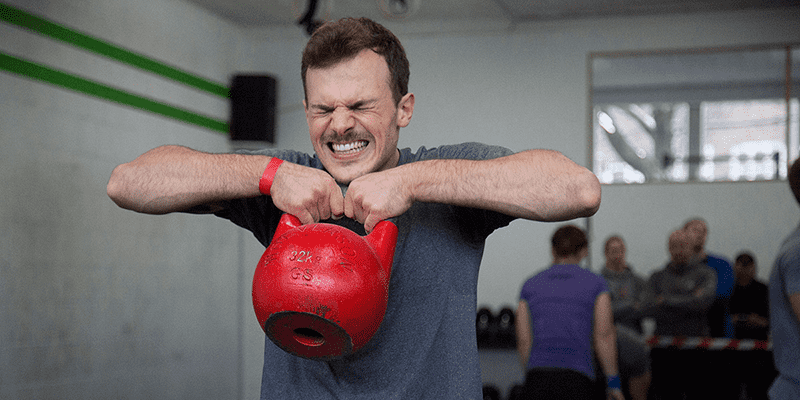
The mind-muscle connection (MMC) refers to the ability to consciously engage and contract a specific muscle during an exercise. Rather than simply moving a weight from point A to point B, MMC ensures the targeted muscle does the majority of the work, leading to superior muscle activation and hypertrophy.
Research supports this concept, showing that increased internal focus on the target muscle leads to greater muscle fibre recruitment and enhanced growth (Calatayud et al., 2016).
1. Use Internal Cueing
Internal cueing means focusing on the muscle being worked rather than the movement itself. Studies have found that directing attention to the muscle enhances activation. Wulf et al. (2010) demonstrated that athletes who concentrated on squeezing their muscles during resistance training activated those muscles more effectively than those focusing on the external load. To implement this, visualise the muscle contracting and mentally command it to engage before executing each repetition.
2. Slow Down Your Reps
Tempo plays a crucial role in strengthening MMC. Slower, controlled reps increase time under tension and force the brain to stay engaged with the movement. A study by Schoenfeld et al. (2015) revealed that increasing eccentric time during lifts resulted in greater muscle growth. Instead of rushing through a movement, count three to four seconds during the eccentric phase and focus on feeling every fibre stretch and contract.
3. Use Pre-Exhaustion Techniques
Pre-exhaustion techniques involve isolating a muscle before performing a compound movement to enhance its activation. Research by Augustsson et al. (2003) found that pre-fatiguing a muscle with an isolation exercise increased its involvement in subsequent compound movements. For example, performing a set of pec flyes before bench pressing ensures the pectorals are fully engaged, leading to better chest activation.
4. Perform Isometric Holds
Isometric holds force you to maintain tension in a muscle, reinforcing the neural pathways responsible for MMC. Studies indicate that isometric contractions increase motor unit recruitment and enhance neuromuscular efficiency (Babault et al., 2006). Holding the peak contraction for three to five seconds during exercises like bicep curls or lat pulldowns strengthens the mind-muscle link, making it easier to engage the targeted muscle during dynamic movements.
5. Train Unilaterally
Unilateral training—working one limb at a time—helps eliminate imbalances and improves muscle activation. Research by Behm et al. (2002) suggests that single-limb training increases neuromuscular coordination, leading to stronger MMC. Exercises such as single-arm cable rows, Bulgarian split squats, and one-arm lat pulldowns allow for a greater focus on each muscle, enhancing activation and control.

6. Reduce the Load and Increase Reps
Lifting excessively heavy weights often shifts focus to completing the lift rather than engaging the target muscle. Studies by Campos et al. (2002) show that moderate loads with higher reps (8-12 range) promote better hypertrophy and muscle control. Using slightly lighter weights with strict form and a deliberate focus on the contraction enhances MMC, leading to more effective muscle growth.
7. Implement Resistance Bands for Feedback
Resistance bands provide variable resistance and constant tension, making it easier to feel muscle engagement throughout the range of motion. Research by Wallace et al. (2006) found that band resistance training improved muscle activation and proprioception. Using bands in warm-ups or as part of compound exercises ensures consistent tension and reinforces the mind-muscle link.
Conclusion
The mind-muscle connection is a critical component of muscle hypertrophy. By implementing techniques such as internal cueing, slower repetitions, pre-exhaustion, isometric holds, unilateral training, moderate loading, and resistance bands, you can significantly enhance muscle activation and accelerate muscle growth. Scientific research supports these methods, proving that refining your neurological engagement with muscles leads to superior gains in both size and strength.
Key Takeaways
| Method | Benefit |
|---|---|
| Internal Cueing | Enhances muscle activation through conscious focus |
| Slow Down Reps | Increases time under tension, leading to greater hypertrophy |
| Pre-Exhaustion | Ensures target muscle is fully engaged during compound lifts |
| Isometric Holds | Strengthens neuromuscular pathways and improves control |
| Train Unilaterally | Eliminates imbalances and enhances individual muscle activation |
| Reduce Load, Increase Reps | Promotes better control and focus on contractions |
| Use Resistance Bands | Provides consistent tension and improves proprioception |