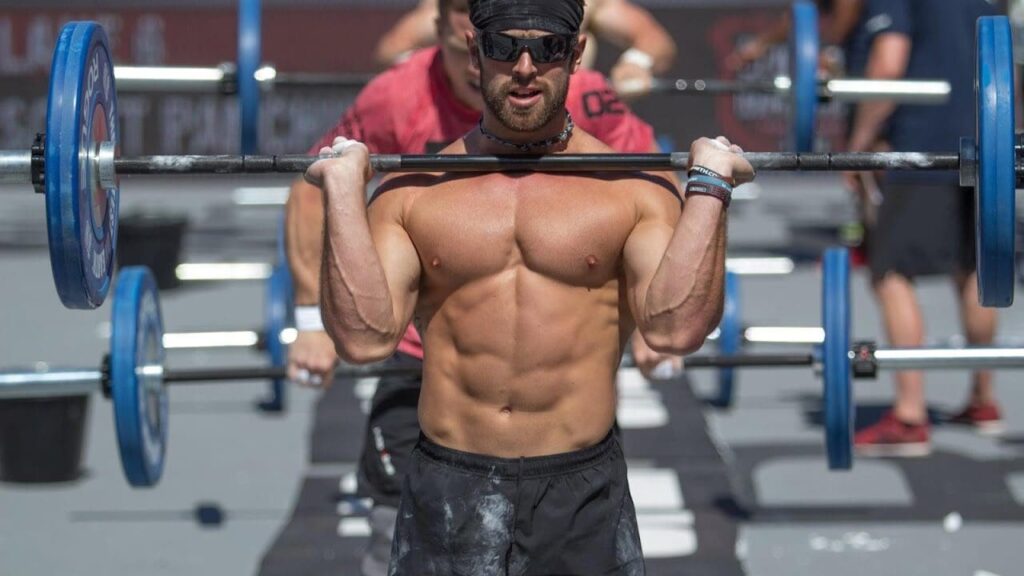
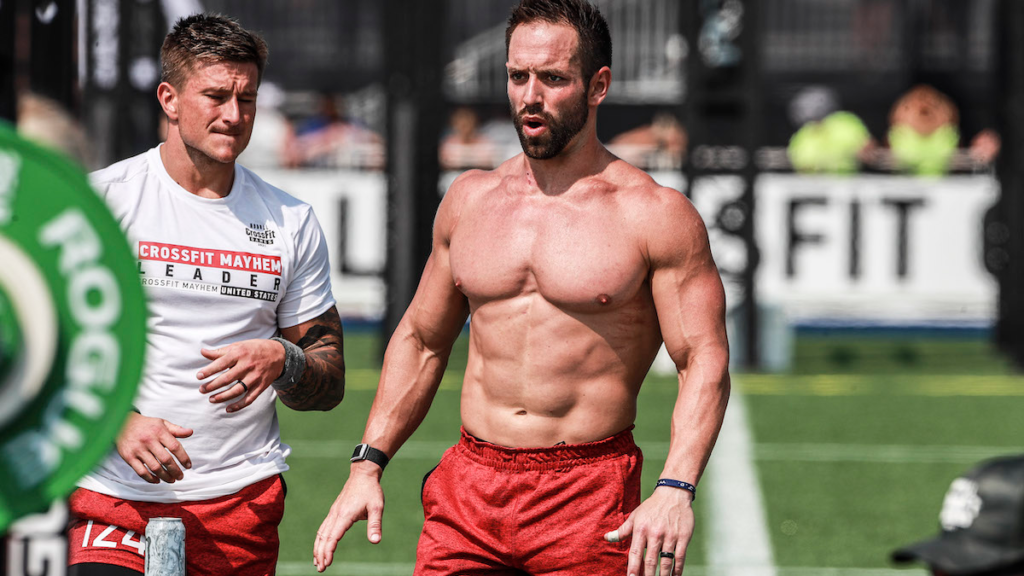
Before diving into the actionable tips, it’s essential to understand that looking bigger doesn’t always mean being bigger. The human eye is easily tricked by proportion, posture, and visual emphasis. Bodybuilders, fitness models, and athletes often use these principles to their advantage in competition and photography.
By optimizing posture, muscle engagement, and strategic training, you can significantly enhance your upper body’s perceived size, even without gaining new muscle tissue immediately.
1. Improve Your Posture
Good posture instantly increases upper body presence. Standing tall with shoulders pulled back and chest up opens up the thoracic cavity and stretches the spine, giving the illusion of a wider, more developed torso. A 2014 study in the journal BioMed Research International found that spinal alignment directly influences the perception of muscle symmetry and upper body mass.

Slouching not only reduces your apparent height and size but also restricts shoulder width visually. Incorporating daily mobility routines that emphasize thoracic extension, scapular retraction, and cervical alignment can make you look significantly bigger in minutes.
Action Plan
- Perform wall angels and thoracic bridges daily.
- Stretch tight chest muscles and strengthen the mid-trapezius and rhomboids.
- Practice standing and walking tall throughout the day.
2. Pump Up the Right Muscles
Pre-event muscle pumping has long been a staple for physique athletes and models. The goal is to drive blood into key upper body muscles such as the deltoids, upper chest, and lats. A muscle filled with blood looks rounder, fuller, and more prominent.
The “muscle pump” effect, explained by increased sarcoplasmic fluid, leads to temporary hypertrophy. Research published in Journal of Strength and Conditioning Research (2013) confirms that high-rep, low-rest training can cause significant transient increases in muscle volume due to cellular swelling.
Action Plan
- Perform 3 sets of 15-20 reps of lateral raises, incline push-ups, and band pull-aparts.
- Rest no more than 30 seconds between sets.
- Finish with isometric holds to prolong the pump.
3. Focus on Shoulder Width
Broad shoulders are a hallmark of a dominant upper body. The deltoids, particularly the lateral heads, are responsible for adding width. Emphasizing these muscles creates the illusion of a larger upper torso relative to the waist.
A study in European Journal of Applied Physiology (2010) found that deltoid activation peaks during exercises like overhead presses and lateral raises, making them essential in any width-focused routine.
Action Plan
- Prioritize lateral raises with strict form.
- Use upright rows and Arnold presses to target all heads of the deltoid.
- Maintain a narrow waist through cardio and abdominal conditioning to enhance the shoulder-to-waist ratio.
4. Target the Upper Chest
A flat or underdeveloped upper chest creates a drooping look, reducing visual mass. Building the clavicular portion of the pectoralis major elevates the chest line and adds dimension to the torso.
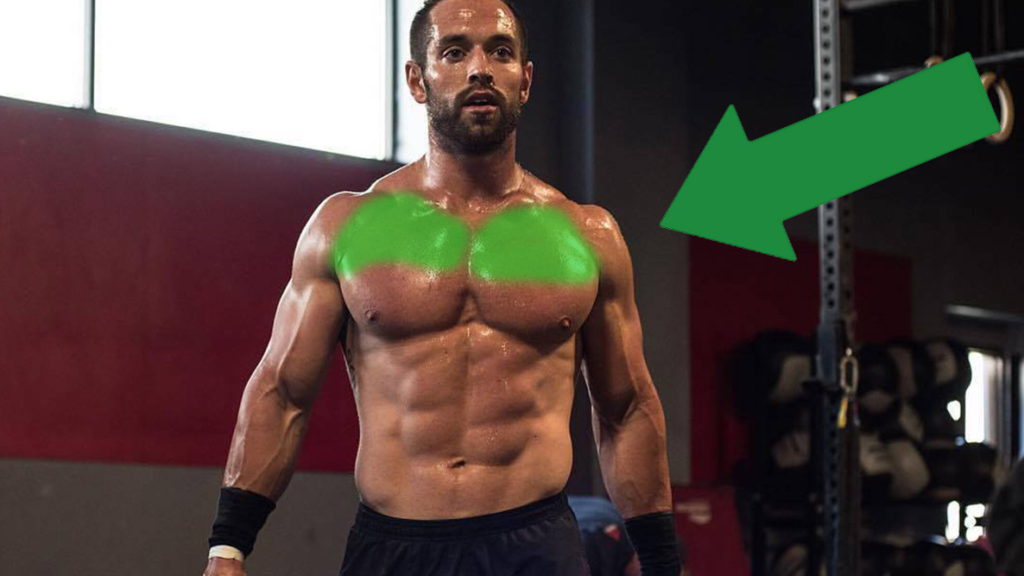
Electromyographic (EMG) analysis conducted in a 2012 study published in Journal of Sports Science & Medicine confirmed that incline pressing angles above 30 degrees significantly increase upper chest activation.
Action Plan
- Perform incline bench presses and incline dumbbell flyes.
- Use cables to maintain constant tension during incline chest movements.
- Focus on the mind-muscle connection to maximize fiber recruitment.
5. Enhance Lat Flare
A wide latissimus dorsi creates the V-taper—a defining trait of a powerful upper body. The greater the spread of the lats, the more dominant the torso appears. This can be achieved through both long-term hypertrophy and acute muscle engagement.
A 2015 study in Journal of Human Kinetics identified that lat pulldowns with a moderate grip activate more fibers in the lats than narrow or excessively wide grips.
Action Plan
- Train lats using pull-ups, lat pulldowns, and straight-arm pulldowns.
- Practice flaring your lats in front of a mirror for better neuromuscular control.
- Engage your lats during posture correction for added width.
6. Taper the Waist
The narrower the waist, the larger the upper body appears by comparison. This illusion is pivotal in competitive bodybuilding. Even if your shoulders and chest remain the same, reducing waist circumference by a few inches drastically enhances upper body proportions.
A 2011 meta-analysis in Obesity Reviews highlighted that waist circumference is not only a key health metric but also a determinant in body attractiveness and perceived athleticism.
Action Plan
- Incorporate planks, vacuum exercises, and ab rollouts to build a tighter core.
- Reduce bloating by minimizing sodium and simple carbohydrate intake before visual events.
- Wear compression garments under clothing to streamline the waist.
7. Optimize Clothing Fit and Style
Clothing can dramatically influence how your physique is perceived. Wearing garments that taper at the waist and fit snugly around the shoulders and chest can exaggerate your V-taper.
Dark colors on the torso and lighter tones on the lower body also draw attention upward. Structured seams, shoulder pads, and vertical lines enhance visual height and width.
Action Plan
- Choose fitted shirts with raglan sleeves or stretch fabric.
- Avoid oversized or boxy clothing that hides your shape.
- Use layering (like fitted blazers) to build upper body depth.
8. Engage in Strategic Pre-Event Conditioning
Short-term water and carbohydrate manipulation can produce a drier, fuller look, enhancing muscle definition and size. Bodybuilders use this technique before competition to appear more muscular on stage.
A study in International Journal of Sport Nutrition and Exercise Metabolism (2017) observed that increasing carbohydrate intake while reducing water moderately can maximize glycogen storage and vascularity.
Action Plan
- Consume 6-10g of carbohydrates per kg of body weight 24-36 hours prior to your appearance.
- Slightly reduce water intake the night before, but do not dehydrate.
- Add a small amount of sodium pre-event to boost vascularity.
Bibliography
Andersen, L.L., Tufekovic, G., Zebis, M.K., and Crameri, R.M., 2010. The effect of resistance training on muscle activation. European Journal of Applied Physiology, 109(4), pp.719-728.
Gentil, P., Fischer, B., Martorelli, A.S., Lima, R.M., and Bottaro, M., 2015. Effects of grip width on muscle activation in lat pulldown. Journal of Human Kinetics, 44, pp.37-43.
Goto, K., Ishii, N., Kizuka, T., and Takamatsu, K., 2013. The impact of metabolic stress on muscle hypertrophy and strength. Journal of Strength and Conditioning Research, 27(12), pp.3249-3258.
Kraemer, W.J., Fleck, S.J., and Deschenes, M.R., 2012. Exercise Physiology: Integrating Theory and Application. Philadelphia: Lippincott Williams & Wilkins.
McAllister, M.J., and Hammond, K.G., 2017. Glycogen supercompensation and its effects on performance and body composition. International Journal of Sport Nutrition and Exercise Metabolism, 27(3), pp.219-227.
Park, S.Y., Yoo, W.G., and Kim, M.H., 2014. The effect of thoracic extension exercise on muscle symmetry and spinal posture. BioMed Research International, 2014, Article ID 573128.
Trexler, E.T., Smith-Ryan, A.E., and Norton, L.E., 2014. Strategies to manipulate body water for competitive athletes. Journal of Sports Science and Medicine, 13(1), pp.240-246.
Valentine, K., and Green, C., 2011. Waist circumference as a predictor of physical attractiveness. Obesity Reviews, 12(6), pp.468-475.
Welsch, E.A., Bird, M., and Mayhew, J.L., 2012. Electromyographic activity of the pectoralis major and deltoid during incline bench pressing. Journal of Sports Science & Medicine, 11(3), pp.510-516.