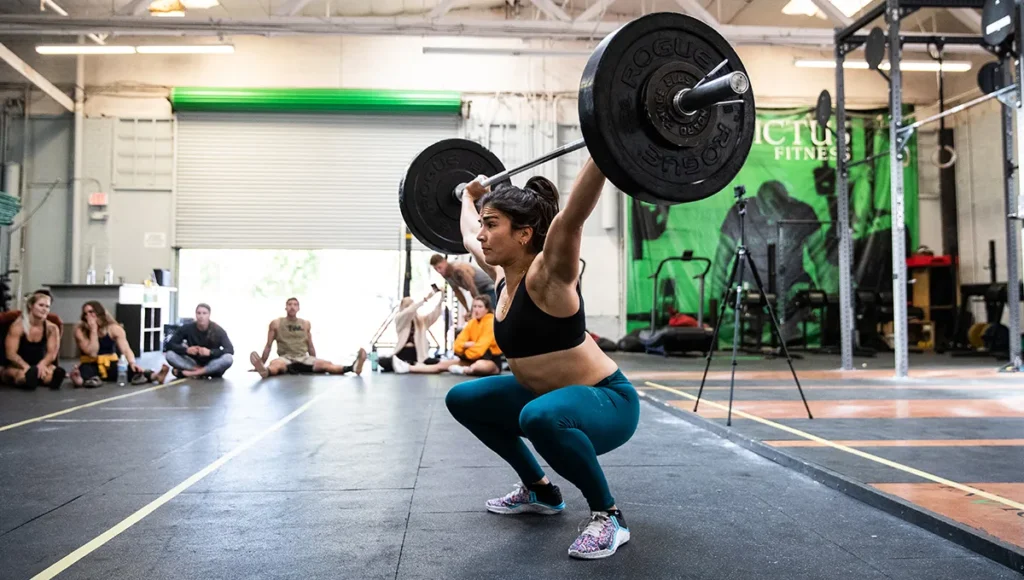
After pushing hard on a workout, probably the last few reps got sloppy and maybe it even left you vulnerable to injury. Follow this interval weight training method to increase your cardio and strength and not sacrifice the quality of your reps.
This interval weight training was designed by Marcus Filly, a CrossFit athlete that has developed a form of training that combines CrossFit style workouts with his method of “Functional Bodybuilding.”


In less than an hour, you will have a warm-up with a purpose, a strength training with high threshold aerobic work that will not burn you out, and a finisher to work on knee bulletproofing.
Watch an Interval Weight Training Session with Marcus Filly
Everything is also scalable and can be regressed to whatever fitness level you are at the moment. Take a lighter load or choose a less complex movement. Instead of the thruster, you can do a kettlebell squat. Instead of the deficit deadlift, you may do a normal deadlift or good morning, for example.
Warm-up:
3 sets of:
- 1 minute on bike
- 10 seated dumbbell good morning
- 10 Poliquin step-ups/leg
Adding a bit of weight within your warm-up will help you jump right into the next portion without needing to do too many warm-up sets once you transition into your interval weight training.
Workout 1 – Anterior Chain Emphasis
3 sets of:
- 6 cyclist front squats
- 12 kettlebell thrusters
- 90 seconds on bike
- Rest 2 minutes
The cyclist front squats are done by elevating your heels, which will emphasize the anterior chain of the legs.
If you pace it right, after the last set, you should feel like you do not want to do another one, but before that, you should feel like you can do one more set.
Your quads should be on fire by the end of this workout.

During the rest period, you can continue to move slowly your legs on the bike to clear the lactic acid. “Laying down now is not the move. Keep active,” Marcus Filly says.
Workout 2 – Posterior Chain Emphasis
3 sets of:
- 6 deficit barbell deadlift
- 12 dual kettlebell deadlift
- 300 metres on assault air runner
- Rest 2 minutes
The added range of motion in the deficit deadlift helps you to work your end range strength, and flexibility while also getting a solid strength stimulus.
Doing the same movement in the second exercise, but with a different load and a different range of motion, it helps target different parts of the posterior chain.
Hamstrings should get hot at the end of the workout.
Workout 3 – Strength Balance Finisher
3 sets of:
- Nordic Hamstring curls
- Reverse Nordics
“I never like to end a workout at max intensity. The brain needs to slow down and consolidate some of the motor outputs with slowing down and controlling some exercises.”
This is a finisher that works a joint-specific balance from front to back and it bulletproofs your knees.

Related: How to Build Explosive Power for Weightlifting and Functional Fitness
Why Should You Improve Your Cardio and Strength?
Improving one’s cardiovascular (cardio) and strength capacities holds paramount significance for overall health and wellbeing. Cardiovascular fitness, encompassing activities that elevate the heart rate, plays a crucial role in enhancing the efficiency of the heart, lungs, and vascular system. Engaging in regular cardio exercises, such as jogging, cycling, or swimming, can significantly boost the heart’s ability to pump blood more effectively, thereby supplying oxygen and vital nutrients to various body tissues. This enhancement in circulatory efficiency not only elevates one’s stamina and endurance but also contributes to the reduction of risks associated with heart diseases, hypertension, and type 2 diabetes.
On the other hand, strength training, which involves exercises designed to improve muscle endurance and power, is equally vital. By engaging in resistance training or weightlifting, individuals can foster muscle growth, improve bone density, and enhance joint flexibility. This form of exercise is instrumental in counteracting the loss of muscle mass and bone density that naturally occurs as one ages. Additionally, strength training has been linked to numerous health benefits, including improved metabolic rate, better glucose regulation, and a reduction in the risk of chronic conditions such as obesity, arthritis, and back pain.

The synergy between cardio and strength training manifests in numerous ways, contributing to a holistic approach to fitness. While cardio exercises enhance endurance and promote heart health, strength training builds muscle and bone resilience, forming a comprehensive fitness regimen. This balanced approach not only aids in achieving a more toned and robust physique but also ensures a higher level of functional fitness, enabling individuals to perform daily activities with greater ease and reduced risk of injury.
Moreover, the benefits of improving cardio and strength extend beyond physical health, encompassing mental health as well. Regular engagement in these forms of exercise has been shown to alleviate symptoms of depression and anxiety, enhance cognitive function, and boost self-esteem and resilience. In essence, advancing one’s cardio and strength capacities is a cornerstone of maintaining and enhancing overall quality of life, underpinning the notion that a sound mind resides in a sound body.
Try This Brutal 6 Minute Leg Workout Created By a Top Fitness Coach