When it comes to sculpting your chest, many people turn to the good old bench press. The cable crossover is often overlooked, although it is a great exercise to strengthen your entire chest and has a few perks that the bench press does not.
The cable crossover might be just what you need if you don’t enjoy laying down on the bench and pressing plates, or dumbbells, up and down.


Find out all you need to know about the cable crossover.
How To Do the Cable Crossover
You will need a cable machine to be able to perform the cable crossover. There are three different ways to do the exercise, depending on how high (or low) you put the handles. Depending on where you put the handle, it also targets different muscles on your chest.
Regardless of which position the handles are placed, the movement pattern is the same for all three exercises:
- Standing up, grab the handles, one in each hand.
- Take one step forward so the weights in the cable machine slightly come out of the stack.
- Cables should be stretched and you should feel the weights pushing back your hands.
- Keep your back straight at all times during the exercise. Put one foot ahead of the other with the knee bent to help you maintain balance while performing the movement. This is the initial position.
- Pull your hands in front of your body in an arch shape. Pull hands down if you put the handles in a high position, pull the hands in front of your chest if the handles are shoulder height, or pull the hands up if the handles were firstly placed low.
- Squeeze your chest muscles while bringing the hands to nearly touching each other.
- In a controlled manner, slowly bring your arms to the initial position.
- That is one rep.
Muscles Worked
As stated before, the cable crossover can have three different starting points, making it three distinctive exercises, although they all target your chest.
- Upper chest (handles in a low position)
- Middle chest (handles in mid-position, usually shoulder height)
- Lower chest (handles in a high position, usually above the head)
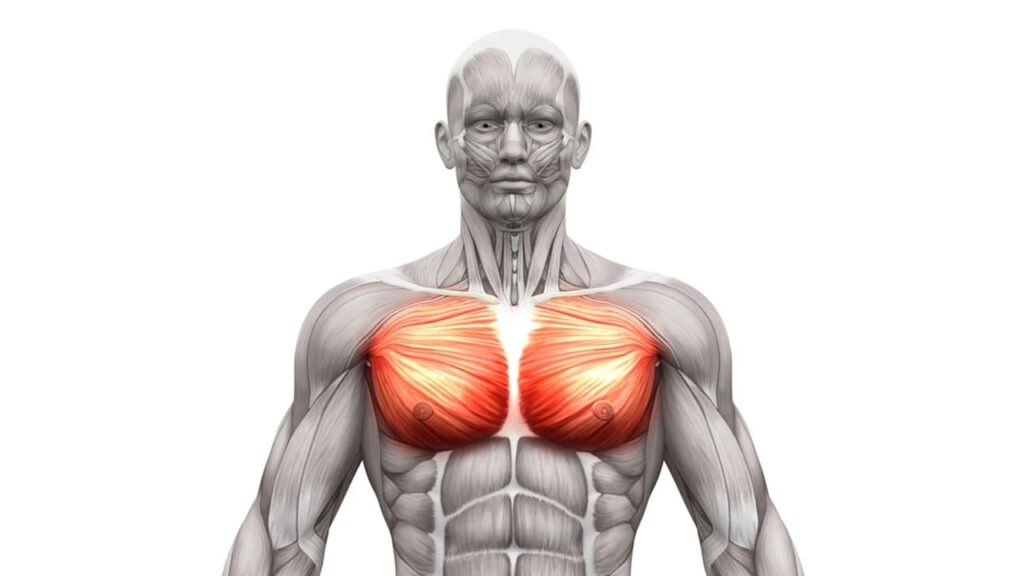
Although minimal, the cable crossover will also engage other areas of your chest, your back and shoulders: pecs minor, rhomboids, levator scapulae, anterior delts, and latissimus dorsi.
Mistakes to Avoid
There are a few mistakes easy to do, but luckily easy to avoid as well.
- Elbows moving in and out
As with most chest exercises, the elbows should be locked in and not bend at any time during the movement to activate properly your chest muscles. In that way, you will maintain the arch movement pattern the exercise requires. This leads us to mistake number 2.
- Pushing the shoulders
The hands should almost touch each other in front of your body, but not close to you, at the end of the movement. By moving your elbows or pushing through your shoulders, you will refrain your chest muscles to work as much as they should in this exercise and steer away from the focus of the cable crossover.
- Swingin weights too fast
This is not a competition to finish a precise number of reps in the fastest time possible. Control your tempo on the eccentric and concentric phases of the movement.
Who Should Do the Cable Crossover
To be honest, anyone can and should add the cable crossover to their training routine.
However, the exercise is an isolation move, meaning that it targets one specific group muscle, instead of a group of different muscles.
For that reason, the cable crossover is commonly seen among bodybuilders or people who are working out for aesthetics purposes and get a bigger chest.
If you have a shoulder injury, however, do not attempt to do the cable crossover as it provides less support to the rotator cuff.
Cable Crossover vs Bench Press
The bench press will always be regarded as the number one exercise to build your chest. In a study conducted by a team of researchers from the University of Wisconsin, the bench press was regarded as the best exercise to activate the pectoralis major, with the cable crossover coming closely in 3rd position.
So why choose the cable crossover over the bench press?
Firstly, if you are looking for aesthetics, then the cable crossover will get you there faster.
Second, the cable crossover also offers the chance for you to hit all levels of your chest without much hassle. By simply moving the handles upwards or downwards, you will be hitting your mid, upper or lower chest in no time.
In contrast, the bench press is a great compound movement that will also make you work your triceps and shoulders, but then again to activate your upper chest you need to incline your bench, and to get your lower chest pumped up you need to decline your bench, which can be annoying and time-consuming.
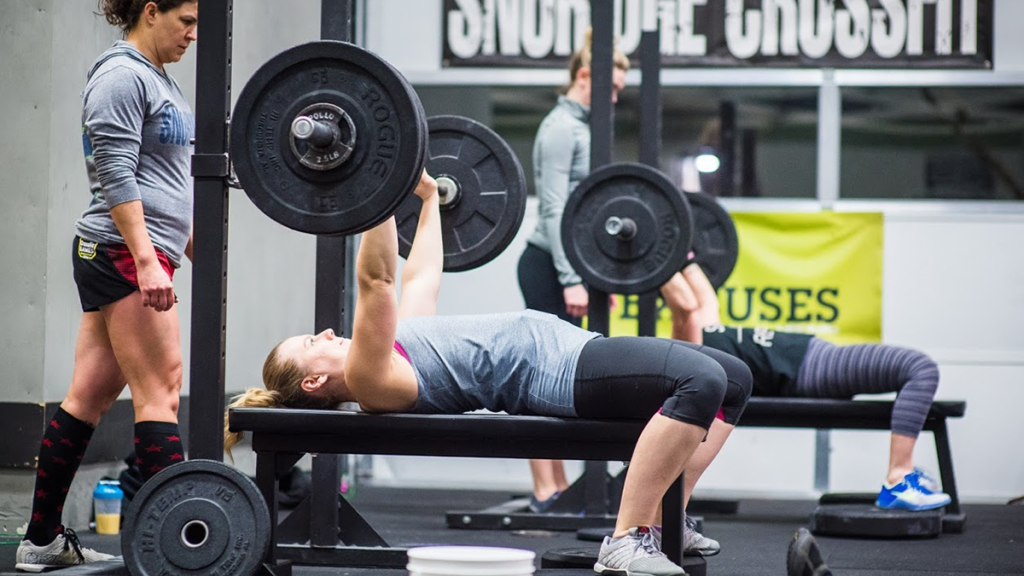
Being a cable machine exercise, the cable crossover also stretches the pecs from the start of the position and maintains the tension throughout the movement, which the bench press does not.
In a similar way, you may also increase the amount of weight you lift by simply adding more plates to the cable crossover, just like with a traditional bench press.
Overall, it is simply a matter of choice, availability (as most people find it hard to come across an empty cable machine) and time constraints.
How Many Reps and How Much Weight
As the cable crossover is an isolation move, chances are you will be doing this exercise to grow a bigger chest. To get to that, you need to work at a hypertrophy rep scheme level.
A good rule is to keep reps between 6-12 to develop muscle growth with weights that are challenging enough for you.
One of the best workouts to do with the cable crossover is the ladder.
Cable Crossover Ladder Workout
Pick a weight that you are able to do between 8-12 reps and stick to it the entire workout.
- Start with the handles at the lowest position in the cable machine.
- Start with incline cable crossovers until you reach failure.
- Rest a maximum of 15 seconds, enough time for you to move the handles up one notch.
- Repeat the exercise, pulling your hands in front of you, until failure.
- Move handles up another notch.
- Repeat the process until the handles reach the highest point in the cable machine and you are performing the decline cable crossover.
This exercise does not take much time and it works tirelessly your chest muscles.
Read More: The Best Science-Based Chest Workout for Mass and Symmetry
FAQs
What is the cable crossover exercise?
The cable crossover is a strength training exercise that targets the chest muscles. It uses a cable machine to perform movements that engage the upper, middle, and lower parts of the chest.
How do you perform the cable crossover?
To perform the cable crossover:Set the cable handles to the desired height (low, mid, or high).
Stand up, grab the handles, and take a step forward.
Keep your back straight and one foot ahead of the other for balance.
Pull your hands in front of your body in an arch shape, squeezing your chest muscles.
Slowly return your arms to the starting position.
What muscles does the cable crossover work?
The cable crossover primarily targets the chest muscles, including the upper chest (handles low), middle chest (handles mid-height), and lower chest (handles high). It also engages the pecs minor, rhomboids, levator scapulae, anterior delts, and latissimus dorsi.
What are the benefits of the cable crossover?
Benefits include targeted chest muscle engagement, continuous tension throughout the exercise, and the ability to easily adjust for different parts of the chest. It is also a good alternative for those who prefer not to use a bench press.
Who should do the cable crossover?
Anyone can add the cable crossover to their training routine. However, it is especially beneficial for bodybuilders or those aiming to improve chest aesthetics. It is not recommended for individuals with shoulder injuries.
What are common mistakes to avoid when doing the cable crossover?
Common mistakes include:Moving elbows in and out – keep elbows locked to maintain the correct movement pattern.
Pushing through the shoulders – ensure the hands nearly touch in front of your body without moving elbows or shoulders.
Swinging weights too fast – control the tempo during both the eccentric and concentric phases.
How does the cable crossover compare to the bench press?
The bench press is regarded as the top exercise for activating the pectoralis major and is a compound movement that also works the triceps and shoulders. The cable crossover, however, is better for aesthetics, offering the ability to target different parts of the chest without changing equipment settings extensively. It maintains tension on the pecs throughout the movement.
How many reps and how much weight should you use for the cable crossover?
For muscle growth, aim for 6-12 reps per set with challenging weights. One effective workout method is the ladder workout, where you start with the handles at the lowest position, perform incline cable crossovers to failure, move the handles up one notch, and repeat until reaching the highest position.
Why choose the cable crossover over the bench press?
The cable crossover allows for targeted chest workouts without needing to adjust the bench position. It maintains continuous tension on the pecs, is less time-consuming, and is beneficial for aesthetic goals.
What is the Cable Crossover Ladder Workout?
The ladder workout involves:Picking a weight suitable for 8-12 reps.
Starting with handles at the lowest position for incline cable crossovers.
Moving handles up one notch after reaching failure and resting for 15 seconds.
Repeating until reaching the highest point for decline cable crossovers.