Do you know what is the ultimate cheat code for muscle growth? Then keep scrolling to find out.
And we are not going to beat around the bush for too long. The buzz around partial reps is hard to ignore. From gym enthusiasts to seasoned bodybuilders, everyone seems to be incorporating them into their training routines. However, the key to harnessing their benefits lies in understanding the nuances of their execution. And the person who we are basing the info for this article is none other than Jeff Cavaliere.


Jeff Cavaliere is a fitness trainer, physical therapist, and the creator of the popular fitness YouTube channel called ATHLEAN-X. He is known for his expertise in strength training, conditioning, and sports medicine. Jeff Cavaliere served as the Head Physical Therapist and Assistant Strength Coach for the New York Mets in Major League Baseball from 2006 to 2009.
Contrary to popular belief, partial reps are not a new phenomenon. Icons like CT Fletcher and other successful bodybuilders have been integrating them into their training methodologies for years.

The crucial aspect, however, is not haphazardly incorporating partial reps but understanding the specific place and purpose of each application.
See more below.
5 Steps to Build a Perfect Male Physique
The Ultimate Cheat Code for Muscle Growth
If you find yourself unsure about what a partial actually entails, fear not – Cavaliere uses the lat pulldown as an example to dissect the variations.
Partial repetitions can occur at different points in the range of motion. A lengthened partial, for instance, involves performing reps at the top, in the elongated or stretched position. On the other hand, mid-range partials occur in the middle part of the range of motion, while contracted partials involve taking the bar all the way down and repeating strong contractions. The focus here will be on lengthened partials, as they have garnered significant research support.
Research indicates that lengthened partials, particularly in the stretched position, create muscle hypertrophy and growth. The stretch-induced eccentric tension in this phase, coupled with prolonged time under tension, becomes a potent combination for driving muscle gains. Now, the excitement may have set in, and you’re eager to incorporate partials into your routine. The question is, how do you implement them effectively?
There are three options to consider. Firstly, you can choose to perform partials every rep of the set, ensuring that each repetition involves a partial movement. Secondly, integrated partials involve alternating between full-range-of-motion reps and partial reps, commonly known as one-and-a-half reps. Lastly, you can opt for full-range-of-motion repetitions until failure, followed by intensifying the set with partial reps – a method favoured by many.
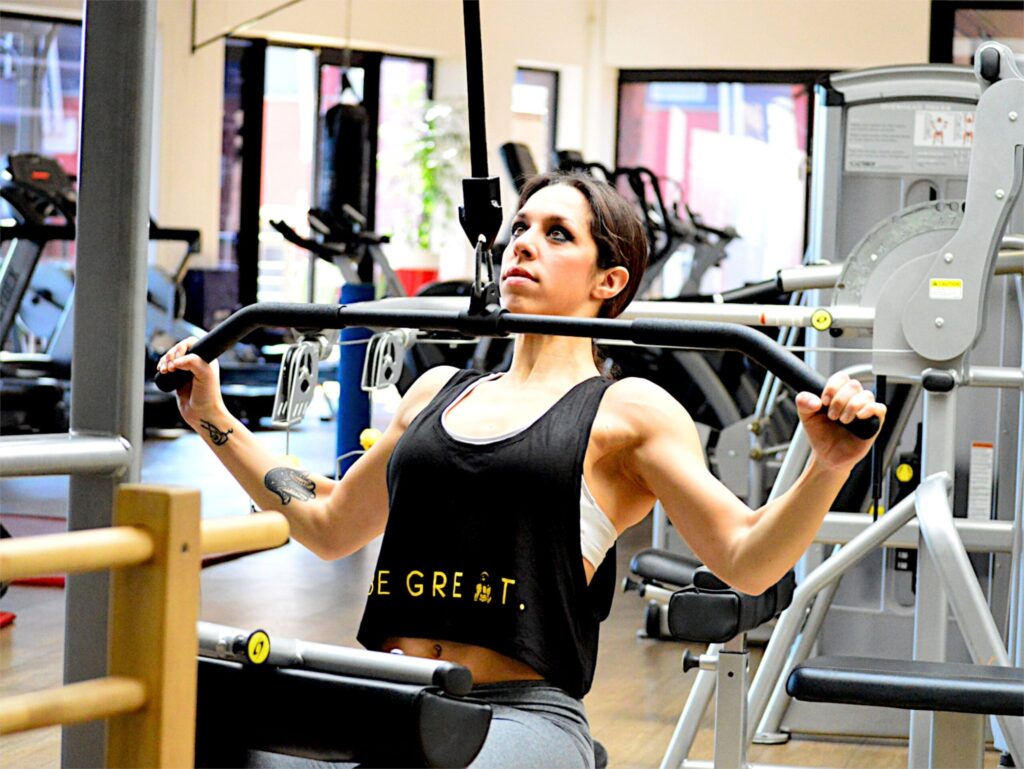
The execution of effective partials varies based on the exercise and its classification. Pulling exercises, like the lat pulldown, offer the advantage of allowing for slight momentum and additional partial reps. In contrast, pushing exercises present a different challenge, as you lack the opportunity to use body momentum when the weight is at the bottom.
For pull exercises, the option of dropping the weight or adjusting body position to continue partial reps is available. However, pushing exercises require a different strategy. Two options emerge: incorporating a drop set with lighter weights immediately after failure or stopping a few reps short and transitioning into partial reps to maximize time under tension.
When it comes to leg exercises, partials can be applied, albeit uncomfortably. The Bulgarian split squat is a prime example, where staying in the stretched position of the quads throughout the exercise becomes an effective strategy. While one-and-a-half reps and quarter squats have their merits, the application of every-rep partials in leg exercises, particularly for hypertrophy, can be impactful.
How to Increase Your Metabolism
In the pursuit of trying something new, remember that it’s not about muscle confusion but muscle disruption. The goal is to challenge yourself differently while preserving the benefits of full-range-of-motion repetitions. Whether you’re training for strength, athleticism, or longevity, understanding the diverse advantages of each method is crucial.
So, as you embark on the journey of incorporating partial reps into your training routine, keep in mind the specific application, choose the method that aligns with your goals, and revel in the challenging and different approach that can potentially lead to the results you seek. Remember, it’s not just about following trends; it’s about disrupting your muscles in a way that propels you toward optimal growth and performance.
Watch the video below for more information from Cavaliere himself.
Chest Exercises Ranked Best to Worst
How Often Should You Work Out
The frequency of your workouts depends on various factors, including your fitness goals, current fitness level, and schedule. Here are some general guidelines to help you determine how often you should work out:
- Strength Training:
- For beginners: Start with two to three days per week, allowing at least one day of rest between sessions to promote recovery.
- For intermediate to advanced individuals: Aim for three to six sessions per week, targeting different muscle groups on different days.
- Cardiovascular Exercise:
- For general health: Engage in moderate-intensity cardio activities, such as brisk walking or cycling, for at least 150 minutes per week or vigorous-intensity activities for at least 75 minutes per week.
- For weight loss: Increase the duration and intensity of cardio workouts, aiming for 300 minutes or more per week for substantial weight loss.
- Combining Strength and Cardio:
- If time allows, you can alternate between strength training and cardiovascular workouts on different days, providing a well-rounded fitness routine.
- Flexibility and Mobility:
- Include flexibility and mobility exercises at least two to three times per week to improve joint range of motion and prevent injuries.
- Rest and Recovery:
- Allow at least one to two days of rest per week to give your body time to recover and reduce the risk of overtraining.
- Listen to Your Body:
- Pay attention to your body’s signals. If you feel fatigued, sore, or notice signs of overtraining, take a day off or opt for lighter activities.
Remember, the key is to find a workout frequency that aligns with your goals, fits into your schedule, and allows for adequate recovery. Additionally, consulting with a fitness professional or healthcare provider can help tailor a workout routine based on your individual needs and circumstances.