Are you over 40 years old, have a resistance band at home and want to get fitter? This is the workout that you will want to do to get those results.
As we gracefully navigate the decades of life, staying committed to maintaining muscle mass and strength becomes increasingly vital for our overall health and well-being. In this article, we embark on a journey tailored specifically for women in their 40s, 50s, and 60s – a comprehensive full-body workout utilising the versatile and accessible tool of resistance bands.


These bands, renowned for their convenience and portability, are not only excellent for at-home workouts but also offer an efficient means of building muscle and strength, catering to the unique needs of our bodies as we progress through these stages of life.
As we age, the importance of physical activity takes centre stage in promoting longevity, enhancing mobility, and mitigating the effects of age-related muscle loss. The beauty of resistance bands lies in their adaptability to various fitness levels, making them an ideal companion for those seeking an effective workout regimen that can be seamlessly integrated into daily life.
But honestly, although we are talking about this workout being targeted at women above 40, you definitely can do it if you are younger, or even a man. It all depends on your fitness level, your goals, and your body limitations.
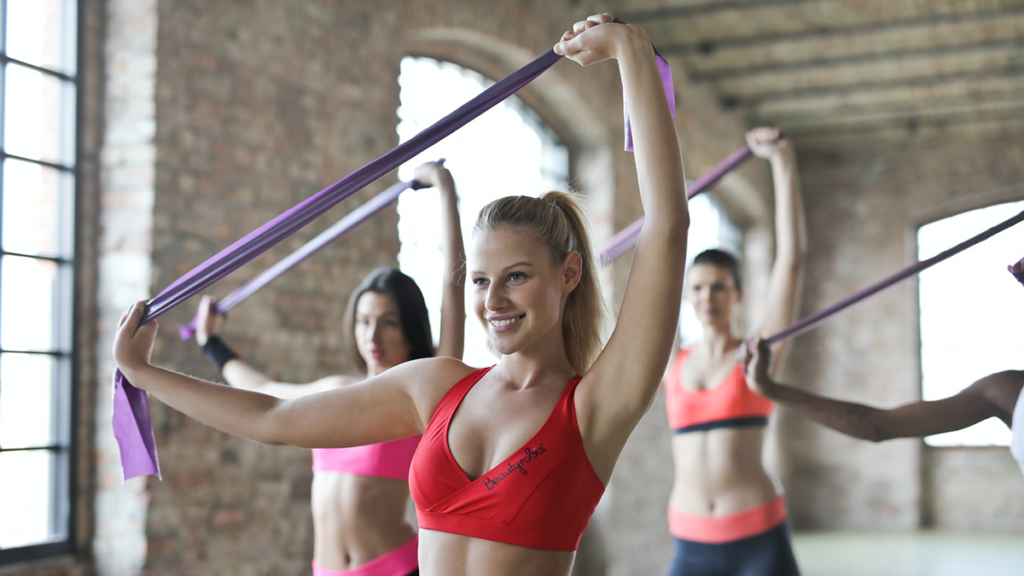
In the following sections, we will delve into a meticulously crafted routine encompassing a thorough warm-up and five thoughtfully paired exercise sequences. These exercises are designed not just to challenge your muscles but to do so in a mindful and considerate manner, acknowledging the unique requirements and potential limitations that may arise with age.
Dr. Anthony Balduzzi is a naturopathic doctor, national champion bodybuilder and founder of the Fit Father Project and Fit Mother Project – online health and fitness communities aimed at empowering busy parents to get healthy, lose weight, and build muscle through practical nutrition and exercise plans. The information you will see below was based on a video he shared on his Fit Mother Project YouTube channel.
Embarking on this resistance band workout journey holds the promise of not just physical transformation but also the rejuvenation of the mind and spirit. This workout is not merely about building muscle; it’s about fostering a holistic sense of well-being, embracing the joy of movement, and challenging preconceptions about fitness limitations as we gracefully navigate through our 40s, 50s, and 60s.
So, let’s lace up those exercise shoes, secure those resistance bands, and embark on a transformative journey towards a stronger, more resilient version of ourselves. This full-body workout is not just an investment in your physical health but a celebration of the incredible capabilities of the human body, irrespective of age.
10 Best Exercises to Lose Fat At Home
Full Body Resistance Band Workout for Women
Before engaging in any workout, a proper warm-up is essential to prepare the body for exercise. For the lower body, start with “Monster Walks” using a resistance band placed around the ankles and knees. Perform squats in a waddling motion for 1-2 minutes to activate the glutes and increase blood flow to the lower body. For the upper body, use a longer resistance band for “Overhead Shoulder Passes” – around 10 in each direction – followed by “Pull-Parts” to engage the upper back and shoulders.
Exercises:
Resistance Band Deadlift and Row Pyramid:
- Using the heaviest resistance band, perform a unique pyramid-style rep: Deadlift, Row, 2 Deadlifts, 2 Rows, and so on, building up to 10 reps.
- Focus on creating tension throughout the body, activating muscles in the back, glutes, and legs.
Resistance Band Squats and Shoulder Press:
- Attach two different bands to your feet for squats, aiming for 20 reps.
- Immediately transition to standing shoulder presses after squats, maintaining engagement in the legs. Aim for 15-20 reps.
- Rest for 1 minute and repeat the set.
Crossbody Fly Single Arm and Curls:
- Use a medium-tension band for crossbody flies (10-15 reps per arm).
- Without resting, transition to curls with the same band for 10-15 reps.
- Rest for 30-60 seconds and repeat the set.
Triceps Extensions and Shoulder Raises:
- With a light to medium band, anchor it behind one foot and extend overhead for 15-20 triceps extensions.
- Move immediately to shoulder raises, maintaining tension for 10-15 reps.
- Rest for 1 minute and repeat the set.
Face Pulls and Hollow Body Holds:
- Anchor the band at face height and perform face pulls with external rotation (10-15 reps).
- Lower the band to a lower position, then perform hollow body holds with a resistance band for 30-60 seconds.
- Rest for 1 minute and repeat the set.
The Full Workout
Warm-Up:
- Monster walks
- Shoulder passes
Exercises:
- Deadlift / row
- Squat / press
- Fly / curls
- Extension / raise
- Pull / hold
This resistance band workout, designed for individuals in their 40s, 50s, and 60s, offers a convenient and effective way to build muscle and strength at home. With only two to three types of resistance bands, this routine can be performed anywhere.
5 Fat Loss Supplements That Actually Work
Remember to progress gradually, increase resistance as you get stronger, and allow sufficient time for recovery between sessions. Incorporating this full-body workout into your routine can bring about positive changes in muscle tone, strength, and overall fitness.
To fully understand how to perform the exercises, it is better to see them, correct? Below you will find the video from Anthony Balduzzi in which he demonstrates his full body resistance band workout for women above 40.
Pay attention to his cues and perform the exercise as exemplified. Not only you will get the most benefits of the movement, but also keep you relatively injury free so you can workout more often and get the results you want in no time – remember, consistency is the key ingredient to getting fitter and healthier.
5 Excellent Exercises to Promote Fat Loss
Resistance bands have gained immense popularity in the fitness world, and their widespread acclaim is attributed to several factors that make them an exceptional tool for working out. Here are some reasons why resistance bands are considered great for incorporating into your exercise routine:
Versatility:
- Resistance bands offer a wide range of exercises that target various muscle groups, providing a full-body workout.
- From strength training to flexibility exercises, resistance bands can be adapted to suit different fitness levels and goals.
Convenience:
- Portable and lightweight, resistance bands are easy to carry, making them perfect for home workouts, travel, or exercising on the go.
- They require minimal storage space, making them an excellent choice for individuals with limited room for bulky fitness equipment.
Adaptability:
- Suitable for all fitness levels, resistance bands come in different levels of resistance, from light to heavy, allowing users to progressively increase the difficulty as their strength improves.
- Their adaptability makes them ideal for individuals of all ages and fitness backgrounds.
Joint-Friendly:
- Unlike heavyweights or machines, resistance bands provide constant tension throughout the range of motion, reducing stress on joints and decreasing the risk of injury.
- They are particularly beneficial for those with joint issues or individuals recovering from injuries.
Cost-Effective:
- Compared to traditional gym equipment, resistance bands are cost-effective, making them an affordable option for individuals building a home gym on a budget.
- Their durability ensures long-term use, providing excellent value for money.
Functional Movement:
- Resistance bands allow for natural and functional movements, closely mimicking real-life activities.
- This aids in improving overall functional fitness, enhancing coordination, and promoting better movement patterns.
Enhanced Muscle Engagement:
- The constant tension provided by resistance bands throughout the entire range of motion results in improved muscle engagement and activation.
- This can lead to better muscle development and increased strength.
Incorporation of Variable Resistance:
- Variable resistance, inherent in resistance bands, means that the resistance increases as the band is stretched, providing a unique challenge to muscles throughout the exercise.
- This helps overcome strength plateaus and promotes continuous improvement.
Engagement of Stabilising Muscles:
- The instability created by resistance bands requires the engagement of stabilising muscles, enhancing core strength and overall stability.
- This aspect is particularly beneficial for improving balance and preventing injuries.
Inclusivity:
- Suitable for people of all fitness levels, including beginners, seniors, and advanced athletes, resistance bands contribute to a more inclusive fitness environment.
In conclusion, the versatility, convenience, adaptability, and numerous health benefits make resistance bands an excellent addition to any workout routine. Whether you are aiming for strength training, flexibility, or rehabilitation, these bands provide a dynamic and effective means of achieving your fitness goals.
30 Minutes Of Jump Rope Every Day For 30 Days – What Happens to Your Body?

When training with resistance bands, it’s crucial to pay attention to proper form and technique. While these bands provide a versatile and adaptable means of exercise, executing movements with correct form ensures effectiveness and reduces the risk of injury. Maintain a stable posture, engage your core, and control the range of motion to maximise the benefits of each exercise. This is particularly important as resistance bands create continuous tension, and maintaining proper form ensures that the targeted muscles are effectively engaged throughout the entire movement.
Secondly, consider the level of resistance that suits your fitness level and the specific exercise. Choosing the right resistance band ensures that the workout is challenging yet manageable. Starting with a lighter resistance is advisable for beginners, gradually progressing to higher resistance levels as strength improves. This incremental approach minimises the risk of overexertion and allows for a more sustainable and progressive training regimen. Tailor the resistance to match your current strength, and don’t hesitate to adjust as needed to accommodate your fitness journey.
Lastly, incorporate variety into your resistance band workouts. Avoid sticking to a single routine for an extended period as this may lead to plateaus in strength and muscle development. Introduce different exercises that target various muscle groups to ensure a well-rounded workout. This not only keeps your routine interesting but also challenges your body in different ways, fostering continuous improvement. Experiment with different band tensions, angles, and movement patterns to add diversity to your training regimen. Remember that consistency, proper form, appropriate resistance, and variety are key elements to keep in mind for a safe, effective, and engaging resistance band workout experience.
9 Things You Should Know About Burning Fat
5 “Healthy Foods” Filled with Sugar You Should Avoid
What Are the Minimum Steps You Should Walk Every Day for Health Benefits (Not 10K)