Check out the 4 most common deadlift errors to avoid so that you can reap all the benefits of doing one of the best well-rounded compound exercises there is.
Deadlifts, a cornerstone in strength training, are as challenging as they are rewarding. Mastering this compound lift not only enhances your strength but also significantly boosts your fitness journey. However, the road to perfecting the deadlift is fraught with common pitfalls that can hinder progress and pose injury risks.


In this comprehensive guide, we delve into the four prevalent deadlift mistakes and provide practical solutions to correct them. Whether you’re a novice or an experienced lifter, understanding and rectifying these errors can elevate your deadlift technique, ensuring a safer and more effective workout.
The information used for this article is based on a video Jeff Nippard shared. Jeff Nippard is a natural professional bodybuilder and fitness coach who shares tips and training programs on his YouTube channel.
So let’s dig deeper into the 4 most common deadlift errors to avoid, according to Jeff Nippard.
The 4 Most Common Deadlift Errors to Avoid
Mastering the deadlift requires attention to detail and a commitment to correct form. By addressing these common errors—lower back rounding, early hip rise, improper joint stacking, and excessive lockout—you can enhance your lifting technique, maximise gains, and reduce injury risks.
Here is a detailed explanation of the 4 most common deadlift errors to avoid and how to fix them once and for all.
1. Lower Back Rounding: The Primary Culprit
Lower back rounding is arguably the most frequent and critical error in deadlifting. When the lumbar region rounds excessively, it not only compromises the lift’s effectiveness but also heightens the risk of injury. This mistake is prevalent in both sumo and conventional deadlifts, and addressing it is paramount for a safe and productive lifting experience.
Solution 1: Addressing Hamstring Flexibility
Jeff Nippard emphasises the significance of hamstring flexibility, stating, “If you’re feeling a huge hamstring stretch to the point of discomfort when you pull your lower back into that neutral position, then you really do need to work on your hamstring flexibility.” To combat this, integrate dynamic stretches and foam rolling before your sessions. Post-workout, engage in static stretching to alleviate tightness. Additionally, incorporating Romanian deadlifts can dynamically stretch your hamstrings under load, improving your range of motion and deadlift posture.
Solution 2: Strengthening the Glutes
Nippard challenges the common belief that lower back weakness is the culprit, suggesting instead that “it’s much more likely that your glutes are so weak that your lower back is rounding to compensate.” To address this, augment your routine with glute-focused exercises like hip thrusts and cable pull-throughs. By bolstering your glute strength, you can maintain a neutral spine, as your lower back won’t need to overcompensate during the lift.
Solution 3: Employing Paused Deadlifts
To directly tackle the issue of maintaining spinal alignment, Nippard recommends paused deadlifts: “Pause for a one to two-second count as soon as the plates leave the floor… the pause is going to force you to do a quick check on your positioning.” This technique cultivates awareness and control, helping to ingrained proper alignment throughout the lift.
2. The Issue of Early Hip Rise
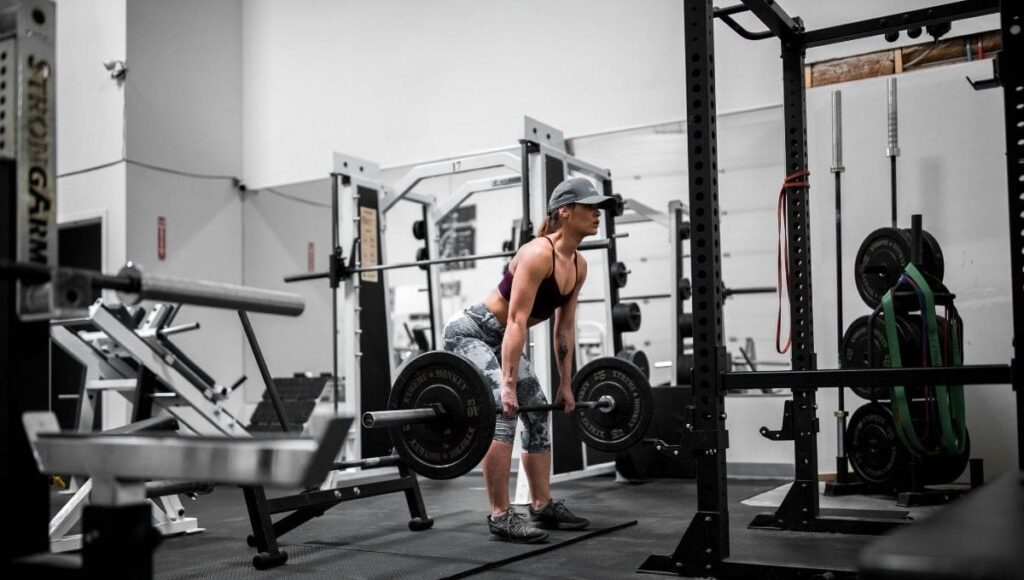
Incorrect hip positioning at the lift’s initiation can cause the hips to rise prematurely, shifting undue stress to the lower back and detracting from the lift’s efficiency.
Solution: Optimising the Setup
Nippard advises lifters to rethink their setup approach: “Rather than thinking about sitting your hips down, you want to think about pushing your hips back… then allow your knees to come slightly forward until your shins start to touch the bar.” This adjustment ensures that your hips are positioned optimally, preventing them from shooting up and disrupting the lift’s mechanics.
3. Joint Stacking in the Deadlift
Proper joint alignment is essential for effective force transfer during the deadlift. Misalignment can reduce lifting efficiency and increase the risk of injury.
Solution: Adjusting Stance and Mobility
Nippard highlights the importance of joint alignment, particularly in the sumo deadlift: “You should be able to draw a perfectly straight vertical line from your knees to your heels.” If misalignment occurs, it may be necessary to narrow your stance or enhance hip mobility. This adjustment ensures that your knees do not cave in and that your stance facilitates optimal force transfer.
Build Massive Muscle Gains with The Perfect Pull Workout
4. Excessive Lockout: A Common Overzealous Error
An overly vigorous lockout at the deadlift’s apex can lead to hyperextension of the lower back and diminished lift efficiency.
Solution: Controlled Lockout
Nippard warns against overzealous lockouts: “All you need to do to finish out the lift is stand up with an upright posture, flexing your glutes to lock out the hips.” This guidance underscores the importance of a controlled, measured lockout. By focusing on proper hip and chest alignment at the top of the lift, you can ensure a safe and effective conclusion to your deadlift.
Perfecting the deadlift is an effort that transcends the sole physical realm. It is a modern dance of power, technique, and presence, with common pitfalls lining the journey of those looking to perfect this foundational lift. Enough to derail progress and worse, risk injury. By dissecting and addressing these lower back rounding errors, premature rise in the hips, and joint misalignments with an excessive lockout, we unlock what potential exists for a more robust, effective, and safe lifting experience.
In summary, the quest in perfecting the deadlift is a mission of understanding and respect for our body’s mechanics. It is equally a quest in adopting a mindset toward continuous improvement and mindful execution. Further to integrate the inputs and solutions offered by him, including the ones from professionals like Jeff Nippard, will only better us in deadlifting but also will envelope the larger philosophy of lifting, that of harmony between strength, safety, efficacy, and technique. These adopt a more wholesome approach and boost not only our deadlift but also our overall fitness journey in a way that we interact with the world of strength training with more knowledge, efficiency, and success.
Watch the video below for more information from Jeff Nippard himself. In the video, he also showcases the 4 most common deadlift errors to avoid and has visual cues on how to fix them correctly. Happy training, y’all.
Read Also: How To Build Back Strength and Muscle Without The Deadlift (1 Simple Exercise)
The deadlift is considered an all-time best exercise, purely because it naturally incorporates many muscle groups at once and at the same time, and is applicable in almost everything that requires physical effort. The deadlift is an ultimate compound exercise to focus on the glutes, hamstrings, lower back, core, and upper back. It also targets other body parts very well. It helps in a full-body workout with overall improvement in muscle coordination and strength. These are compound exercises, really, but they replicate the natural, functional action of everyday life that involves the picking up of heavy objects from the floor, improving their functional fitness and reducing the risk of injury in daily activities.
The deadlifts further enhance posture in nature by a whole-body workout since most of the back and core muscles are required and developed while lifting. This means it caters to people of all kinds of fitness levels and hence provides an opportunity for one to graduate in weightlifting, from the weakest to the strongest. Its effectiveness in training multiple muscles at one time makes it the perfect choice for anybody interested in perfecting their strength training or weightlifting routine by adding both muscle growth and strength gains, along with metabolic enhancement.