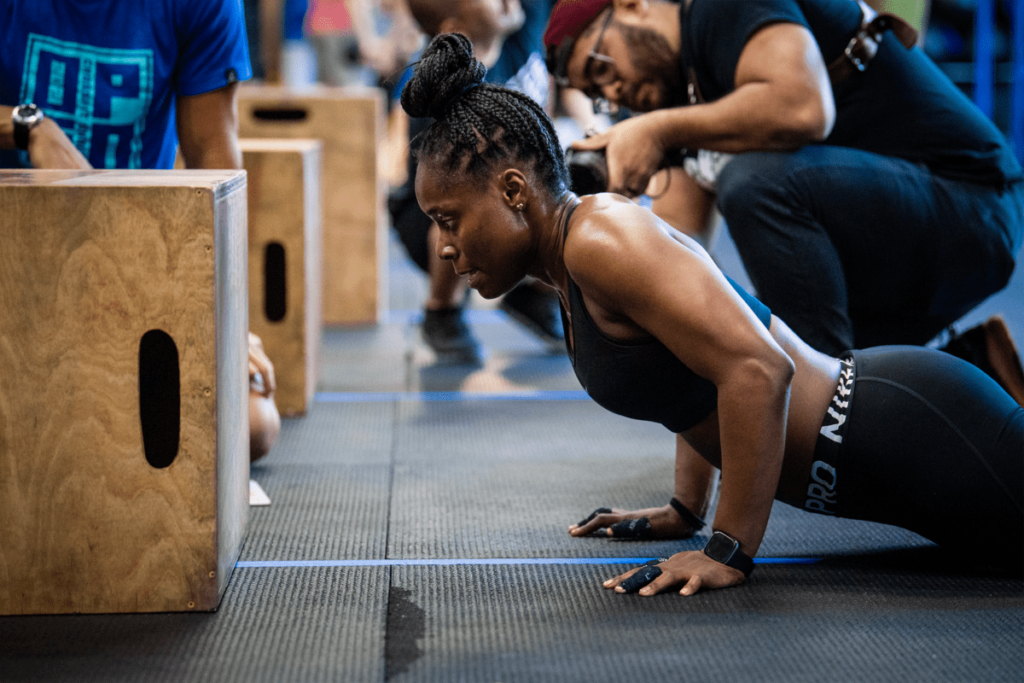
This might be the hardest bodyweight challenge you can do. Check out what happens to your body when you do 100 push-ups and pull-ups a day for 30 days.
But wait, we are not going to tell you in theory what impact that might have on your body and how it could change. It’s true that each person is unique and this fitness challenge will not give the same results to everyone, but you can take into consideration what happens to someone who has already done that challenge and take some conclusions of what that could mean for you.


And this is why we turn to Ryan Sadilek, since he is the crazy calisthenics guy who decided to take on this fitness challenge.
Ryan Sadilek, known for his YouTube page “Minus the Gym,” is a fitness enthusiast, certified personal trainer and content creator who focuses on sharing fitness tips, routines, and advice, particularly around bodyweight exercises and maintaining a healthy lifestyle without the need for a traditional gym setting. His content often includes tutorials, exercise demonstrations, and routines that viewers can follow to achieve their fitness goals, emphasizing the convenience and effectiveness of working out with minimal or no equipment. He is also an advocate for plant-based nutrition and how people can get fit while choosing to go vegan.
Push-ups and pull-ups are arguably the best bodyweight exercises a person can do to their upper body. Traditional push-ups mainly target the chest and triceps while pull-ups focus on your back muscles.

Incorporating daily push-ups into your routine can offer numerous benefits, as they are a compound exercise that engages multiple muscle groups simultaneously. Here are some key advantages:
- Muscle Strengthening and Toning: Regular push-ups primarily work the chest, shoulders, and triceps, but they also engage the core, hips, and legs, contributing to improved muscle tone and strength.
- Enhanced Core Stability: Push-ups demand a significant amount of core engagement to maintain proper form, which strengthens and stabilises the abdominal and lower back muscles.
- Improved Cardiovascular Health: Performing push-ups at a moderate to high intensity can raise the heart rate, contributing to cardiovascular endurance over time.
- Increased Joint Support: Regularly performing push-ups can help strengthen the muscles around the shoulders and elbows, which can enhance joint stability and reduce the risk of injuries.
- Convenience and Versatility: Push-ups require no equipment and can be done anywhere, making them a highly convenient exercise. They can be modified to suit various fitness levels and target different muscle groups.
- Bone Health: Weight-bearing exercises like push-ups can improve bone density and strength, which is crucial for overall skeletal health.
- Better Posture: Stronger core and upper body muscles, developed through consistent push-up practice, can contribute to improved posture.
- Mental Health Benefits: Regular exercise, including push-ups, can boost mood and reduce symptoms of anxiety and depression, partly due to the release of endorphins.
Similar to push-ups, doing daily pull-ups can offer a plethora of benefits, given they are a potent upper-body exercise that engages several muscle groups simultaneously. Here are the primary advantages:
- Upper Body Strength: Pull-ups primarily target the back muscles, including the latissimus dorsi, as well as the biceps, shoulders, and chest, contributing to overall upper body strength.
- Enhanced Grip Strength: Regularly performing pull-ups can significantly improve your grip strength, which is beneficial for other strength training exercises and daily activities.
- Core Stability: Pull-ups require engagement of the abdominal muscles, thus helping to strengthen and stabilize the core, which is vital for overall physical performance.
- Improved Posture: By strengthening the back and core muscles, pull-ups can help correct poor posture, particularly if you spend a lot of time sitting.
- Functional Fitness: Pull-ups enhance functional strength, which is the ability to perform daily tasks more efficiently, as they simulate natural movements like climbing.
- Versatility and Progression: There are various pull-up variations that can target different muscle groups and increase the difficulty level, offering continual challenges as you get stronger.
Pull-ups are also versatile, as you only need a bar or a place to hang from to be able to perform them, and it will also, possibly, increase your mental strength.

But you’re here to understand what happens to your body when you do 100 push-ups and pull-ups a day for 30 days. Let’s see how Ryan did it in the paragraphs below.
Related: Beginner Calisthenics Workout At Home
Understanding Ladder Supersets
Ryan, a dedicated fitness enthusiast from the gym, embarked on a gruelling month-long challenge that pushed the boundaries of his physical limits: 100 push-ups and 100 pull-ups every day, for a whole month, without a day’s break. His experience sheds light on a unique workout strategy known as ladder supersets, a method that might just be the key to unlocking new levels of fitness prowess.
Before we dive into the specifics of ladder supersets, it’s crucial to grasp the concept of basic ladder workouts. Imagine starting with a single repetition of an exercise, followed by a brief pause—just long enough for a deep breath. With each subsequent set, the number of reps increases, along with the rest period, creating a ‘ladder’ that you climb. This progressive approach not only enhances endurance but also incrementally challenges your muscles with increasing intensity.
Now, ladder supersets take this concept up a notch by integrating two exercises instead of one. For Ryan, these were push-ups and pull-ups. He began with one pull-up, immediately followed by one push-up, taking a single deep breath before advancing to two reps of each, then three, and so on, climbing this metaphorical ladder until reaching ten reps. But the challenge didn’t end there. After ascending to the peak, he reversed the process, decrementing the reps until he returned to the starting point, completing a full cycle.
Read More: How To Get Huge Without the Gym
Pros and Cons of the 100 Push-Ups and Pull-Ups Challenge
Ryan’s dedication to this rigorous routine yielded impressive results, enhancing his upper body strength and endurance. However, such an intense regimen is not without its drawbacks. While it’s exceptional for boosting endurance and increasing your rep max, it might not cater to those aiming for muscle mass or specific skill development.

One intriguing aspect of Ryan’s approach was his variation in grip and style, ensuring a comprehensive workout that targeted different muscle groups. Alternating between standard, wide, and close grips, as well as incorporating chin-ups, helped distribute the strain, reducing the risk of overuse injuries and promoting balanced muscle growth.
100 Push-Ups and Pull-Ups a Day for 30 Days: What Happens to Your Body
Ryan didn’t provide specific measurements regarding the size of his chest or back, nor did he mention any changes in his body weight. However, he did share some details on his performance improvements. Before embarking on this challenge, his maximum number of pull-ups in one set wasn’t specified, but by the end of the month, he was able to achieve 21 pull-ups in a single set, indicating a significant increase in his upper body strength and endurance.
As for the duration of the workouts, Ryan noted a progression in efficiency over the course of the challenge. Initially, he didn’t specify how long it took him to complete the 100 push-ups and 100 pull-ups, but he mentioned that, by the end of the challenge, he was able to complete the daily routine in approximately 15 to 20 minutes. This faster completion time suggests an improvement in his physical conditioning and muscular endurance.
In terms of his workout approach, Ryan added variety to his regimen by altering the grip and type of push-ups and pull-ups, which likely contributed to a more balanced and comprehensive upper body development. However, without more detailed metrics or visual documentation, it’s challenging to quantify the exact changes in his physique beyond the performance enhancements and his subjective satisfaction with the results.
Related: 15-Minute Hardcore Bodyweight Workout for Weight Loss
To Take On or Not to Take On the Challenge
So, should you consider embarking on this formidable challenge? If your goal is to enhance endurance and push your rep limits, this could be an ideal venture. However, if you’re leaning towards muscle hypertrophy or skill acquisition, you might want to explore other workout routines more aligned with those objectives.
In essence, Ryan’s journey through this relentless fitness challenge exemplifies the potential gains from ladder supersets when applied with strategic variation and determination. Whether you choose to tackle this challenge or adapt its principles to your workout regimen, the core message remains clear: perseverance, adaptability, and a well-structured plan are pivotal to transcending your fitness boundaries.
To see Ryan’s take on the fitness challenge of doing 100 push-ups and pull-ups a day for 30 days, you can simply hit the button below and watch his video.
Read More: The Only 8 Bodyweight Exercises You Need to Build Muscle Fast