As life gets busier and busier, we all need ways to save time and be more efficient. However, eating takeout, even if it isn’t fast food, is often the solution for your busy schedule, which can become a significant health and financial issue if it happens regularly.

Meal prepping is one way to make your life easier and ensure you eat healthy meals every day. Check out these meal prep hacks, which will save you tons of time and add tons of quality to your life.


1. Plan Your Meals in Advance
As obvious as this sounds, many people seem to misunderstand meal planning. It isn’t just deciding what to eat each day; it is a comprehensive network of meals, ingredients, spices, condiments, containers, and storage places.
Your meal prepping begins here, and without a good and detailed meal plan, your strategy will soon fall apart. Start by creating a weekly menu and determining what you need for each meal that week.
This meal-prepping hack is also very useful when it comes to shopping since you will know exactly what to buy and when.
Run to the store and get all the necessary ingredients for the first two days and whatever you can get that has a longer shelf life so you reduce the grocery shopping for the rest of the week.
Balance out the carbs, protein, sugar, and fats, and place the meals on the appropriate days so as not to overload the same nutritional groups several days a row. This meal-prepping hack gives you a clear view of your meals and an easy adjustment route if needed.
2. Rotate Your Menus
As essential as variety is for a balanced diet, changing up your menu regularly can prevent dietary boredom and enhance nutritional intake. Develop a robust rotation of different meals that you can look forward to, rotating them throughout the month to keep your palate excited and your meals diverse.
Come up with as many meals as you can, preferably ten or more, and rotate them during the month. That way, you won’t repeat the same dishes more than two or three times a month, keeping the process fun and enjoyable.
To support your menu rotation, consider setting up a meal planner to log what you eat each day for better dietary tracking and future planning.
3. Invest in Quality Containers
Opting for high-quality containers is crucial for successful meal prepping. Poor-quality containers not only compromise the freshness and flavor of your food but also pose health risks if they are not made from safe materials. Choose containers that are both functional and made to last to protect your health and your meals.
Not having quality containers is far beyond aesthetics, and it destroys the quality of your food. If, for example, the lead isn’t tight enough, your food will quickly spoil, or if the material the container is made of is not appropriate, your food might start to smell.
None of these scenarios is favorable, and all will lead to disaster. Luckily, a suitable container can prevent all of that from happening. Investing in quality containers is crucial for effective meal prep.
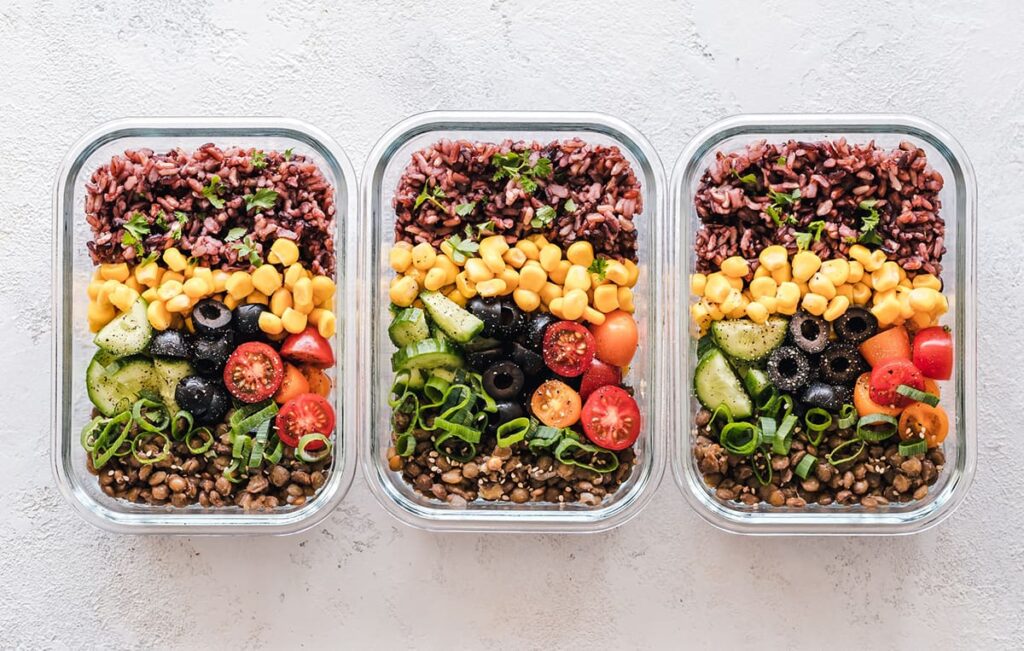
Choose containers that are microwave-safe, dishwasher-safe, and leak-proof. Opt for glass or high-quality metal containers that can withstand repeated use and cleaning without degrading.

Be mindful of the size of your containers, and make sure you have different sizes for different portions. Various sizes can help with portion control and organization.
Ensure you have various sizes for different meal types and portions, facilitating better portion control and dietary management. Lastly, label your containers clearly. Knowing exactly what you have and when it was prepared will greatly improve your meal management and ensure you enjoy your food at its best.
4. Batch Cooking
Batch cooking is a great way to increase efficacy and reduce time, but be very careful with this practice because not all foods can be batch-cooked. Although it is a remarkable time-saving strategy, before you start batch-cooking, you have to know which foods can be batch-cooked and which cannot, or you will definitely be headed toward disaster.
For example, grains such as rice and quinoa aren’t supposed to be batch-cooked, but you can do so with harder veggies, such as carrots and potatoes, if you plan on including them in your meals for the next three to seven days.
You can also batch-cook meat, such as grilling and roasting it, but be careful not to let it out of the fridge unless you plan to include it in the final meal right away. Also, don’t batch-cook meat for more than three days.
Another crucial aspect of batch cooking is properly portioning the ingredients. Do not let the entire batch sit together; instead, separate it into different containers and keep it there until you use it. This portioning will ensure that your ingredients last longer.
5. Utilize Freezer-Friendly Meals
Freezer-friendly meals are the perfect choice for meal preppers. You can make as many as you want and just pop them in the freezer. As long as you eat them somewhere in the next three months, your meals will be perfectly safe and delicious.
You can prep sauces and soups this way, prep tons of meat without worrying about it, and even make broths and bouillons to enrich future meals. Just make sure you don’t freeze potatoes in any form, rice and other cooked grains, and leafy veggies like spinach or kale because they won’t do well in the freezer.
6. Prep Ingredients, Not Just Meals
Some may think that meal prepping involves cooking meals ahead of time. Although you could do that as well, meal prep can also mean having your ingredients prepared so that when the time comes to cook your meal, you have your work cut out for you.
Have your ingredients washed, peeled, sliced, diced, and properly stored so that you can cook in 30 minutes or less instead of an hour.
Learn which ingredients can be prepped for how long ahead (not all veggies can be prepped and stored for an extended amount of time) and start practicing ingredient prepping.
For example, to prep broccoli, cut it into florets, rinse thoroughly, and pat dry. Store in an airtight container with a paper towel to absorb moisture. They stay fresh for up to five days.
Peel carrots and cut them into sticks or rounds. Store in a container filled with water to keep them crisp. Change the water every couple of days, and they will remain fresh for up to one week.
If you want to store bell peppers, slice them into strips or dice. Store in an airtight container with a paper towel to absorb moisture. This way, they stay fresh for up to 5 days.
This meal-prepping hack will save you a lot of time. You just need to assemble the meals rather than make them from scratch.
7. Use Time-Saving Kitchen Tools
Investing in time-saving kitchen tools can make meal prep more efficient and enjoyable. Sometimes, just thinking about the struggle of pealing or blending just because you don’t have a proper peeler or blender can deter you from prepping a meal.
Tools like a slow cooker, pressure cooker, or air fryer can significantly reduce cooking times and simplify the process. You should also consider chopping and dicing tools, grates, squeezers, good-quality knives, a mixer, and a food processor.
Having the right infrastructure will make meal-prepping easier and more time-efficient, so you won’t dread it but look forward to it.
8. Portion Control
Portion control is crucial to meal prepping, especially for those with specific fitness or weight management goals. Portion control containers fit perfectly into this setting as they can contain precisely what you can eat. When you turn this meal prepping hack into a regular practice, you will also know exactly how much food you need to buy so none of it goes to waste.

Using portion control containers can help you ensure you eat the proper amounts of each food group. This meal prepping hack helps prevent overeating and ensures a balanced diet.
Measuring out portions ahead of time makes it easy to grab a meal without worrying about portion sizes, which is particularly beneficial for those with busy schedules.
9. Smart Storage Solutions
Although seemingly a space issue, proper storage space is an integral cog of meal-prepping; no matter how well you prep your meals and how suitable your containers and equipment are, your efforts will be in vain if you don’t have where to store all that food.
A freezer is a necessity here, but it does take up a lot of space. The best thing is probably to invest in a vertical freezer rather than a horizontal one. That way, your meals will be neatly stored in your freezer drawers.
Another space-saver is stackable containers, but make sure they are suitable for food, so opt for glass instead of plastic. These are excellent for keeping prepped ingredients like cut carrots or cucumbers, and you can also fill them with water if the storage of the particular vegetable requires it.
Mason jars are an excellent option for salads, as they keep ingredients fresh and prevent them from getting soggy. You can store your cut lettuce or cabbage salad unseasoned in a sealed mason jar, where it will remain fresh for three to four days.