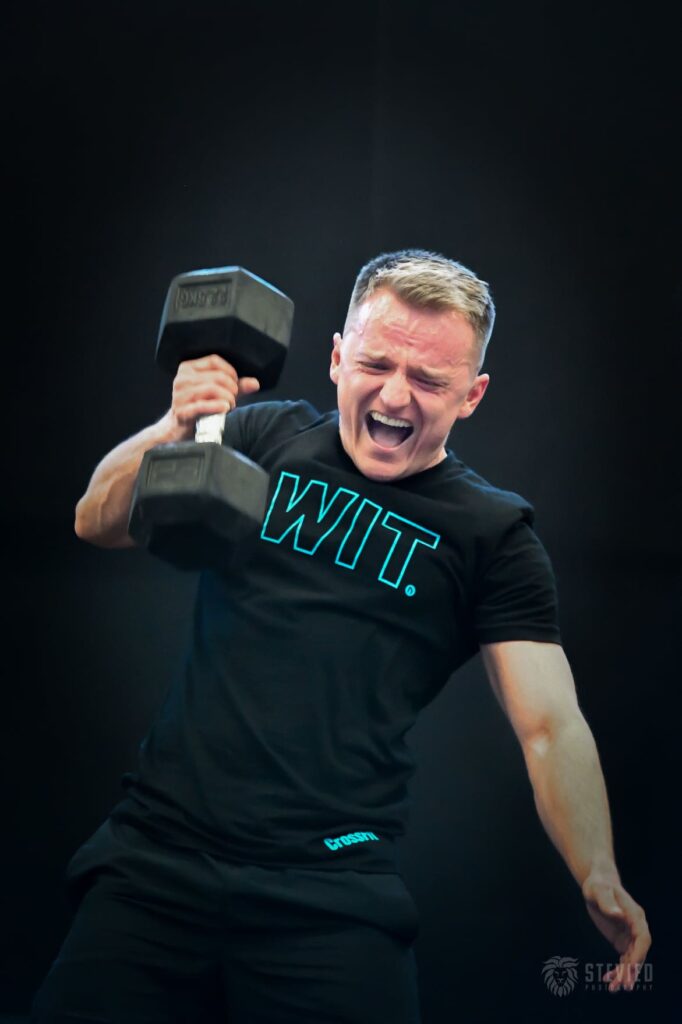
Building a strong and jacked physique doesn’t require an elaborate gym setup or a plethora of equipment. In fact, with just a pair of dumbbells, you can achieve significant muscle growth and strength. This article delves into the three essential dumbbell exercises that should form the cornerstone of any effective workout regimen for men aiming to build a powerful and muscular body.
The Science of Muscle Building
Before diving into the exercises, it’s essential to understand the principles of muscle hypertrophy (growth). Muscle growth is primarily driven by three factors: mechanical tension, muscle damage, and metabolic stress.


- Mechanical Tension: This is the force applied to muscles during resistance training. Higher weights and controlled movements create greater tension, leading to muscle growth.
- Muscle Damage: Microtears occur in muscle fibers during exercise. The repair process, which requires protein synthesis, results in muscle growth.
- Metabolic Stress: This involves the accumulation of metabolites like lactate during exercise, leading to muscle cell swelling and growth signaling.
Research consistently shows that resistance training, especially with free weights like dumbbells, is highly effective for muscle hypertrophy and strength gains .
Exercise 1: Dumbbell Bench Press
Why It Works
The dumbbell bench press is a powerhouse exercise for the upper body, targeting the pectoral muscles, deltoids, and triceps. Unlike the barbell bench press, using dumbbells allows for a greater range of motion and independent arm movement, enhancing muscle activation and reducing muscle imbalances.
Execution
- Starting Position: Lie on a flat bench with a dumbbell in each hand. Hold the dumbbells at shoulder width with your palms facing forward. Your feet should be flat on the ground.
- Descent: Slowly lower the dumbbells to the sides of your chest. Maintain control to engage your muscles fully.
- Press: Push the dumbbells back up to the starting position, fully extending your arms. Squeeze your chest muscles at the top.
Scientific Backing
Studies show that the dumbbell bench press activates the pectoral muscles more effectively than the barbell version due to the increased range of motion and stabilization requirements . Additionally, it reduces the risk of shoulder injuries often associated with the fixed bar path of a barbell .
Exercise 2: Dumbbell Squat
Why It Works
The dumbbell squat is a foundational lower body exercise that targets the quadriceps, hamstrings, glutes, and core. Squats are crucial for building functional strength and muscle mass in the lower body.
Execution
- Starting Position: Stand with your feet shoulder-width apart, holding a dumbbell in each hand at your sides.
- Descent: Lower your body by bending your knees and hips, as if sitting back into a chair. Keep your back straight and chest up.
- Ascent: Push through your heels to return to the starting position, fully extending your hips and knees.
Scientific Backing
Research indicates that squats are highly effective for lower body hypertrophy and strength due to the significant mechanical tension they generate . Dumbbell squats, in particular, engage stabilizing muscles more effectively than machine-based squats, enhancing overall muscle development and functional strength .
Exercise 3: Dumbbell Row
Why It Works
The dumbbell row is essential for developing a strong back, targeting the latissimus dorsi, rhomboids, and trapezius. It also engages the biceps and forearms, making it a comprehensive upper body exercise.
Execution
- Starting Position: Place your right knee and hand on a bench, keeping your back straight. Hold a dumbbell in your left hand, letting it hang straight down.
- Row: Pull the dumbbell towards your hip, squeezing your back muscles at the top of the movement. Keep your elbow close to your body.
- Lower: Slowly lower the dumbbell back to the starting position. Repeat for the desired number of reps and switch sides.
Scientific Backing
Dumbbell rows are proven to activate a broad range of upper body muscles, contributing significantly to back strength and hypertrophy . They also improve shoulder stability and posture by strengthening the scapular retractors .
Training Program
Frequency and Volume
For optimal muscle growth, perform these exercises 2-3 times per week, allowing at least one day of rest between sessions for muscle recovery. Aim for 3-4 sets of 8-12 repetitions per exercise. This rep range is well-supported by research for maximizing muscle hypertrophy .
Progressive Overload
To continue making gains, progressively increase the weights you use as you get stronger. This principle, known as progressive overload, is crucial for sustained muscle growth and strength improvements .
Sample Workout Plan
Day 1: Chest and Triceps
- Dumbbell Bench Press: 4 sets of 8-12 reps
- Dumbbell Flyes: 3 sets of 12-15 reps
- Tricep Kickbacks: 3 sets of 12-15 reps
Day 2: Back and Biceps
- Dumbbell Rows: 4 sets of 8-12 reps
- Dumbbell Shrugs: 3 sets of 12-15 reps
- Bicep Curls: 3 sets of 12-15 reps
Day 3: Legs and Shoulders
- Dumbbell Squats: 4 sets of 8-12 reps
- Dumbbell Lunges: 3 sets of 12-15 reps
- Dumbbell Shoulder Press: 3 sets of 12-15 reps
Nutrition and Recovery
Protein Intake
Protein is essential for muscle repair and growth. Aim for 1.6-2.2 grams of protein per kilogram of body weight per day . Good sources include lean meats, dairy, eggs, and plant-based proteins like beans and lentils.
Sleep and Recovery
Adequate sleep is crucial for muscle recovery. Aim for 7-9 hours of quality sleep per night. Sleep supports protein synthesis and the release of growth hormones .
Conclusion
By focusing on these three fundamental dumbbell exercises—the dumbbell bench press, dumbbell squat, and dumbbell row—you can build a strong and jacked physique. These exercises cover all major muscle groups, ensuring balanced and comprehensive muscle development. Incorporate them into your routine, adhere to progressive overload principles, and complement your training with proper nutrition and recovery to achieve impressive results.
Key Takeaways
| Exercise | Target Muscles | Benefits | Repetitions and Sets |
|---|---|---|---|
| Dumbbell Bench Press | Pectorals, Deltoids, Triceps | Greater muscle activation, improved shoulder stability | 3-4 sets of 8-12 reps |
| Dumbbell Squat | Quadriceps, Hamstrings, Glutes, Core | Functional strength, significant lower body hypertrophy | 3-4 sets of 8-12 reps |
| Dumbbell Row | Latissimus Dorsi, Rhomboids, Trapezius, Biceps | Comprehensive back development, enhanced shoulder stability | 3-4 sets of 8-12 reps |
Bibliography
- Schoenfeld, B. J. (2010). The mechanisms of muscle hypertrophy and their application to resistance training. Journal of Strength and Conditioning Research, 24(10), 2857-2872.
- Folland, J. P., & Williams, A. G. (2007). The adaptations to strength training: morphological and neurological contributions to increased strength. Sports Medicine, 37(2), 145-168.
- Saeterbakken, A. H., Mo, D. A., Scott, S., & Andersen, V. (2017). Muscle activation in three chest-press exercises with different stability requirements. Journal of Sports Sciences, 35(2), 166-172.
- Escamilla, R. F., Yamashiro, K., Paulos, L., & Andrews, J. R. (2009). Shoulder muscle activity and function in common shoulder rehabilitation exercises. Sports Medicine, 39(8), 663-685.
- Schoenfeld, B. J. (2016). Squatting kinematics and kinetics and their application to exercise performance. Journal of Strength and Conditioning Research, 30(4), 1358-1370.
- Fry, A. C., Smith, J. C., & Schilling, B. K. (2003). Effect of knee position on hip and knee torques during the barbell squat. Journal of Strength and Conditioning Research, 17(4), 629-633.
- Lehman, G. J., & McGill, S. M. (2002). The importance of precise instruction during kettlebell exercises. Journal of Strength and Conditioning Research, 16(4), 573-580.
- Cools, A. M., Dewitte, V., Lanszweert, F., Notebaert, D., Roets, A., Soetens, B., … & Witvrouw, E. E. (2007). Rehabilitation of scapular muscle balance: which exercises to prescribe? The American Journal of Sports Medicine, 35(10), 1744-1751.
- Phillips, S. M., & Van Loon, L. J. (2011). Dietary protein for athletes: from requirements to optimum adaptation. Journal of Sports Sciences, 29(sup1), S29-S38.
- Zeng, X., Zhu, Y., Huang, Z., Ma, W., & Wang, Q. (2017). Associations of sleep quality and duration with the progression of carotid atherosclerosis in community-dwelling elderly adults: The Northern Shanghai Study. Sleep, 40(3), zsw092.