Achieving a V-shaped torso is a common fitness goal, particularly for men over 35 who are looking to enhance their physique and improve their overall health. While many believe that achieving this shape requires hours in the gym lifting heavy weights, bodyweight exercises can be equally effective.
In this article, we will explore the three most effective bodyweight exercises that can help men over 35 achieve a V-shaped torso, supported by scientific evidence.


Why Focus on a V-Shaped Torso?
A V-shaped torso, characterised by broad shoulders and a narrow waist, is often associated with strength and vitality. This shape not only enhances physical appearance but also supports better posture and reduces the risk of injury. As men age, maintaining muscle mass and bone density becomes crucial, and targeting specific muscle groups can aid in this process.
The Science Behind Bodyweight Exercises
Bodyweight exercises are effective because they utilise multiple muscle groups simultaneously, improving strength, flexibility, and endurance. They can be done anywhere, require no equipment, and are less likely to cause injury compared to heavy weightlifting. Research has shown that bodyweight exercises can be as effective as resistance training in increasing muscle mass and strength.
Benefits of Bodyweight Exercises
- Accessibility: Can be performed anywhere with no equipment.
- Versatility: Can be modified for different fitness levels.
- Functional Strength: Improves everyday functional movements.
- Joint Health: Lower impact on joints compared to heavy lifting.
The Top 3 Bodyweight Exercises for a V-Shaped Torso
1. Pull-Ups
Why Pull-Ups?
Pull-ups are one of the most effective exercises for building upper body strength. They primarily target the latissimus dorsi, the large muscles of the back, which are crucial for creating a broad, V-shaped appearance. Additionally, pull-ups engage the biceps, shoulders, and core muscles.
How to Perform Pull-Ups
- Grip: Hang from a pull-up bar with your hands slightly wider than shoulder-width apart, palms facing away from you.
- Lift: Pull your body up until your chin is above the bar. Focus on squeezing your shoulder blades together.
- Lower: Slowly lower yourself back to the starting position with control.
Modifications for Different Levels
- Beginner: Use resistance bands for assistance or perform negative pull-ups by jumping up and slowly lowering yourself down.
- Advanced: Add weight with a dip belt or perform variations like wide-grip or close-grip pull-ups.
Scientific Support
A study published in the Journal of Strength and Conditioning Research found that pull-ups significantly activate the latissimus dorsi and biceps brachii, making them an effective exercise for upper body development (Youdas et al., 2010).
2. Push-Ups
Why Push-Ups?
Push-ups are a compound exercise that targets the pectoral muscles, triceps, and deltoids. They also engage the core and lower back muscles, promoting overall upper body strength and stability. Regularly performing push-ups can enhance muscle definition in the chest and shoulders, contributing to the V-shaped torso.
How to Perform Push-Ups
- Starting Position: Begin in a plank position with your hands placed slightly wider than shoulder-width apart.
- Lower: Bend your elbows to lower your body until your chest is just above the ground.
- Lift: Push through your palms to return to the starting position, keeping your body in a straight line throughout the movement.
Modifications for Different Levels
- Beginner: Perform push-ups on your knees or against a wall.
- Advanced: Try variations like diamond push-ups, decline push-ups, or plyometric push-ups.
Scientific Support
Research published in the Journal of Applied Biomechanics indicates that push-ups are highly effective for activating the pectoral and triceps muscles, supporting their use in upper body strength training (Ebben et al., 2011).
3. Planks
Why Planks?
Planks are an isometric exercise that primarily targets the core muscles, including the rectus abdominis, transverse abdominis, and obliques. A strong core is essential for maintaining proper posture and supporting the entire body during movement, which is crucial for achieving a V-shaped torso. Planks also engage the shoulders, back, and glutes.
How to Perform Planks
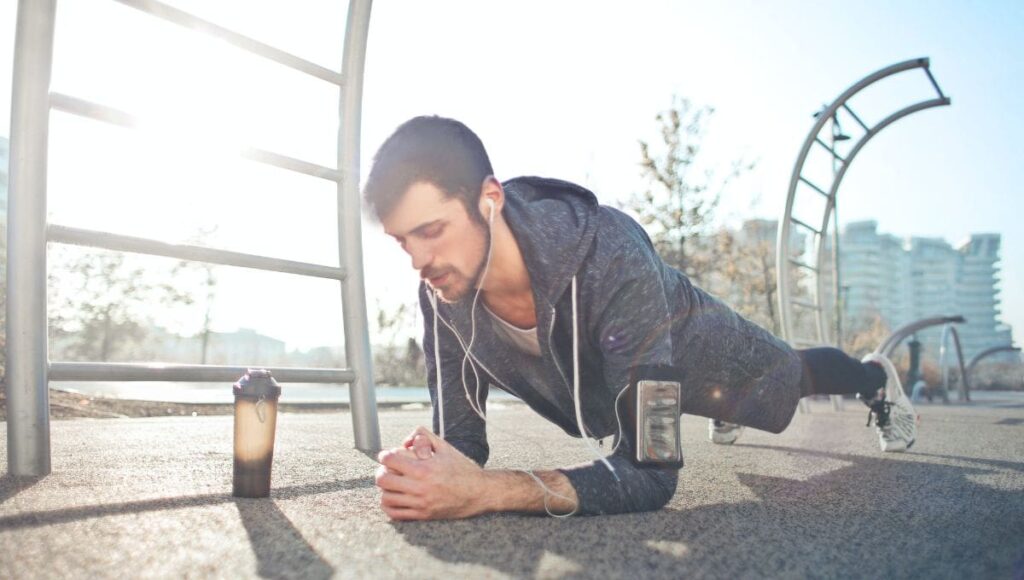
- Starting Position: Begin in a forearm plank position with your elbows directly under your shoulders and your body forming a straight line from head to heels.
- Hold: Maintain this position, keeping your core tight and avoiding any sagging or lifting of the hips.
- Duration: Aim to hold the plank for at least 30 seconds, gradually increasing the time as your strength improves.
Modifications for Different Levels
- Beginner: Perform planks on your knees or against an elevated surface.
- Advanced: Try side planks, plank variations with leg lifts, or plank-to-push-up transitions.
Scientific Support
A study in the Journal of Strength and Conditioning Research found that planks effectively engage the core muscles and are beneficial for enhancing overall stability and posture (Lehman et al., 2005).
Incorporating These Exercises into Your Routine
Designing a Balanced Workout Plan
To maximise the benefits of these exercises, it’s important to incorporate them into a well-rounded workout routine. Here’s a sample weekly plan:
Sample Weekly Plan
- Monday: Pull-Ups – 3 sets of 8-12 reps
- Wednesday: Push-Ups – 3 sets of 15-20 reps
- Friday: Planks – 3 sets of 30-60 seconds
Progression and Variation
Progression is key to continuous improvement. As you become stronger, increase the number of sets, reps, or the duration of each exercise. Incorporating variations can also prevent plateaus and keep your workouts interesting.
Importance of Rest and Recovery
Allowing adequate rest between workout sessions is crucial for muscle recovery and growth. Aim for at least one rest day between sessions targeting the same muscle groups.
Additional Tips for Achieving a V-Shaped Torso
Nutrition
Proper nutrition is essential for muscle growth and fat loss. Ensure a balanced diet rich in protein, healthy fats, and complex carbohydrates. Staying hydrated and avoiding processed foods can also support your fitness goals.
Consistency and Patience
Consistency is crucial for achieving and maintaining a V-shaped torso. It’s important to stay committed to your workout routine and be patient, as results will come with time and effort.
Tracking Progress
Keep track of your progress by taking regular measurements and photos. This can help you stay motivated and make necessary adjustments to your workout plan.
Conclusion
Achieving a V-shaped torso does not require complex equipment or endless hours in the gym. By incorporating pull-ups, push-ups, and planks into your regular workout routine, you can build a strong, defined upper body that not only looks great but also supports overall health and functional strength. Remember to stay consistent, focus on proper form, and gradually increase the intensity of your workouts to see the best results.
Key Takeaways
| Key Points | Details |
|---|---|
| Top 3 Exercises | Pull-Ups, Push-Ups, Planks |
| Primary Muscles Targeted | Latissimus dorsi, Pectorals, Core |
| Benefits of Bodyweight Exercises | Accessibility, Versatility, Functional Strength, Joint Health |
| Weekly Plan | Example: Pull-Ups (Monday), Push-Ups (Wednesday), Planks (Friday) |
| Progression Tips | Increase sets/reps, incorporate variations |
| Additional Tips | Balanced nutrition, consistency, tracking progress |
Bibliography
- Ebben, W. P., Wurm, B. J., VanderZanden, T. L., Spadavecchia, M. L., Durocher, J. J., & Petushek, E. J., 2011. Kinetic analysis of several variations of push-ups. Journal of Strength and Conditioning Research, 25(9), pp. 2868-2873.
- Lehman, G. J., Hoda, W., & Oliver, S., 2005. Trunk muscle activity during bridging exercises on and off a Swiss ball. Journal of Strength and Conditioning Research, 19(3), pp. 627-633.
- Youdas, J. W., Amundson, C. L., Cicero, K. S., Hahn, J. J., Harezlak, D. T., & Hollman, J. H., 2010. Surface electromyographic activation patterns and elbow joint motion during a pull-up, chin-up, or perfect-pullup rotational exercise. Journal of Strength and Conditioning Research, 24(12), pp. 3404-3414.