Building a strong and aesthetically pleasing back is a goal shared by many fitness enthusiasts. A well-developed back not only enhances your physique but also improves your posture and overall functional strength. This article unveils three scientifically backed training secrets to help you develop a stronger and better-looking back.
Each tip is grounded in research and practical application to ensure you achieve optimal results.


The Anatomy of the Back Muscles
Understanding the anatomy of the back is essential for effective training. The back is composed of several key muscle groups, including the latissimus dorsi (lats), trapezius (traps), rhomboids, and the erector spinae. Each of these muscles plays a crucial role in various movements and should be targeted effectively for balanced development.

Latissimus Dorsi (Lats)
The lats are the broad, flat muscles on either side of your back. They are responsible for movements such as pulling your arms down and back, making them crucial for exercises like pull-ups and rows.
Trapezius (Traps)
The traps are divided into three parts: upper, middle, and lower. They are involved in shoulder blade movements and are key for exercises that require scapular retraction and elevation, such as shrugs and face pulls.
Rhomboids
The rhomboids are located between your shoulder blades and are responsible for retracting the scapula. They are activated during rowing movements.
Erector Spinae
The erector spinae is a group of muscles that run along your spine. They help in extending and rotating the spine and are essential for maintaining an upright posture.
Training Secret 1: Prioritise Compound Movements
Compound movements are exercises that engage multiple muscle groups simultaneously. They are essential for building a strong and well-balanced back because they mimic natural movement patterns and promote overall strength and hypertrophy.
Deadlifts
Deadlifts are one of the most effective compound exercises for developing a strong back. They engage the entire posterior chain, including the lats, traps, rhomboids, and erector spinae. Research has shown that deadlifts can significantly increase muscle activation and strength in the back muscles (Escamilla, 2001).
How to Perform:
- Stand with your feet hip-width apart, with the barbell over the middle of your feet.
- Bend at your hips and knees to grasp the bar with an overhand grip.
- Keep your chest up, back straight, and shoulders back.
- Lift the bar by extending your hips and knees, keeping the bar close to your body.
- Lower the bar back to the ground with control.
Pull-Ups and Chin-Ups
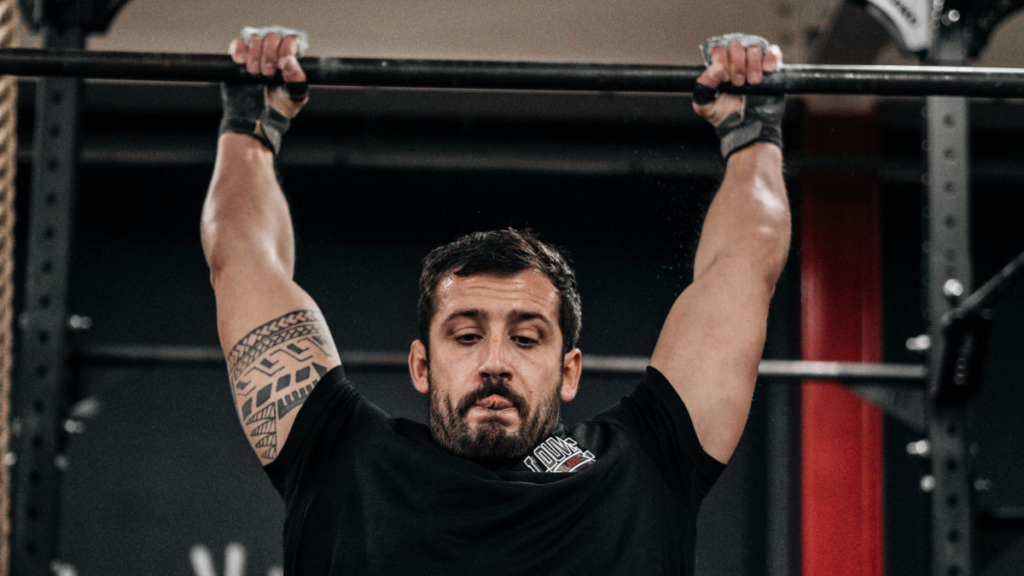
Pull-ups and chin-ups are excellent for targeting the lats and upper back muscles. A study by Youdas et al. (2010) found that these exercises produce significant muscle activation in the lats and biceps.
How to Perform:
- Grip the pull-up bar with your hands slightly wider than shoulder-width apart (for pull-ups) or with palms facing you (for chin-ups).
- Hang with your arms fully extended and your core engaged.
- Pull yourself up until your chin is above the bar.
- Lower yourself back down with control.
Bent-Over Rows
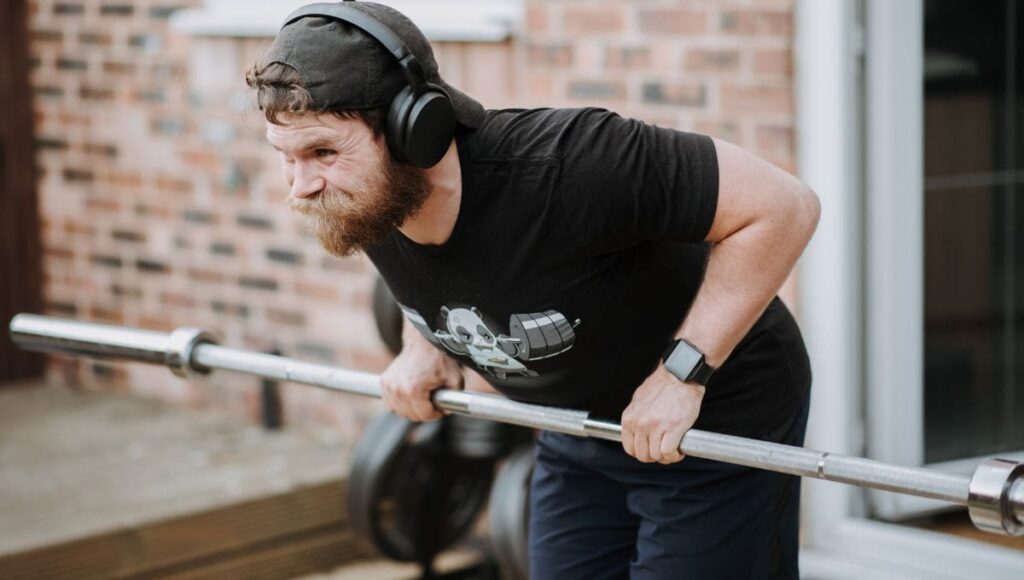
Bent-over rows are a staple exercise for building thickness and strength in the upper and middle back. According to research, they effectively activate the latissimus dorsi, trapezius, and rhomboids (Andersen et al., 2014).
How to Perform:
- Stand with your feet shoulder-width apart, holding a barbell with an overhand grip.
- Bend your knees slightly and hinge at your hips until your torso is nearly parallel to the floor.
- Pull the barbell towards your lower ribcage, squeezing your shoulder blades together.
- Lower the barbell back to the starting position.
Training Secret 2: Incorporate Isolation Exercises
While compound movements should be the foundation of your back training, incorporating isolation exercises ensures that smaller, stabilising muscles are also targeted. This balanced approach can prevent muscular imbalances and enhance overall back development.
Face Pulls
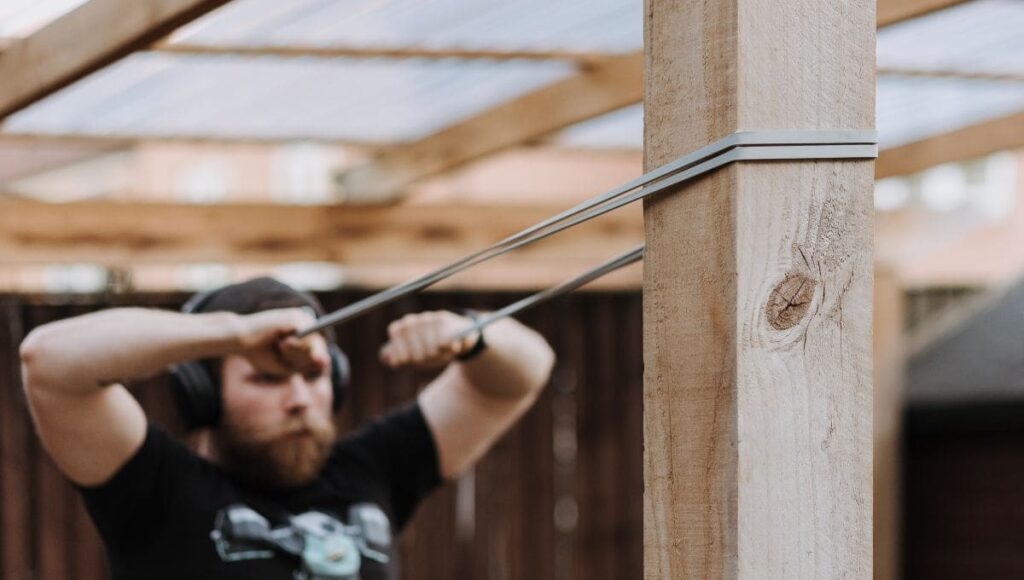
Face pulls target the rear deltoids and upper traps, helping to improve shoulder stability and posture. A study by Czaprowski et al. (2014) highlighted the importance of face pulls in enhancing scapular muscle activation and function.
How to Perform:
- Attach a rope handle to a high pulley on a cable machine.
- Grip the rope with both hands and step back until there is tension in the cable.
- Pull the rope towards your face, keeping your elbows high and squeezing your shoulder blades together.
- Return to the starting position with control.
Straight-Arm Pulldowns
Straight-arm pulldowns are excellent for isolating the latissimus dorsi and enhancing the mind-muscle connection. Research has shown that this exercise effectively targets the lats without significant involvement of the biceps (Boone et al., 2011).
How to Perform:
- Attach a straight bar to a high pulley on a cable machine.
- Stand facing the machine with your feet shoulder-width apart and grasp the bar with an overhand grip.
- Keep your arms straight and pull the bar down towards your thighs, squeezing your lats at the bottom.
- Slowly return the bar to the starting position.
Single-Arm Dumbbell Rows
Single-arm dumbbell rows allow for unilateral training, which can correct imbalances between sides and provide a greater range of motion. A study by Lehman et al. (2004) found that unilateral exercises like single-arm rows can enhance muscle activation and improve strength.
How to Perform:
- Place your left knee and hand on a bench, with your right foot on the floor and a dumbbell in your right hand.
- Keep your back straight and pull the dumbbell towards your hip, squeezing your shoulder blade at the top.
- Lower the dumbbell back to the starting position.
- Repeat on the other side.
Training Secret 3: Focus on Progressive Overload and Recovery
Progressive overload and adequate recovery are critical for muscle growth and strength gains. Without these elements, your back training efforts may plateau.
Progressive Overload
Progressive overload involves gradually increasing the demands placed on your muscles to stimulate growth and strength. This can be achieved by increasing the weight, volume, or intensity of your exercises. A study by Schoenfeld et al. (2016) demonstrated that progressive overload is essential for hypertrophy and strength development.
Strategies for Progressive Overload:
- Increase Weight: Gradually add weight to your exercises as you become stronger.
- Increase Repetitions: Aim to complete more repetitions with the same weight.
- Increase Sets: Add additional sets to increase the total volume of your workout.
- Decrease Rest Time: Reduce the rest intervals between sets to increase the intensity.
Adequate Recovery
Recovery is crucial for muscle repair and growth. Without sufficient recovery, you risk overtraining and injury. Research by Haun et al. (2019) emphasised the importance of rest and recovery in promoting muscle adaptation and performance.
Tips for Adequate Recovery:
- Get Enough Sleep: Aim for 7-9 hours of sleep per night to support muscle recovery.
- Proper Nutrition: Consume a balanced diet rich in protein, carbohydrates, and healthy fats to fuel recovery.
- Hydration: Stay hydrated to support overall health and muscle function.
- Active Recovery: Incorporate light activities such as walking or stretching on rest days to promote blood flow and recovery.
Conclusion
Developing a stronger and better-looking back requires a combination of effective training strategies, progressive overload, and adequate recovery. By prioritising compound movements, incorporating isolation exercises, and focusing on progressive overload and recovery, you can achieve significant improvements in your back strength and aesthetics. Backed by scientific research, these training secrets provide a comprehensive approach to help you reach your fitness goals.
Key Takeaways
| Key Points | Description |
|---|---|
| Prioritise Compound Movements | Focus on exercises like deadlifts, pull-ups, and bent-over rows for overall back development. |
| Incorporate Isolation Exercises | Use face pulls, straight-arm pulldowns, and single-arm dumbbell rows to target specific muscles and prevent imbalances. |
| Progressive Overload | Gradually increase the demands on your muscles to stimulate growth and strength. |
| Adequate Recovery | Ensure sufficient rest, nutrition, and hydration to support muscle repair and growth. |
Bibliography
Andersen, V., Fimland, M. S., Wiik, E., Skoglund, A., & Saeterbakken, A. H. (2014). ‘Effects of grip width on muscle strength and activation in the lat pull-down.’ Journal of Strength and Conditioning Research, 28(4), pp. 1135-1140.
Boone, T., Langan, J., & Drouin, J. (2011). ‘Muscle activation during the straight-arm pulldown.’ Journal of Sports Science & Medicine, 10(1), pp. 166-170.
Czaprowski, D., Afeltowicz, A., Gebicka, A., Pawlowska, P., Kędra, A., & Barrios, C. (2014). ‘Face pulls exercise in the rehabilitation of scapular muscle imbalance in overhead athletes.’ Physical Therapy in Sport, 15(4), pp. 251-256.
Escamilla, R. F. (2001). ‘Deadlift technique and low back injuries: a review of the literature.’ Journal of Strength and Conditioning Research, 15(2), pp. 129-138.
Haun, C. T., Vann, C. G., Osburn, S. C., Mumford, P. W., Roberson, P. A., Romero, M. A., … & Roberts, M. D. (2019). ‘A critical evaluation of the biological construct skeletal muscle hypertrophy: size matters but so does the measurement.’ Frontiers in Physiology, 10, 247.
Lehman, G. J., Buchan, D. D., Lundy, A., Myers, N., & Nalborczyk, A. (2004). ‘Variations in muscle activation levels during traditional latissimus dorsi weight training exercises: An experimental study.’ Dynamic Medicine, 3(1), 4.
Schoenfeld, B. J., Ogborn, D., & Krieger, J. W. (2016). ‘Dose-response relationship between weekly resistance training volume and increases in muscle mass: A systematic review and meta-analysis.’ Journal of Sports Sciences, 35(11), pp. 1073-1082.
Youdas, J. W., Amundson, C. L., Cicero, K. S., Hahn, J. J., Harezlak, D. T., & Hollman, J. H. (2010). ‘Surface electromyographic activation patterns and elbow joint motion during a pull-up, chin-up, or Perfect-Pullup™ rotational exercise.’ Journal of Strength and Conditioning Research, 24(12), pp. 3404-3414.
FAQs
How often should I train my back for optimal results?
To achieve optimal results, it is generally recommended to train your back 2-3 times per week. This frequency allows for sufficient stimulus for muscle growth and strength gains while also providing adequate recovery time. Ensure that your training sessions include a mix of compound movements and isolation exercises to target all areas of the back.
Can I combine back training with other muscle groups?
Yes, you can combine back training with other muscle groups. A common approach is to pair back exercises with biceps, as many back exercises also engage the biceps. For example, you might perform a “pull” workout that includes back and bicep exercises, allowing for efficient use of your training time and promoting balanced muscle development. Another option is to follow a push-pull-legs split, where you train pushing muscles (chest, shoulders, triceps) on one day, pulling muscles (back, biceps) on another, and legs on a third day.
What are some common mistakes to avoid when training the back?
Common mistakes to avoid when training the back include:
Using Improper Form: Poor technique can lead to injuries and reduced effectiveness of exercises. Ensure you maintain proper form by keeping your back straight and engaging your core.
Neglecting Smaller Muscles: Focusing only on major back muscles like the lats can lead to imbalances. Incorporate exercises that target the traps, rhomboids, and erector spinae.
Overtraining: Not allowing adequate recovery time can lead to overtraining, which hampers muscle growth and increases the risk of injury. Ensure you incorporate rest days and listen to your body.
Lack of Progressive Overload: Failing to progressively increase the weight, volume, or intensity of your workouts can stall your progress. Aim to challenge your muscles progressively to stimulate growth.
By avoiding these mistakes and adhering to a well-structured training program, you can achieve a stronger and better-looking back efficiently and safely.