Squats are a cornerstone of effective leg training, renowned for their ability to strengthen muscles, improve flexibility, and boost cardiovascular health. The “100 Squats Workout” is designed to challenge your lower body with a variety of squat exercises. However, it’s essential to proceed with caution and ensure you’re physically ready for such an intense regimen.
Before beginning this workout, consider the following safety disclaimer:


- If you have knee pain, lower back pain, or don’t feel well, please refrain from this workout as it could cause more harm than good.
- Visit a qualified physiotherapist and get proper rehabilitation. Once you get clearance, you can safely proceed with this training.
This workout includes ten different squat variations, each targeting different muscle groups in your legs and providing a cardiovascular boost. For beginners, it’s crucial to move your hips correctly when squatting. Improper hip movement can lead to unsafe squats. Aim for a squat where your hips are at least parallel to your knees. If you feel uncomfortable, modify the depth of your squat or use a chair for support.
And it wasn’t us from BOXROX who came up with this follow-along 100 squats workout. For that, we turn to Jordan Yeoh. Jordan Yeoh is a YouTube fitness influencer with more than 3.6 million subscribers on his channel. He usually shares tips on workouts, exercises and all about getting fitter.
After an exercise, if you feel your legs are very tense, you can use your hands to shake your legs and quads a little bit. “It is what I normally do when muscles start to fatigue to release the stress tension,” Yeoh says.
Follow Along 100 Squats Workout
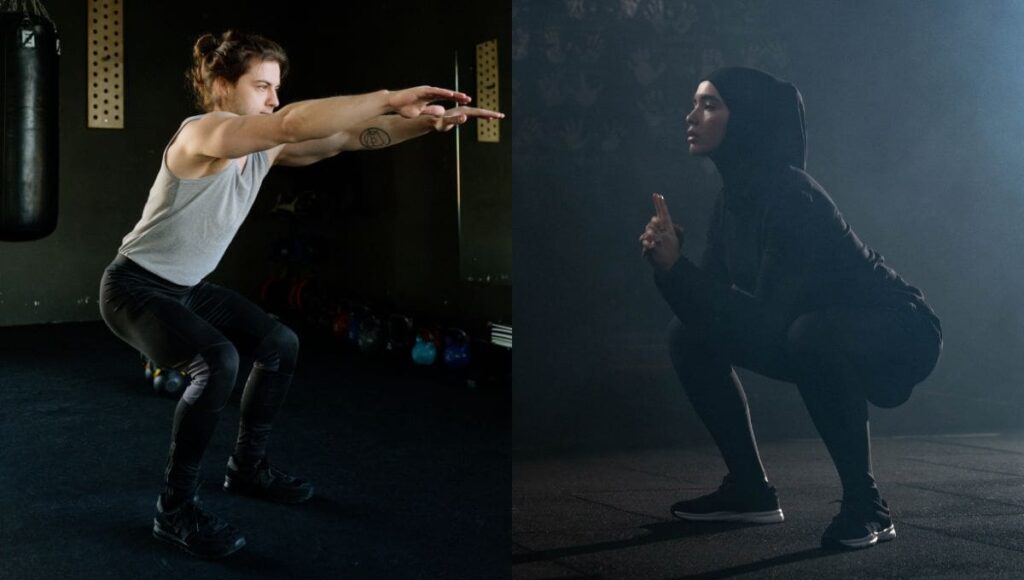
1. Standard Squat
- Stand with feet shoulder-width apart or slightly wider, toes pointing outward.
- Lower your hips back and down as if sitting into a chair.
- Keep your back straight and knees aligned with your toes.
2. Sumo Squat
- Position your feet wider than shoulder-width apart, toes pointing outward.
- Lower your hips down while keeping your back straight.
- Ensure your knees track over your toes.
3. Close Squat
This is a bit of a dangerous variation of the squat. So if you are new to this, don’t go all the way down, as this is a narrow version of the standard squat. The closer you get your feet to each other on the stance, the harder it is.
- Place your feet closer together, about hip-width apart.
- Lower your hips back and down, maintaining a straight line from your knees to your ankles.
- Use your arms for balance if necessary.
4. Pop Squat
- Start in a wide stance squat position.
- Jump up, bringing your feet together, then back out to the wide stance.
- Repeat in a rhythmic motion.
5. Squat and Lunge Combo

- Perform a standard squat.
- Upon rising, step back into a lunge with one leg.
- Return to the squat position and repeat with the other leg.
Each squat is one rep, so you don’t count one squat, one lunge as two reps, but rather as one rep.
Take a quick break now. One to 2 minutes is a good beginning.
6. Squat Pause
- Perform a standard squat but pause at the bottom for a count of two.
- This helps in practicing depth and building strength in the lower range of motion.
7. Side-to-Side Squat
- Step to the side into a squat position.
- Return to the center and repeat on the other side.
- This variation targets the inner and outer thighs.
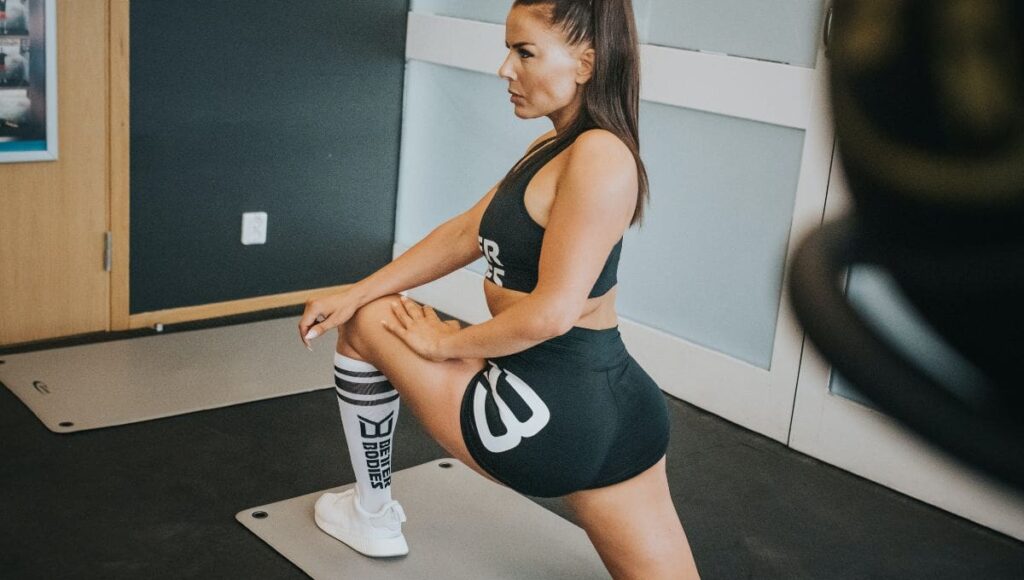
8. Split Squat (Dynamic Lunge)
- Position one leg forward and one leg back into a lunge position.
- Lower your hips straight down, keeping your torso upright.
- When coming back up, you do a little jump and switch leg.
- One rep is count for every time you do each leg once – so two lunges count as one rep, since it is one lunge on each leg.
9. Squat Jump

This variation is not simply jumping up and down. You do an extra move in this Jordan Yeoh’s variation, in which you perform a jump squat and return back from the squat to the stance position, only then you begin the second jump squat.
- Perform a standard squat but explode upward into a jump.
- Land softly and return to the stance position.
- That is one rep.
- For the following rep, you perform a standard squat, explode into a jump, land softly and return to stance position. That is two reps. Perform 10 reps in total.
10. Rapid Squat Jump
- Similar to the squat jump but performed in rapid succession.
- Land softly, but instead of returning to stance position, you immediately explode into the next jump to then land softly and squat again.
- Focus on maintaining form even at high speed.
The 100 squats workout is a versatile routine that can significantly benefit your legs and cardiovascular health. By incorporating various squat techniques, you engage different muscles and keep the workout interesting. Remember, proper form is critical to avoid injury. Always start with a thorough warm-up, listen to your body, and make adjustments as necessary. If at any point you feel discomfort or pain, stop the workout and consult a professional.
Who should do this workout?
Individuals looking to improve their leg strength, enhance cardiovascular fitness, and add variety to their lower body training can benefit from the 100 Squats Workout. This workout is suitable for those who have some basic fitness level, understand proper squat form, and are free from significant lower body injuries.
Who should NOT do this workout?
People with existing knee pain, lower back issues, or any conditions that affect their ability to perform squats safely should avoid this workout. Additionally, beginners who are not yet comfortable with basic squat movements should first focus on learning proper form and building foundational strength.
What are the benefits of doing this 100 squats workout?
The 100 Squats Workout enhances muscle strength in the legs, glutes, and core while boosting cardiovascular health. It also improves flexibility, stability, and balance, leading to better overall functional fitness. The variety in squat types targets different muscle groups, preventing workout monotony and promoting balanced muscle development.
Should you do this workout every day?
It is not advisable to perform the 100 Squats Workout every day as your muscles need time to recover and rebuild. Incorporating rest days and alternating with other forms of exercise will help prevent overuse injuries and ensure balanced muscle development and optimal performance.