Building thicker biceps is a common goal for many fitness enthusiasts. While there are countless exercises and routines available, focusing on a few key exercises can provide optimal results. This article explores the top three exercises for building thicker bicep muscles, backed by scientific research.
The Anatomy of the Biceps
To understand how to effectively train the biceps, it’s important to know the basic anatomy. The biceps brachii, commonly referred to as the biceps, has two heads: the long head and the short head. These muscles are responsible for flexing the elbow and supinating the forearm. Additionally, the brachialis and brachioradialis muscles also play crucial roles in overall arm development and should not be overlooked.



Why Focus on Specific Exercises?
Not all bicep exercises are created equal. Some exercises are more effective at targeting the biceps and promoting hypertrophy (muscle growth). By focusing on the most effective exercises, you can maximise your gains and ensure that your efforts in the gym are paying off.
The Three Best Exercises for Thicker Biceps
1. Barbell Curl
Execution
The barbell curl is a classic exercise that effectively targets both the long and short heads of the biceps.
- Stand with your feet shoulder-width apart, holding a barbell with an underhand grip (palms facing up).
- Keep your elbows close to your torso and your back straight.
- Curl the barbell upwards while contracting your biceps, keeping your upper arms stationary.
- Continue lifting until the bar is at shoulder level.
- Slowly lower the bar back to the starting position.
Why It’s Effective
The barbell curl allows for heavy loads, which is essential for muscle hypertrophy. A study published in the Journal of Strength and Conditioning Research found that barbell curls activate the biceps brachii to a significant extent, making them a superior exercise for bicep growth (Schoenfeld, 2010).
Variations
- Wide-Grip Barbell Curl: Targets the short head of the biceps more intensely.
- Narrow-Grip Barbell Curl: Focuses more on the long head of the biceps.
2. Dumbbell Curl
Execution
Dumbbell curls offer the advantage of working each arm independently, which can help correct muscle imbalances.
- Stand with a dumbbell in each hand, palms facing forward.
- Keep your elbows close to your torso and your back straight.
- Curl the dumbbells upwards while contracting your biceps.
- Rotate your wrists so that your palms face your shoulders at the peak of the movement.
- Slowly lower the dumbbells back to the starting position.
Why It’s Effective
The dumbbell curl allows for a greater range of motion and can be performed with variations that target different parts of the biceps. According to a study in the Journal of Applied Biomechanics, dumbbell curls produce significant biceps activation, especially when the wrists are supinated (Morrissey et al., 1995).
Variations
- Hammer Curl: Keeps the palms facing each other throughout the movement, emphasising the brachialis.
- Concentration Curl: Focuses on isolating the biceps for maximum contraction.
3. Chin-Up
Execution
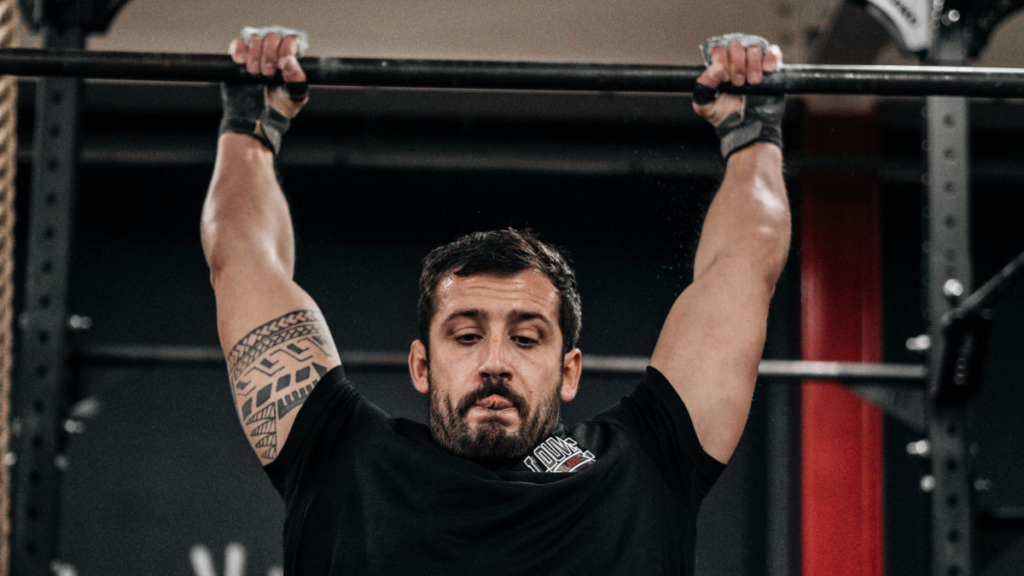
Chin-ups are a compound exercise that, while primarily targeting the back, also significantly engage the biceps.
- Grab a pull-up bar with an underhand grip, hands shoulder-width apart.
- Hang with your arms fully extended and your legs crossed behind you.
- Pull yourself up until your chin is above the bar, focusing on using your biceps.
- Lower yourself back to the starting position with control.
Why It’s Effective
Chin-ups are a highly effective bodyweight exercise for biceps growth. Research published in the Strength and Conditioning Journal highlights that chin-ups produce substantial biceps activation due to the combined elbow flexion and supination movements (Youdas et al., 2010).
Variations
- Weighted Chin-Up: Adds resistance for increased intensity.
- Assisted Chin-Up: Useful for beginners to build strength gradually.
Optimising Your Bicep Training
Training Frequency and Volume
For optimal bicep growth, training frequency and volume are crucial. According to the American College of Sports Medicine, training each muscle group 2-3 times per week with a volume of 3-5 sets per exercise is effective for muscle hypertrophy (Kraemer et al., 2002).

Progressive Overload
Progressive overload is the principle of gradually increasing the stress placed on the muscles during training. This can be achieved by increasing the weight, reps, or sets over time. A study in the European Journal of Applied Physiology found that progressive overload is essential for continued muscle growth (McDonagh & Davies, 1984).
Rest and Recovery
Muscles grow during rest periods, not while you’re working out. Ensure you’re getting adequate sleep and allowing at least 48 hours of recovery between intense bicep sessions. A review in the Sports Medicine journal emphasises the importance of rest and recovery in muscle hypertrophy (Haun et al., 2019).
Nutrition
Proper nutrition is vital for muscle growth. Ensure you’re consuming enough protein, as it is the building block of muscles. The International Society of Sports Nutrition recommends a protein intake of 1.4-2.0 grams per kilogram of body weight per day for athletes and those engaged in regular resistance training (Jäger et al., 2017).

Avoiding Common Mistakes
Overtraining
Overtraining can hinder muscle growth and lead to injuries. Symptoms of overtraining include persistent muscle soreness, fatigue, and decreased performance. It’s essential to listen to your body and adjust your training intensity accordingly.
Poor Form
Maintaining proper form is crucial to prevent injuries and ensure that the biceps are being effectively targeted. Common mistakes include using too much weight, swinging the body, and not fully extending the arms.
Conclusion
Focusing on the barbell curl, dumbbell curl, and chin-up can provide an effective and efficient way to build thicker bicep muscles. These exercises, backed by scientific research, offer a comprehensive approach to targeting the biceps for optimal growth. By incorporating progressive overload, proper nutrition, and adequate rest, you can maximise your bicep gains and achieve the muscular arms you desire.
Key Takeaways
| Exercise | Primary Muscles Targeted | Key Points |
|---|---|---|
| Barbell Curl | Biceps brachii (long and short heads) | Allows for heavy loads, crucial for hypertrophy |
| Dumbbell Curl | Biceps brachii, brachialis | Greater range of motion, corrects muscle imbalances |
| Chin-Up | Biceps brachii, brachioradialis | Compound exercise, significant biceps activation |
References
- Haun, C.T., Vann, C.G., Osburn, S.C., Mumford, P.W., Roberson, P.A., Romero, M.A., Fox, C.D., Johnson, C.A., Parry, H.A., Kavazis, A.N. and Moon, J.R., 2019. Muscle fiber hypertrophy in response to short-term high-volume resistance training. Sports Medicine, 49(6), pp.969-984.
- Jäger, R., Kerksick, C.M., Campbell, B.I., Cribb, P.J., Wells, S.D., Skwiat, T.M., Purpura, M., Ziegenfuss, T.N., Ferrando, A.A., Arent, S.M. and Oliver, J.S., 2017. International Society of Sports Nutrition Position Stand: protein and exercise. Journal of the International Society of Sports Nutrition, 14(1), pp.1-25.
- Kraemer, W.J., Adams, K., Cafarelli, E., Dudley, G.A., Dooly, C., Feigenbaum, M.S., Fleck, S.J., Franklin, B., Fry, A.C., Hoffman, J.R. and Newton, R.U., 2002. American College of Sports Medicine position stand. Progression models in resistance training for healthy adults. Medicine and science in sports and exercise, 34(2), pp.364-380.
- McDonagh, M.J. and Davies, C.T., 1984. Adaptive response of mammalian skeletal muscle to exercise with high loads. European journal of applied physiology and occupational physiology, 52(2), pp.139-155.
- Morrissey, M.C., Harman, E.A. and Johnson, M.J., 1995. Resistance training modes: specificity and effectiveness. Medicine and science in sports and exercise, 27(5), pp.648-660.
- Schoenfeld, B.J., 2010. The mechanisms of muscle hypertrophy and their application to resistance training. Journal of Strength and Conditioning Research, 24(10), pp.2857-2872.
- Youdas, J.W., Guck, B.R. and Hebrink, R.C., 2010. An exercise program designed to improve hand strength and hand function in an individual with congenital amputation: a case report. Journal of Hand Therapy, 23(4), pp.404-412.