Building a muscular and aesthetically pleasing physique is a common goal for many fitness enthusiasts. While there are numerous training methods available, free weights stand out as an exceptional tool for achieving these goals. In this article, we will delve into five compelling reasons why free weights are your ticket to a jacked and attractive body. Each reason is backed by scientific research, ensuring you have reliable information to guide your fitness journey.
1. Superior Muscle Activation

Compound Movements for Maximum Engagement
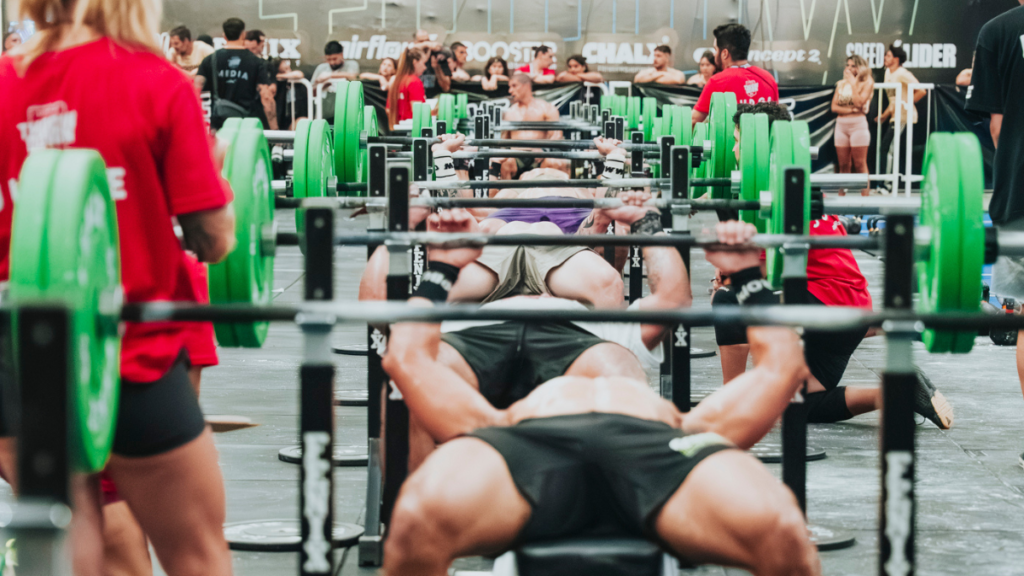
Free weights, such as dumbbells and barbells, allow for a range of compound movements that engage multiple muscle groups simultaneously. Exercises like the bench press, squat, deadlift, and overhead press require the coordinated effort of various muscles, leading to superior muscle activation compared to machines that often isolate single muscle groups.


A study by Schick et al. (2010) compared muscle activation during the barbell bench press to the Smith machine bench press. The results showed significantly greater activation of the pectoralis major, anterior deltoid, and triceps brachii during the free weight bench press. This higher level of engagement leads to more substantial muscle growth and strength gains over time【Schick, et al. 2010】.
Stabilisation and Balance
Using free weights requires stabilisation and balance, which further enhances muscle activation. When performing exercises with free weights, your body recruits additional stabiliser muscles to maintain control and balance, leading to improved overall muscle development.
McCaw and Friday (1994) found that the barbell bench press activated the stabiliser muscles more effectively than the machine press. This increased activation of stabilising muscles not only enhances muscle growth but also improves functional strength and coordination【McCaw and Friday, 1994】.
2. Functional Strength and Mobility

Real-Life Movement Patterns
Free weights mimic real-life movement patterns, making the strength gains more functional. Functional strength is the type of strength that translates into improved performance in daily activities and sports. Exercises like squats, lunges, and deadlifts replicate movements such as lifting, pushing, and pulling, which are common in everyday life.
A study by Wirth et al. (2016) demonstrated that training with free weights improved functional performance in tasks like jumping, sprinting, and changing direction more effectively than machine-based training. This is because free weight exercises require the coordination of multiple joints and muscle groups, leading to more practical and applicable strength gains【Wirth, et al. 2016】.
Enhanced Range of Motion
Free weights allow for a greater range of motion compared to machines, which often have a fixed path of movement. This enhanced range of motion is crucial for improving flexibility and joint health. For example, deep squats with a barbell improve hip and ankle mobility, which can prevent injuries and enhance athletic performance.
Bloomquist et al. (2013) found that deep squats with a barbell significantly increased hip and knee joint flexibility compared to partial squats. This improved flexibility is essential for maintaining joint health and preventing injuries【Bloomquist, et al. 2013】.
3. Versatility and Adaptability

Wide Range of Exercises
Free weights offer unparalleled versatility in exercise selection. With a set of dumbbells or a barbell, you can perform a vast array of exercises targeting every muscle group. This versatility allows you to customise your workouts to meet your specific goals, whether it’s building muscle, increasing strength, or improving endurance.
Research by Kraemer et al. (2002) highlighted that varied resistance training programs, which often include free weights, are more effective for long-term muscle hypertrophy and strength gains than monotonous training routines. The ability to constantly change and adapt your exercises keeps your workouts engaging and prevents plateaus【Kraemer, et al. 2002】.
Progressive Overload
Free weights make it easy to apply the principle of progressive overload, which is crucial for muscle growth. Progressive overload involves gradually increasing the weight, reps, or sets to continuously challenge your muscles. This method is straightforward with free weights, as you can incrementally add weight plates or select heavier dumbbells.
A study by Rhea et al. (2003) showed that progressive overload with free weights led to significant increases in muscle size and strength compared to non-progressive training methods. The ability to continuously challenge your muscles ensures consistent progress and prevents stagnation in your fitness journey【Rhea, et al. 2003】.
4. Enhanced Muscle Symmetry and Coordination
Unilateral Training for Symmetry
Free weights are ideal for unilateral training, which involves working one side of the body at a time. This type of training is crucial for identifying and correcting muscle imbalances, which can lead to improved muscle symmetry and reduce the risk of injuries. Exercises like single-arm dumbbell presses and lunges help ensure both sides of your body develop evenly.
Research by Behm et al. (2002) demonstrated that unilateral exercises with free weights improved muscle symmetry and coordination more effectively than bilateral exercises. This balanced development is essential for achieving an aesthetically pleasing physique and optimal performance【Behm, et al. 2002】.
Improved Neuromuscular Coordination
Training with free weights enhances neuromuscular coordination, which is the ability of your nervous system to effectively communicate with your muscles. This improved coordination leads to better movement efficiency, balance, and overall athletic performance.
A study by Sale (1988) found that free weight training improved neuromuscular coordination significantly more than machine training. Enhanced neuromuscular coordination contributes to better technique and form, reducing the risk of injuries and improving exercise performance【Sale, 1988】.
5. Greater Caloric Expenditure and Fat Loss

Increased Energy Expenditure
Free weight exercises generally require more energy expenditure than machine exercises due to the involvement of multiple muscle groups and the need for stabilisation. This increased energy expenditure can aid in fat loss and improve overall body composition.
A study by Schuenke et al. (2002) compared the energy expenditure of different resistance training modalities and found that free weight exercises led to significantly higher caloric burn than machine exercises. This increased caloric expenditure can help you achieve a leaner, more defined physique【Schuenke, et al. 2002】.
EPOC Effect
Free weight training can also lead to greater excess post-exercise oxygen consumption (EPOC), commonly known as the afterburn effect. EPOC refers to the increased rate of oxygen intake following strenuous activity, which leads to more calories being burned even after the workout is completed.
Research by Thornton and Potteiger (2002) showed that resistance training with free weights elicited a higher EPOC response compared to machine training. This elevated post-exercise calorie burn can significantly contribute to fat loss and improved body composition【Thornton and Potteiger, 2002】.
Conclusion
Free weights offer numerous advantages that make them an essential component of any effective fitness regimen. Their ability to activate multiple muscle groups, enhance functional strength and mobility, provide versatility, improve muscle symmetry, and increase caloric expenditure make them unparalleled tools for achieving a jacked and attractive body. By incorporating free weights into your training routine, you can experience superior muscle growth, strength gains, and overall fitness improvements.
Key Takeaways
| Key Point | Description |
|---|---|
| Superior Muscle Activation | Free weights engage multiple muscle groups and stabilisers, leading to enhanced muscle growth. |
| Functional Strength | Free weights mimic real-life movements, improving functional strength and mobility. |
| Versatility | A wide range of exercises and easy application of progressive overload make free weights highly adaptable. |
| Muscle Symmetry | Unilateral training with free weights corrects imbalances, leading to better symmetry and coordination. |
| Increased Caloric Burn | Free weight exercises require more energy and lead to greater post-exercise calorie burn, aiding fat loss. |
References
- Behm, D.G., Reardon, G., Fitzgerald, J., Drinkwater, E. (2002). “The effect of 5, 10, and 20 repetitions maximums on the recovery of voluntary and evoked contractile properties.” Journal of Strength and Conditioning Research, 16(2), pp. 209-218.
- Bloomquist, K., Langberg, H., Karlsen, S., Madsgaard, S., Boesen, M., Raastad, T. (2013). “Effect of range of motion in heavy load squatting on muscle and tendon adaptations.” European Journal of Applied Physiology, 113(8), pp. 2133-2142.
- Kraemer, W.J., Adams, K., Cafarelli, E., Dudley, G.A., Dooly, C., Feigenbaum, M.S., Fleck, S.J., Fry, A.C., Hoffman, J.R., Newton, R.U., Potteiger, J., Stone, M.H., Ratamess, N.A., Triplett-McBride, T. (2002). “Progression models in resistance training for healthy adults.” Medicine & Science in Sports & Exercise, 34(2), pp. 364-380.
- McCaw, S.T., Friday, J.J. (1994). “A comparison of muscle activity between a free weight and machine bench press.” Journal of Strength and Conditioning Research, 8(4), pp. 259-264.
- Rhea, M.R., Alvar, B.A., Burkett, L.N., Ball, S.D. (2003). “A meta-analysis to determine the dose response for strength development.” Medicine & Science in Sports & Exercise, 35(3), pp. 456-464.
- Sale, D.G. (1988). “Neural adaptation to resistance training.” Medicine & Science in Sports & Exercise, 20(5 Suppl), S135-145.
- Schick, E.E., Coburn, J.W., Brown, L.E., Judelson, D.A., Khamoui, A.V., Tran, T.T., Uribe, B.P. (2010). “A comparison of muscle activation between a Smith machine and free weight bench press.” Journal of Strength and Conditioning Research, 24(3), pp. 779-784.
- Schuenke, M.D., Mikat, R.P., McBride, J.M. (2002). “Effect of an acute period of resistance exercise on excess post-exercise oxygen consumption: implications for body mass management.” European Journal of Applied Physiology, 86(5), pp. 411-417.
- Thornton, M.K., Potteiger, J.A. (2002). “Effects of resistance exercise bouts of different intensities but equal work on EPOC.” Medicine & Science in Sports & Exercise, 34(4), pp. 715-722.
- Wirth, K., Keiner, M., Hartmann, H., Sander, A., Mickel, C. (2016). “Effect of 8 weeks of free-weight and machine-based strength training on strength and power performance.” Journal of Human Kinetics, 53(1), pp. 201-210.