Building muscle effectively requires more than just lifting weights; it demands a strategic approach that maximises muscle stimulation and growth. Free weights, such as dumbbells and barbells, are among the most effective tools for this purpose due to their versatility and ability to engage multiple muscle groups simultaneously. This article explores three scientifically-backed methods to accelerate muscle growth using free weights.
Progressive Overload

Understanding Progressive Overload
Progressive overload is the gradual increase of stress placed on the body during exercise. This principle is fundamental to muscle growth, as it continuously challenges the muscles, prompting them to adapt and grow stronger. The concept of progressive overload was first documented by Thomas Delorme in the 1940s and has since been a cornerstone of resistance training.


Implementing Progressive Overload
To effectively apply progressive overload with free weights, consider the following strategies:
- Increase the Weight: Gradually increasing the weight used in your exercises forces your muscles to adapt to the new stress. This can be done by adding small increments of weight (e.g., 1.25 kg to 2.5 kg) to your lifts.
- Increase the Repetitions: Once you can comfortably perform the current weight for a specific number of repetitions, increase the repetitions. For example, if you are lifting a weight for 8 reps, try increasing to 10 reps before adding more weight.
- Adjust the Volume: Volume refers to the total amount of weight lifted in a session (sets x reps x weight). Increasing the volume by adding more sets or incorporating additional exercises for the same muscle group can enhance muscle growth.
- Manipulate Rest Periods: Reducing rest periods between sets can increase the intensity of your workout, promoting greater muscle fatigue and growth.
Scientific Evidence
A study published in the Journal of Strength and Conditioning Research highlighted the importance of progressive overload in muscle hypertrophy. The researchers found that individuals who applied progressive overload saw significantly greater increases in muscle mass and strength compared to those who did not .
Compound Movements
The Power of Compound Movements
Compound movements involve multiple joints and muscle groups working together. These exercises, such as squats, deadlifts, and bench presses, are highly effective for muscle growth because they allow you to lift heavier weights and engage more muscle fibres.
Key Compound Exercises with Free Weights
- Squats: Target the quadriceps, hamstrings, glutes, and core. Variations include the back squat, front squat, and goblet squat.
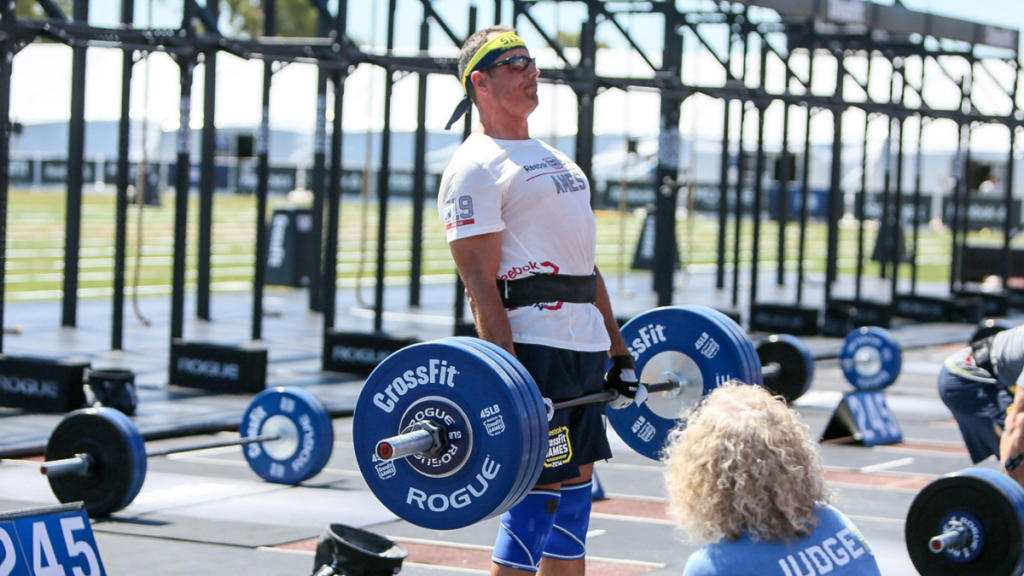
- Deadlifts: Work the posterior chain, including the hamstrings, glutes, lower back, and traps. Variations include conventional deadlifts, sumo deadlifts, and Romanian deadlifts.
- Bench Press: Focus on the pectorals, triceps, and shoulders. Variations include flat, incline, and decline bench presses.
- Rows: Engage the back muscles, biceps, and forearms. Variations include bent-over rows, single-arm dumbbell rows, and T-bar rows.
- Overhead Press: Target the shoulders, triceps, and upper chest. Variations include standing military press and seated dumbbell press.
Scientific Evidence
Research published in the European Journal of Applied Physiology indicates that compound movements are more effective for muscle growth compared to isolation exercises. This is due to the higher hormonal response and greater overall muscle activation associated with compound lifts .
Training Frequency and Recovery

Optimising Training Frequency
Training frequency refers to how often you work out a particular muscle group. The optimal frequency depends on factors such as workout intensity, volume, and individual recovery capacity. However, for most individuals, training each muscle group 2-3 times per week can maximise growth.
Balancing Intensity and Recovery
- Split Routines: Dividing your workouts into split routines (e.g., upper/lower body split, push/pull/legs) can allow for sufficient recovery while maintaining a high training frequency.
- Rest and Recovery: Muscles grow during rest, not during the workout. Ensuring adequate sleep, nutrition, and rest days is crucial for muscle recovery and growth.
Scientific Evidence
A meta-analysis published in the Journal of Sports Sciences found that training a muscle group twice per week was more effective for hypertrophy than once per week. The researchers concluded that increased training frequency allows for higher training volume, which is a key driver of muscle growth .
Conclusion
To accelerate muscle growth with free weights, it is essential to implement progressive overload, incorporate compound movements, and optimise training frequency and recovery. These strategies are grounded in scientific research and have been proven to enhance muscle hypertrophy and strength gains.
Bibliography
- Schoenfeld, B. J., Ogborn, D., & Krieger, J. W. (2016). Effects of Resistance Training Frequency on Measures of Muscle Hypertrophy: A Systematic Review and Meta-Analysis. Sports Medicine, 46(11), 1689-1697.
- Schwanbeck, S., Chilibeck, P. D., & Binsted, G. (2009). A Comparison of Free Weight Squat to Smith Machine Squat Using Electromyography. Journal of Strength and Conditioning Research, 23(9), 2588-2591.
- Grgic, J., Schoenfeld, B. J., Orazem, J., & Sabol, F. (2018). Effects of Resistance Training Frequency on Gains in Muscular Strength: A Systematic Review and Meta-Analysis. Journal of Sports Sciences, 36(12), 1398-1405.
Key Takeaways
| Key Takeaways |
|---|
| Progressive overload is essential for muscle growth. |
| Compound movements engage multiple muscle groups. |
| Train each muscle group 2-3 times per week. |
| Ensure adequate rest and recovery for muscle growth. |
These principles, when applied consistently, can lead to significant improvements in muscle size and strength. For personalised advice, consider consulting with a fitness professional or personal trainer.