Ever wondered what it takes to build a gladiator-worthy physique? Look no further. While Paul Mescal remains tight-lipped about his physical transformation for “Gladiator 2,” we’ve delved into the essentials to help you sculpt a body that echoes his warrior-like form. Mescal, known for downplaying his superhero physique, has nonetheless committed to a rigorous routine, hitting the gym three to four times a week. This article reveals the “Gladiator 2” workout plan inspired by his efforts, crafted to transform you into a modern-day gladiator.
And just in time, as the trailer for Gladiator 2 with Paul Mescal, Pedro Pascal, Denzel Washington and more high-caliber actors have just been released.


Think of this workout as a foundation for building strength and muscle, setting the stage for more advanced, targeted growth in specific areas. Mescal’s transformation isn’t just about lifting weights; it’s an approach incorporating nutrition and recovery, ensuring your body is well-fuelled and rested to maximise gains and to burn off that fuel when pushing hard inside the gym.
Achieving a body ready for the big screen involves more than just intense workouts. It’s about maintaining a daily calorie surplus of around 285 calories and securing eight hours of quality sleep each night. Stick to these principles—caloric surplus, adequate protein intake, heavy lifting, and proper rest—and watch as your physique transforms into that of a gladiator. Ready to embrace the iron? Let’s dive into the Paul Mescal “Gladiator 2” workout routine.
Note: although Paul Mescal or his trainer has not come out yet explaining exactly what the actor did to become the buffed gladiator, BOXROX has searched through the internet to come up with the workout possibly is what he did. Most of the information here was shared on the Eterno Body website.
How to Train Like Paul Mescal from Gladiator 2
Workout Schedule
Workout A (Monday)
- Incline Barbell Bench Press: 3 sets x 5-6, 6-7, 7-8 reps (reverse pyramid training)
- Flat Dumbbell Bench Press: 2 sets x 8-10, 10-12 reps (reverse pyramid training)
- Incline Dumbbell Curls: 3 sets x 6-8 reps (reverse pyramid training)
- Machine Curls: 3 sets x 8-10, 10-12, 10+10 reps (long-length partials)
- Face Pulls: 3 sets x 10 reps (straight sets)
Workout B (Wednesday)
- Bulgarian Split Squats: 3 sets x 6-8 reps (reverse pyramid training)
- Romanian Deadlifts: 3 sets x 6-8 reps (reverse pyramid training)
- Leg Extensions: 3 sets x 10-12 reps (reverse pyramid training)
- Hanging Weighted Knee Raises: 3 sets x 8-15 reps (straight sets)
- Neck Curls: 3 sets x 15-20 reps (normal pyramid training)
Workout C (Friday)
- Arnold Press: 3 sets x 10 reps (straight sets)
- Weighted Chin-ups: 2 sets x 6 reps (reverse pyramid training)
- Seated Cable Rows: 2 sets x 8-12 reps (reverse pyramid training)
- Triceps Rope Pushdowns: 3 sets x 8-10, 10-12, 10-12 reps (reverse pyramid training)
- Lateral Raises: 1 set x 12-15 reps + 3 sets x 4-6 reps (rest-pause training)
Paul Mescal “Gladiator 2” Workout Notes
To get the most out of the Gladiator 2 workout, it’s crucial to follow these guidelines:
Warmup
Start every session with a proper warm-up. For the first exercise, do two warm-up sets. Begin with five reps at 60% of your working weight, rest, then perform another five reps at 80%. This prepares your muscles and nervous system for the heavier sets.
Reverse Pyramid Training
This method involves starting with your heaviest set when you have the most energy. As the sets progress, decrease the weight and increase the reps. This approach promotes strength gains and hypertrophy while preventing muscle fatigue.
Straight Sets
For exercises like face pulls and Arnold presses, use the same weight for all sets. Perform the target reps, rest, and repeat. This helps build endurance and volume without the intensity of heavier lifts.
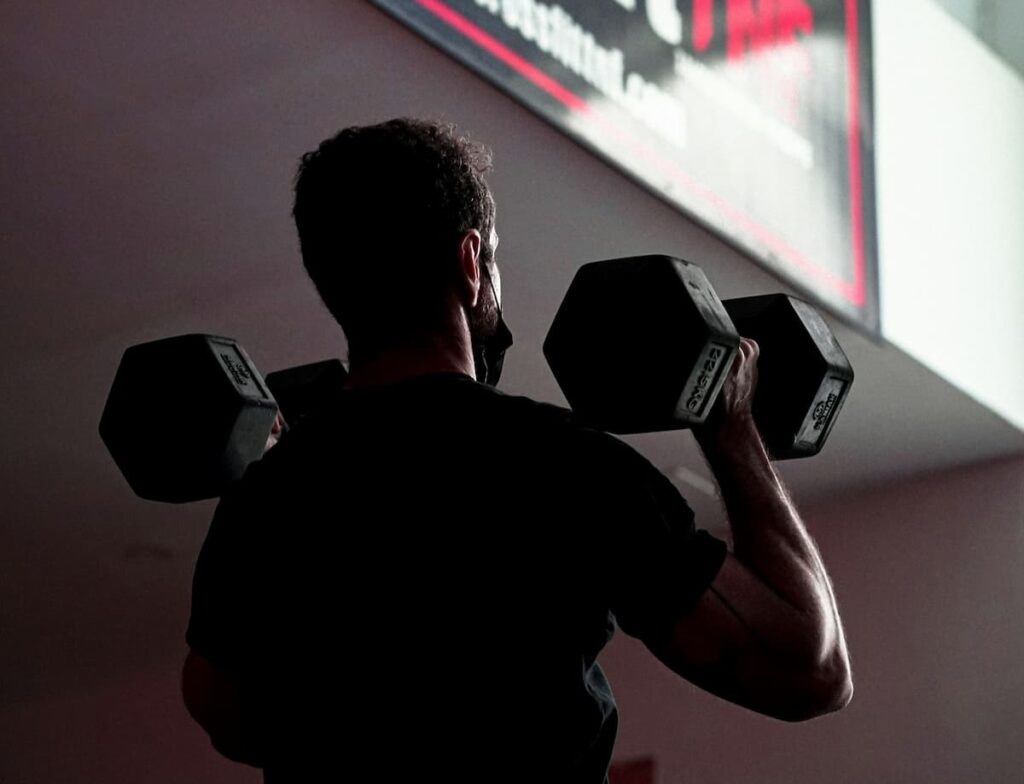
Long-Length Partials
To maximise bicep growth, include long-length partials. Perform 10 full reps followed by 10 half-reps in the stretched position. This technique enhances the muscle pump and stimulates growth by keeping the muscles under tension for longer.
Paul Mescal “Gladiator 2” Diet Plan
Fueling your body correctly is as important as the workouts. Here’s how to align your nutrition for optimal results:
Calorie Surplus and Protein Intake
Maintain a daily calorie surplus of 285 calories and aim for 0.82g of protein per pound of body weight. This surplus supports muscle growth and recovery. Balance your diet with carbs and fats to ensure you’re getting a well-rounded intake of nutrients.
Quality Foods
Prioritise whole, nutrient-dense foods over ultra-processed options. Not only will this improve your overall health and gym performance, but it will also support sustained energy levels throughout the day. While indulging in your favourite treats is fine, keep it moderate—reserve about 500 calories for these pleasures.
Sample Meal Preferences
Based on Mescal’s food preferences, consider incorporating these items into your diet:
- Broccoli, onion, and potato soup
- Tuna and anchovies on sourdough
- Carbonara pasta
- Chicken wings
- Chocolate lava cake or gooey cookie dough for dessert

The Paul Mescal “Gladiator 2” workout is more than just a fitness plan; it’s a comprehensive approach to building a warrior’s physique. By adhering to the workout schedule, leveraging advanced training techniques, and maintaining a well-balanced diet, you can achieve impressive results. Remember, consistency in both your workout and nutrition plans is key to seeing significant changes in your body.
Ready to take on the challenge? Channel your inner gladiator and transform your physique with this powerful routine inspired by Paul Mescal’s “Gladiator 2” training. For a visual guide and more tips, check out the linked videos and embrace the journey to becoming a modern-day warrior.
Key Takeaways
| Aspect | Details |
| Workout Frequency | 3 days a week (Monday, Wednesday, Friday) |
| Training Techniques | Reverse pyramid training, straight sets, long-length partials |
| Diet Plan | Daily calorie surplus of 285 calories, 0.82g of protein per pound of body weight |
| Key Foods | Whole foods, balanced intake of carbs and fats, occasional indulgence in favourite treats |
| Recovery | 8 hours of sleep per night, proper warm-up and cool-down routines |
Check out other training programs you might find uself:
Train Like Arnold Schwarzenegger: Training Session Revealed
Kratos Workout – Build Strength Like the God of War
Gladiators in the Roman period underwent rigorous, highly structured training designed to prepare them for combat in the arena. Contrary to popular belief, they weren’t just thrown into fights without preparation. Here’s a detailed look at how they trained:
1. Training Facilities – The Ludus
Gladiators trained in special schools called ludi, run by a lanista (trainer and manager). The most famous of these was the Ludus Magnus, located near the Colosseum in Rome.
- These schools included living quarters, training yards (palaestra), sparring areas, and even medical facilities.
- Gladiators were slaves, criminals, or volunteers, but once in training, they were valuable investments, so their health and skill were closely managed.
2. Physical Conditioning
Gladiators followed strict daily routines to build strength, endurance, and agility:
- Bodyweight exercises (push-ups, squats, and calisthenics)
- Running and rope climbing for cardiovascular endurance
- Weight training with sandbags and lead-weighted equipment
- Drills with wooden weapons, which were heavier than the real ones to build strength and control
This type of conditioning was similar to modern strength and functional fitness training, emphasizing practical, combat-ready movement.
3. Technical Combat Training
Gladiators trained in specific fighting styles based on their assigned class (e.g., murmillo, thraex, retiarius), each with unique weapons and armor:
- Wooden swords (rudis) and padded shields were used for sparring to avoid injury
- They practiced footwork, offensive techniques, and defensive maneuvers
- Duels were rehearsed under the watch of a doctore (combat coach), often a retired gladiator
Training emphasized discipline, form, and reaction timing, not just brute strength.
4. Nutrition and Recovery
Gladiators were nicknamed “hordearii” (barley men) because their diet was rich in barley, beans, and legumes, which provided sustained energy.
- They consumed a vegetarian-heavy diet, sometimes with ash or bone meal to help with recovery and bone strength.
- Although not optimal by modern athletic standards, the diet supported the robust physical demands placed on them.
5. Mental Toughness and Psychological Conditioning
Gladiators were also conditioned mentally to face fear, pain, and death:
- Training involved discipline, repetition, and harsh supervision
- They watched other fights, both to learn and become desensitized to violence
- Some even took oaths of loyalty and treated their status as a form of honor, especially volunteers and those seeking fame
Roman gladiators were elite fighters, trained systematically with methods surprisingly close to today’s principles of athletic conditioning. Their training combined brutal physical work, technical skill, mental resilience, and structured recovery, making them not just survivors—but performers—in the deadly spectacle of the arena.