The latissimus dorsi, commonly referred to as the “lats,” is one of the largest muscle groups in the upper body. They play a crucial role in movements involving pulling, which makes them essential for building a strong and aesthetically pleasing back. While lat pulldowns are a popular exercise for targeting these muscles, relying solely on this exercise can lead to plateaus in progress and potentially miss the full activation of the lats.
In this article, we’ll explore four effective alternatives to the lat pulldown that can stimulate growth and strength in your lat muscles. We will also delve into the anatomy and function of the lats, as well as the benefits of incorporating variety in your back training routine.


Table of Contents
Anatomy and Function of the Latissimus Dorsi
The latissimus dorsi muscles are large, flat muscles that span the width of the back. Originating from the lower thoracic vertebrae, lumbar vertebrae, sacrum, and iliac crest, they insert into the intertubercular groove of the humerus. This broad origin and narrow insertion give the lats a wing-like appearance when developed, contributing to the coveted V-taper physique.
Functions of the Latissimus Dorsi
- Shoulder Extension: The lats are responsible for extending the shoulder joint, which involves moving the arm backward from a flexed position.
- Adduction: This is the movement of pulling the arms toward the body’s midline, which is crucial in exercises like pull-ups and chin-ups.
- Internal Rotation: The lats assist in internally rotating the arm at the shoulder joint, which is important for various athletic movements.
- Stabilisation: During compound movements, the lats help stabilise the torso and spine, making them essential for exercises like deadlifts and squats.
Understanding these functions is crucial when selecting exercises that effectively target the lats, as it allows us to choose movements that mimic these actions.

Benefits of Variety in Back Training
Incorporating a variety of exercises in your back training routine offers several benefits:
- Muscle Hypertrophy: Different exercises target muscle fibres in various ways, leading to increased muscle growth and development.
- Strength Gains: By training the muscles through different angles and movements, you can improve overall strength and performance.
- Reduced Risk of Injury: Variety in exercises prevents overuse injuries by avoiding repetitive strain on specific joints and muscles.
- Enhanced Neuromuscular Coordination: Engaging different muscle groups and movement patterns enhances your overall motor skills and coordination.
By exploring alternative exercises to the lat pulldown, you can maximise these benefits and achieve greater lat development.
Alternative Exercises to the Lat Pulldown
Here are four effective exercises that target the lats, each offering unique benefits and challenges.
1. Pull-Ups
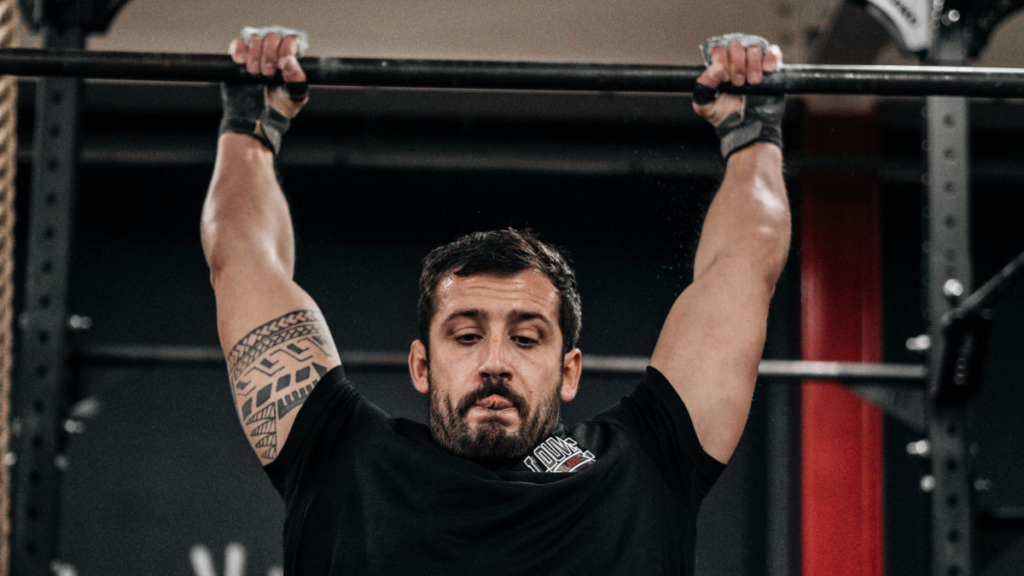
Pull-ups are a classic bodyweight exercise that effectively targets the lats, among other upper body muscles. Unlike lat pulldowns, pull-ups require you to lift your entire body weight, which can lead to greater muscle activation and growth.
Benefits of Pull-Ups:
- Increased Muscle Activation: Pull-ups engage the lats, rhomboids, trapezius, biceps, and core muscles, making them a highly effective compound movement.
- Functional Strength: Pull-ups mimic real-world movements, enhancing your overall functional strength and athletic performance.
- Versatility: There are various pull-up variations, such as wide grip, close grip, and neutral grip, allowing you to target different parts of the lats and upper body.
How to Perform Pull-Ups:
- Starting Position: Hang from a pull-up bar with your palms facing away from you and hands slightly wider than shoulder-width apart.
- Engage Core: Tighten your core muscles to stabilise your body and prevent swinging.
- Pull Up: Initiate the movement by pulling your shoulder blades down and back. Continue pulling until your chin is above the bar.
- Lowering Phase: Slowly lower yourself back to the starting position, maintaining control throughout the movement.
How to Massively Improve Your Pull Ups Quickly (3 Steps)
Tips for Beginners:
- Use resistance bands or an assisted pull-up machine to reduce the amount of weight you need to lift.
- Focus on maintaining proper form rather than completing as many repetitions as possible.
2. Bent-Over Rows
Bent-over rows are a compound exercise that targets the lats, rhomboids, and trapezius muscles. They are performed with a barbell or dumbbells and offer the advantage of loading the lats with heavier weights than bodyweight exercises.
Benefits of Bent-Over Rows:
- Heavy Load: The ability to use heavier weights in bent-over rows leads to increased muscle hypertrophy and strength.
- Improved Posture: By strengthening the muscles of the upper back, bent-over rows contribute to better posture and spinal alignment.
- Versatility: Bent-over rows can be performed with various grips (underhand, overhand) and equipment (barbells, dumbbells), allowing for different muscle activation.
How to Perform Bent-Over Rows:
- Starting Position: Stand with feet shoulder-width apart, holding a barbell or dumbbells with an overhand grip. Bend at the hips, keeping your back straight and knees slightly bent.
- Engage Lats: Pull the weights toward your lower ribcage, keeping your elbows close to your body. Focus on squeezing your shoulder blades together.
- Lowering Phase: Slowly lower the weights back to the starting position, maintaining control and tension in the muscles.
Common Mistakes:
- Rounding the Back: Keep your back straight and avoid rounding to prevent injury and ensure proper muscle engagement.
- Using Momentum: Avoid swinging the weights or using momentum to complete the movement. Focus on controlled and deliberate repetitions.
3. Single-Arm Dumbbell Rows
Single-arm dumbbell rows are an excellent unilateral exercise that targets the lats, allowing for greater focus on each side of the back. This exercise helps address muscle imbalances and enhances stabilisation.
Benefits of Single-Arm Dumbbell Rows:
- Unilateral Training: By working one side at a time, you can address muscle imbalances and improve overall symmetry.
- Enhanced Stabilisation: The unilateral nature of the exercise requires increased core and stabiliser muscle engagement.
- Range of Motion: Single-arm rows allow for a greater range of motion compared to bilateral exercises, leading to increased muscle activation.
How to Perform Single-Arm Dumbbell Rows:
- Starting Position: Place one knee and hand on a bench for support, holding a dumbbell in the opposite hand. Keep your back straight and parallel to the ground.
- Engage Lats: Pull the dumbbell toward your hip, keeping your elbow close to your body. Focus on squeezing your shoulder blade at the top of the movement.
- Lowering Phase: Slowly lower the dumbbell back to the starting position, maintaining control throughout the movement.
Tips for Success:
- Mind-Muscle Connection: Focus on engaging the lats and feeling the contraction during each repetition.
- Balanced Training: Ensure equal volume and intensity for both sides to prevent muscle imbalances.
4. T-Bar Rows
T-bar rows are a highly effective exercise for targeting the lats and the entire upper back. They allow for the use of heavy weights while maintaining a stable and controlled movement.
Benefits of T-Bar Rows:
- Heavy Load: T-bar rows enable the use of heavy weights, contributing to significant muscle growth and strength gains.
- Focus on Lats: The angle of the T-bar row emphasises lat engagement, making it an excellent exercise for lat development.
- Core Engagement: The bent-over position requires core stabilisation, enhancing overall core strength.
How to Perform T-Bar Rows:
- Starting Position: Stand with feet shoulder-width apart, straddling the T-bar row machine. Bend at the hips and grip the handles with both hands.
- Engage Lats: Pull the handles toward your chest, keeping your elbows close to your body. Focus on squeezing your shoulder blades together at the top of the movement.
- Lowering Phase: Slowly lower the weight back to the starting position, maintaining control and tension in the muscles.
Common Mistakes:
- Rounded Back: Keep your back straight and avoid rounding to prevent injury and ensure proper muscle engagement.
- Using Momentum: Avoid using momentum or jerking motions to complete the movement. Focus on controlled and deliberate repetitions.
Incorporating These Exercises into Your Routine
When incorporating these exercises into your routine, consider the following tips for optimal results:
- Progressive Overload: Gradually increase the weight, repetitions, or sets over time to ensure continuous progress and muscle growth.
- Proper Form: Prioritise proper form and technique over lifting heavier weights. This will help prevent injuries and maximise muscle engagement.
- Balanced Routine: Include a variety of exercises that target different areas of the back, including the lats, rhomboids, and trapezius muscles.
- Recovery: Allow adequate time for rest and recovery between workouts to promote muscle growth and prevent overtraining.
- Nutrition: Support your training with a balanced diet rich in protein, carbohydrates, and healthy fats to fuel muscle growth and recovery.

Conclusion
While lat pulldowns are a popular exercise for targeting the lats, incorporating a variety of exercises into your back training routine can lead to greater muscle growth, strength gains, and overall performance. Pull-ups, bent-over rows, single-arm dumbbell rows, and T-bar rows are excellent alternatives that effectively target the lats and provide unique benefits. By understanding the anatomy and function of the latissimus dorsi and incorporating these exercises into your routine, you can achieve optimal lat development and enhance your overall physique.
Key Takeaways
| Exercise | Primary Benefits | Tips for Success |
|---|---|---|
| Pull-Ups | Increased muscle activation, functional strength, versatility | Use resistance bands for assistance, focus on proper form |
| Bent-Over Rows | Heavy load, improved posture, versatility | Keep back straight, avoid using momentum |
| Single-Arm Dumbbell Rows | Unilateral training, enhanced stabilisation, range of motion | Focus on mind-muscle connection, balance training on both sides |
| T-Bar Rows | Heavy load, focus on lats, core engagement | Maintain straight back, use controlled movements |
References
- Fisher, J., Steele, J., & Smith, D. (2013). Evidence-based resistance training recommendations for muscular hypertrophy. Medicine & Science in Sports & Exercise, 45(1), 129-144.
- Gentil, P., Oliveira, E., & Bottaro, M. (2006). Time under tension and blood lactate response during four different resistance training methods. Journal of Physiological Anthropology, 25(5), 339-344.
- Haff, G. G., & Triplett, N. T. (2015). Essentials of strength training and conditioning (4th ed.). Human Kinetics.
- Schoenfeld, B. J. (2010). The mechanisms of muscle hypertrophy and their application to resistance training. Journal of Strength and Conditioning Research, 24(10), 2857-2872.
- Schoenfeld, B. J. (2016). Science and development of muscle hypertrophy. Human Kinetics.
- Wakahara, T., Fukutani, A., Kawakami, Y., & Yanai, T. (2013). Nonuniform muscle hypertrophy: Its relation to muscle activation in training session. Medicine & Science in Sports & Exercise, 45(11), 2158-2165.