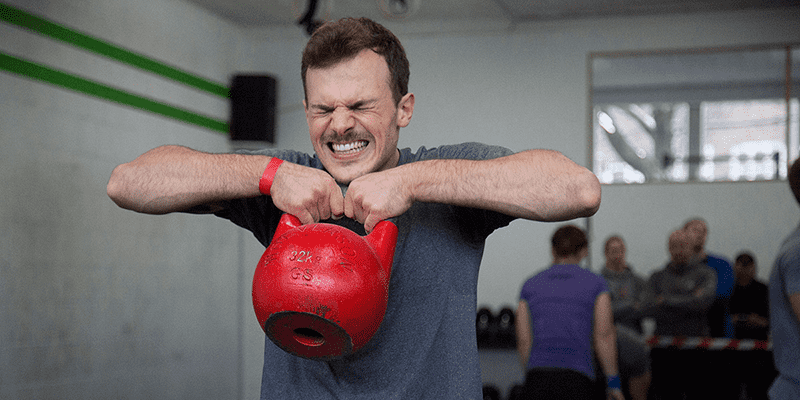
The one-rep max (1RM) is a crucial metric in strength training that represents the maximum weight you can lift for a single repetition of a given exercise, such as a bench press, deadlift, or squat. Knowing your 1RM is essential for effectively programming your workouts, setting goals, and measuring progress. In this article, we’ll explore how to discover your 1RM safely, how to use it in your training, and why it is a key element in strength development.
Table of Contents
Why Your 1RM Matters
Understanding your 1RM offers several advantages. First, it serves as a benchmark for your strength, allowing you to measure progress over time. If your 1RM for squats increases by 10 kg after six months of training, you have clear evidence that you are getting stronger.


Second, it helps you personalise your training program. Many strength programs are designed around percentages of your 1RM. For instance, to build strength, you might work at 70–85% of your 1RM, while hypertrophy training typically involves lifting 60–70% of your one-rep max for higher reps.
Finally, knowing your 1RM can also help reduce the risk of injury. By lifting within appropriate percentages of your max, you avoid overloading your muscles and joints unnecessarily.
How to Safely Test Your 1RM
Testing your 1RM involves lifting the maximum weight you can manage for one complete repetition of an exercise. The key is to do this safely and methodically. Here’s a step-by-step guide to finding your 1RM.
1. Warm Up Properly

Before attempting to lift your heaviest weight, it’s crucial to prepare your muscles and joints. Start with 5–10 minutes of light cardio, such as cycling or jogging, to raise your heart rate. Follow this with dynamic stretches and mobility exercises, focusing on the muscle groups involved in your lift. For example, if you’re testing your squat 1RM, ensure you mobilise your hips, knees, and ankles.
After your general warm-up, perform a few lighter sets of the exercise you are testing. Gradually increase the weight over several sets, with reps in the 5–8 range to prepare your muscles for heavier loads. These warm-up sets prime your neuromuscular system without causing fatigue.
2. Progressively Add Weight
Once you are adequately warmed up, begin with a weight that is approximately 60–70% of your estimated 1RM. Complete 3–5 reps with this load, and then rest for 3–5 minutes.
Gradually increase the weight by about 5–10% per set, reducing your repetitions as the weight gets heavier. You should start doing 2–3 reps per set as you approach heavier weights. Make sure to rest for 3–5 minutes between sets to allow for full recovery.
When you reach a load where you can only perform one repetition with proper form, you’ve found your 1RM. If you attempt a lift and fail, reduce the weight by 2.5–5% and try again after resting.
How Heavy Is Too Heavy to Build Muscle? Do This Quick Test
3. Use Spotters and Safety Equipment
Safety should always be your top priority when attempting a 1RM. For exercises like the bench press or squat, always use spotters who can help you if you fail the lift. For exercises like deadlifts, where spotters are less practical, you should ensure you use proper form and do the lift in a safe environment with the right equipment.
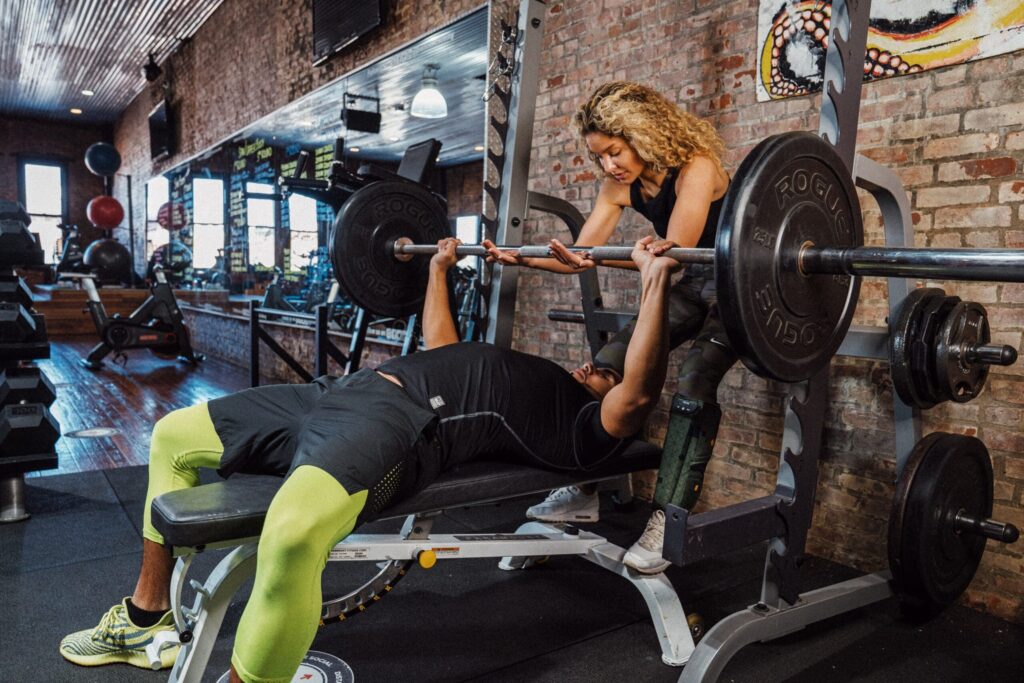
Safety equipment, such as lifting belts, knee sleeves, and wrist wraps, can provide additional stability and reduce the risk of injury. Using a squat rack with safety bars is also crucial when testing heavy squats, as it can prevent the barbell from falling on you in case of failure.
4. Listen to Your Body
Discovering your 1RM is physically and mentally demanding. If you feel fatigued, light-headed, or notice a breakdown in form, it’s best to stop the test and try again another day. Testing your 1RM is not worth risking an injury, so listen to your body throughout the process.
How to Use Your 1RM in Training
Once you’ve established your 1RM for various exercises, you can use this information to guide your training. Whether your goal is strength, hypertrophy, power, or endurance, training programs often revolve around specific percentages of your one-rep max.
1. Strength Training
If your primary goal is to build maximum strength, your workouts will involve lifting heavier weights at lower repetitions. Strength is typically built by working with 70–90% of your 1RM. For example, you might perform sets of 3–5 reps at 80–85% of your 1RM. This method trains your muscles and nervous system to handle heavier loads, improving your overall strength.
Research shows that high-intensity training (around 85% of 1RM) is most effective for increasing maximal strength. According to a study published in the Journal of Strength and Conditioning Research, training with loads greater than 80% of your 1RM leads to significant improvements in strength when compared to lighter loads.
Differences Between Training for Size and for Strength
2. Hypertrophy Training

For muscle growth (hypertrophy), you’ll focus on moderate weights with higher repetitions. The ideal range for hypertrophy is around 60–75% of your 1RM, which allows you to perform 8–12 reps per set. This training style induces greater muscle damage and metabolic stress, key factors in muscle growth.
A study published in The Journal of Applied Physiology found that training at 60–70% of 1RM with multiple sets was effective at promoting muscle hypertrophy in both trained and untrained individuals .
3. Power Training
Power, or explosive strength, involves lifting lighter weights but focusing on the speed of the movement. Power training often involves using 30–60% of your 1RM to move the weight quickly and explosively. This type of training improves your ability to generate force rapidly, which is crucial for sports performance.
A study published in the European Journal of Applied Physiology found that power training at 30–60% of 1RM was effective for improving explosive strength and athletic performance .
4. Endurance Training
For muscular endurance, you’ll use lighter weights and higher repetitions. Typically, endurance training involves working at 40–60% of your 1RM for 12–20+ reps per set. This type of training helps improve your muscles’ ability to sustain effort over prolonged periods.
Adjusting Your 1RM Over Time
As you continue to train and progress, your 1RM will change. It’s important to regularly reassess your 1RM every 6–12 weeks to ensure your training remains appropriately challenging. The frequency with which you test your 1RM will depend on your goals and the phase of training you’re in. For example, during a strength-focused block, you might test your 1RM more frequently, while in a hypertrophy or endurance phase, you may test less often.
Another method for adjusting your 1RM without the need for frequent maximal tests is to use a 3RM or 5RM and estimate your 1RM from these values. This approach can reduce the strain on your body while still providing a close approximation of your true 1RM.

Estimating Your 1RM Without Testing
Testing your 1RM can be taxing and may not always be practical, especially for beginners or those recovering from injury. Fortunately, there are ways to estimate your 1RM using submaximal loads and repetition-based formulas. One of the most popular methods is the Epley formula, which is calculated as follows:
1RM = Weight × (1 + (Reps ÷ 30))
For example, if you can lift 80 kg for 5 reps, your estimated 1RM would be:
1RM = 80 × (1 + (5 ÷ 30)) = 80 × 1.1667 = 93.33 kg
This formula provides a close approximation of your 1RM, though it may become less accurate at higher repetition ranges. Several other formulas exist, such as the Brzycki and Lander formulas, which can also be used to estimate your 1RM based on the number of reps you can perform with a given weight.
8 Signs You Are Overtraining Without Knowing It
Common Mistakes to Avoid
While testing and using your 1RM can be beneficial, there are several common mistakes to avoid:
1. Testing Too Frequently
Testing your 1RM too often can lead to burnout and increase the risk of injury. Your body needs time to recover and adapt to heavy loads, so limit 1RM tests to every few months unless you are in a strength-focused training phase.
2. Ignoring Form
Lifting maximal weights can compromise your form if you’re not careful. Always prioritise proper technique when testing your 1RM. Poor form increases the risk of injury and can skew your results.
3. Not Accounting for Fatigue
Fatigue can negatively impact your 1RM test results. Ensure you’re well-rested before testing and don’t perform too many heavy sets leading up to the test. Allowing sufficient recovery between attempts is also crucial.
Conclusion
Knowing your one-rep max (1RM) is a valuable tool in strength training that allows you to customise your workouts, set realistic goals, and track your progress. By safely testing your 1RM and using it to guide your training program, you can optimise your strength, hypertrophy, power, and endurance gains.
Whether you’re a seasoned athlete or just beginning your strength journey, regularly testing or estimating your 1RM is a key component of intelligent and effective training.
Key Takeaways
| Concept | Key Point |
|---|---|
| 1RM Importance | Provides a benchmark for strength, helps personalise training programs, and reduces injury risk. |
| How to Test Your 1RM | Warm up, gradually increase weight, use spotters and safety equipment, and listen to your body. |
| Using 1RM in Training | Strength (70-90%), Hypertrophy (60-75%), Power (30-60%), and Endurance (40-60%) training all utilise specific percentages of your 1RM. |
| Adjusting Your 1RM | Reassess your 1RM every 6-12 weeks and adjust your training intensity accordingly. |
| Estimating 1RM | Use formulas like Epley to estimate your 1RM without maximal testing, especially useful for beginners or during recovery phases. |
| Common Mistakes | Avoid testing too frequently, prioritise form over load, and ensure you are rested before attempting to test or lift near your 1RM. |
Bibliography
- Baechle, T.R., Earle, R.W. and Wathen, D., 2008. Resistance training. Essentials of strength training and conditioning, pp.381-411.
- Fry, A.C. and Kraemer, W.J., 1997. Resistance exercise overtraining and overreaching. Sports Medicine, 23(2), pp.106-129.
- Hackett, D.A., Johnson, N.A. and Chow, C.M., 2013. Training practices and ergogenic aids used by male bodybuilders. Journal of Strength and Conditioning Research, 27(6), pp.1609-1617.
- McCaulley, G.O., McBride, J.M., Cormie, P., Hudson, M.B., Nuzzo, J.L., Quindry, J.C. and Travis Triplett, N., 2009. Acute hormonal and neuromuscular responses to hypertrophy, strength and power type resistance exercise. European Journal of Applied Physiology, 105(5), pp.695-704.