The Hatfield Squat is a powerful tool to add to your arsenal if you’re looking to take your leg training to the next level and build serious strength. Named after powerlifting legend Dr. Fred Hatfield, this squat variation is designed to help you lift more weight safely while targeting your quads, glutes, and overall lower body.
What is the Hatfield Squat?
The Hatfield Squat is a unique variation of the traditional squat that allows you to handle heavier loads with better stability. Unlike the standard back squat, the Hatfield Squat involves using your hands to hold onto the safety bars or a sturdy structure in front of you while performing the squat. This additional support helps you maintain balance, keep your chest up, and focus on driving through your legs without worrying about tipping forward or losing your form.


The beauty of the Hatfield Squat lies in its ability to allow for more significant muscle activation with reduced risk. By using your hands for balance, you can push more weight than you might typically handle in a regular squat, making it an excellent choice for building strength.
Why the Hatfield Squat is So Effective
Enhanced Stability
One of the primary reasons the Hatfield Squat is so effective is the increased stability it offers. When you hold onto the safety bars or another sturdy object, you create a more stable environment, allowing you to focus entirely on the lifting portion of the squat. This enhanced stability means you can go heavier, targeting the muscles more intensely and promoting greater strength gains.
As Fred Hatfield himself once said, the key to lifting heavier is minimizing the number of variables you need to control. By adding a point of stability, the Hatfield Squat allows you to concentrate on the upward drive without worrying about balance issues, which can be a limiting factor in traditional squats .
Overloading Your Lower Body
The Hatfield Squat allows you to overload your lower body in a way that’s difficult to achieve with other squat variations. Because you have additional stability, you can load the barbell with more weight than usual. This overload is particularly beneficial for those looking to build muscle mass and strength in the quads, glutes, and hamstrings.
Overloading the muscles is one of the most effective ways to stimulate growth and strength. The Hatfield Squat provides a safe and efficient method to push your limits, making it a valuable exercise for anyone serious about lower body development.
How to Perform the Hatfield Squat Correctly
Setup
- Equipment: You’ll need a squat rack with safety bars, a barbell, and a stable structure to hold onto, like the safety bars themselves or a pair of handles positioned in front of you.
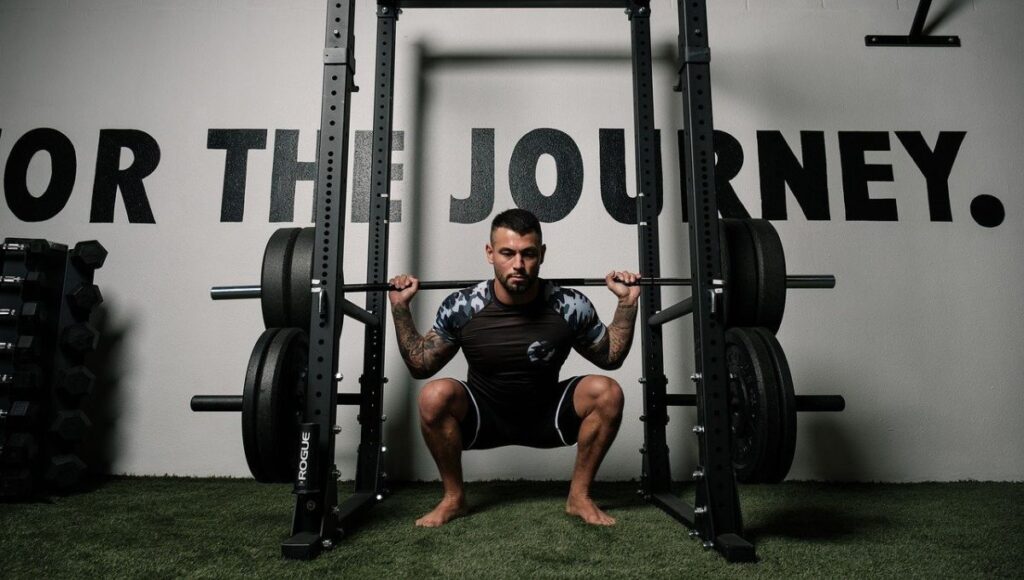
- Bar Placement: Start by setting up the barbell at shoulder height in the squat rack. Position the bar across your upper back as you would for a traditional squat, ensuring it’s centered and secure.
- Hand Position: Stand inside the rack and grip the safety bars or handles at about waist height. Your hands should be positioned slightly in front of you, allowing for a natural hold as you descend into the squat.
Execution
- Descent: Begin the squat by pushing your hips back and bending your knees, just as you would in a traditional squat. As you lower yourself, keep your chest up and your core engaged. Use your hands on the safety bars for additional stability as you descend.
- Depth: Aim to squat to a depth where your thighs are parallel to the ground or slightly below, depending on your mobility. The Hatfield Squat allows for deeper squats because of the added support, so take advantage of this to fully engage your muscles.
- Ascent: Drive through your heels and push upward, using your quads and glutes to lift the weight. Your hands should remain on the safety bars throughout the movement, helping you maintain balance and proper form.
- Breathing: Exhale as you push back up to the starting position. Inhale as you prepare for the next rep.
Benefits of the Hatfield Squat
Increased Muscle Activation
The Hatfield Squat is excellent for targeting the quadriceps and glutes, two of the largest muscle groups in the body. Because you can lift more weight with this squat variation, you’re placing more stress on these muscles, which leads to greater muscle activation and strength development.
Reduced Risk of Injury
Traditional squats can sometimes lead to form breakdown, especially as you approach heavier weights. The added stability provided by the Hatfield Squat reduces the risk of injury by allowing you to maintain proper form even when lifting heavier loads. This is particularly beneficial for lifters with previous injuries or those who are concerned about the risk of injury when squatting heavy.
Ideal for Strength Progression
For athletes looking to break through strength plateaus, the Hatfield Squat offers an effective way to progress. The ability to overload your muscles safely means you can continually push your limits and increase your strength over time. It’s an excellent addition to any strength training program, especially when paired with other squat variations.
Integrating the Hatfield Squat into Your Routine
The Hatfield Squat can be incorporated into your training program in several ways:
- Primary Movement: Use it as the main squat variation in your lower body workouts, especially on days when your goal is to lift heavy.
- Accessory Exercise: After performing your main lifts, add the Hatfield Squat as an accessory movement to further target your quads and glutes.
- Periodization: Integrate the Hatfield Squat into your training cycle during phases where you’re focusing on strength or hypertrophy, helping to overload your muscles and drive progress.
Embrace the Power of the Hatfield Squat
The Hatfield Squat is a powerful exercise that can help you build incredible lower body strength while minimizing the risk of injury. Its unique combination of stability and overload makes it an ideal choice for lifters at any level looking to take their training to new heights. By incorporating the Hatfield Squat into your routine, you can push past plateaus, increase muscle activation, and achieve your strength goals more efficiently.
So next time you’re in the gym, give the Hatfield Squat a try. Your legs—and your PRs—will thank you.
You will also like:
Best Box Squats Guide – Muscles Worked, Benefits and Technique
300 Squats Every Day for 30 Days – What Happens to your Body?