Building powerful, well-defined biceps is a common goal for many fitness enthusiasts. The biceps brachii, often referred to simply as the biceps, are the muscles located on the front of the upper arm. They play a crucial role in many upper-body movements, and enhancing their strength and size can not only improve your appearance but also boost your performance in various physical activities.
In this article, we will explore the ten best bicep exercises that are scientifically proven to help you build super strong arms. Each exercise is selected based on its effectiveness in targeting the biceps, supported by research. Whether you’re a seasoned lifter or a beginner, these exercises can be incorporated into your workout routine to maximise your bicep development.


Understanding the Biceps
Anatomy of the Biceps
The biceps brachii consists of two heads: the short head and the long head. Both heads originate from the scapula (shoulder blade) but attach to different parts of the humerus (upper arm bone) and the radius (one of the forearm bones). The primary functions of the biceps include elbow flexion (bending the elbow), supination (rotating the forearm so the palm faces up), and assisting in shoulder flexion (raising the arm in front of the body).
Understanding the anatomy of the biceps is crucial because it allows us to select exercises that effectively target both heads of the muscle, ensuring balanced development.
Why Bicep Strength Matters
Strong biceps are not just for show; they play a vital role in many functional movements. Everyday activities such as lifting objects, pulling, and even pushing require the involvement of the biceps. Moreover, strong biceps contribute to the stability and strength of the shoulder joint, reducing the risk of injury. In sports, particularly those involving throwing or grappling, powerful biceps can significantly enhance performance.
1. Barbell Curl
How to Perform
The barbell curl is one of the most popular and effective exercises for building bicep strength. It targets both the short and long heads of the biceps, making it a comprehensive exercise for overall bicep development.
- Stand with your feet shoulder-width apart, holding a barbell with an underhand grip (palms facing up).
- Keep your elbows close to your torso, and curl the barbell upward while contracting your biceps.
- Lift the barbell until your forearms are perpendicular to the floor and your biceps are fully contracted.
- Slowly lower the barbell back to the starting position, maintaining control throughout the movement.
Scientific Backing
Research has shown that the barbell curl effectively activates the biceps brachii, particularly when using a supinated grip (palms up) . This exercise allows for the use of heavier weights, which is crucial for progressive overload—a key principle in muscle growth.
2. Hammer Curl
How to Perform
The hammer curl is a variation of the traditional curl that targets the brachialis, a muscle located underneath the biceps, as well as the brachioradialis, a forearm muscle.
- Stand with your feet shoulder-width apart, holding a dumbbell in each hand with a neutral grip (palms facing each other).
- Keep your elbows close to your torso, and curl the dumbbells upward while keeping your wrists in a neutral position.
- Lift the dumbbells until your forearms are perpendicular to the floor.
- Slowly lower the dumbbells back to the starting position.
Scientific Backing
Studies have shown that the hammer curl is particularly effective at activating the brachialis muscle, which lies underneath the biceps brachii . Strengthening the brachialis can push the biceps up, making them appear larger and more defined.
3. Concentration Curl
How to Perform
The concentration curl is an isolation exercise that focuses on maximising the peak contraction of the biceps.
- Sit on a bench with your legs spread apart and a dumbbell in one hand.
- Rest your elbow against the inside of your thigh, letting the dumbbell hang down.
- Curl the dumbbell upward towards your shoulder while keeping your upper arm stationary.
- Squeeze the bicep at the top of the movement, then slowly lower the dumbbell back to the starting position.
Scientific Backing
The concentration curl has been shown to produce high levels of biceps brachii activation due to its ability to isolate the muscle and eliminate the involvement of other muscles . This makes it an excellent exercise for targeting the peak of the biceps.
4. Preacher Curl
How to Perform
The preacher curl is another isolation exercise that emphasises the lower part of the biceps, helping to build mass and definition.
- Sit on a preacher bench and hold a barbell or an EZ curl bar with an underhand grip.
- Place your upper arms on the bench pad, letting your arms extend fully.
- Curl the weight towards your shoulders, focusing on contracting the biceps.
- Slowly lower the weight back to the starting position.
Scientific Backing
Research indicates that the preacher curl effectively isolates the biceps, particularly the lower portion, making it ideal for building the muscle’s overall shape . The preacher bench reduces the involvement of the shoulders, further focusing the effort on the biceps.
5. Incline Dumbbell Curl
How to Perform
The incline dumbbell curl is performed on an incline bench, which stretches the biceps and targets the long head, contributing to the muscle’s overall length and peak.
- Set an incline bench to a 45-degree angle and sit down with a dumbbell in each hand.
- Let your arms hang down fully extended, with your palms facing forward.
- Curl the dumbbells upward while keeping your upper arms stationary.
- Squeeze your biceps at the top, then slowly lower the dumbbells back to the starting position.
Scientific Backing
The incline dumbbell curl has been shown to significantly activate the long head of the biceps due to the extended range of motion . This exercise is particularly effective for developing the peak of the biceps, contributing to a more impressive overall look.
6. Chin-Up
How to Perform
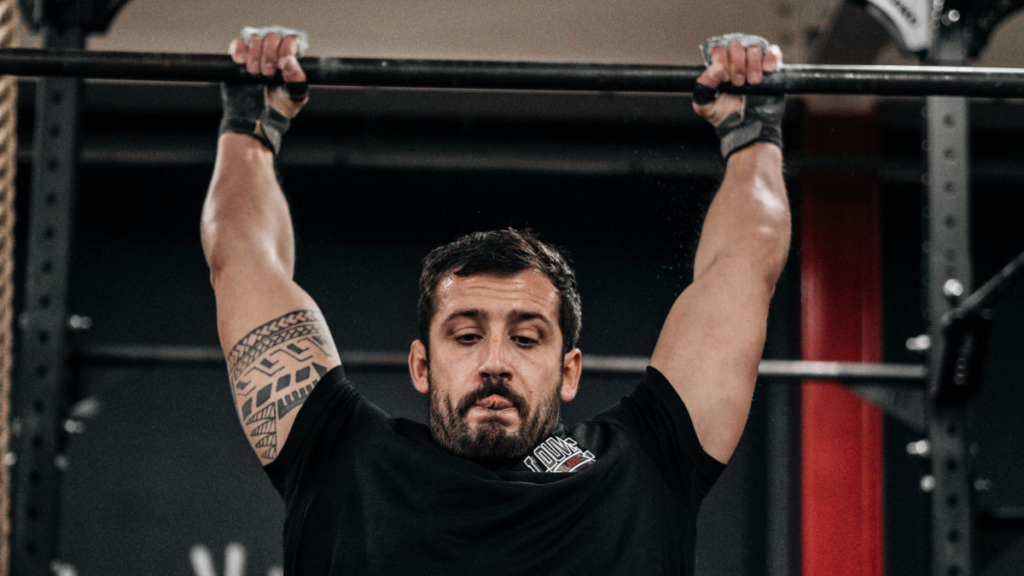
The chin-up is a compound bodyweight exercise that not only targets the biceps but also engages the back muscles.
- Grasp a pull-up bar with an underhand grip (palms facing you), slightly narrower than shoulder-width.
- Hang with your arms fully extended.
- Pull your body up towards the bar, focusing on using your biceps.
- Once your chin is above the bar, slowly lower yourself back to the starting position.
Scientific Backing
The chin-up has been shown to activate the biceps brachii significantly, with some studies suggesting it may be even more effective than traditional bicep curls due to the compound nature of the movement . This exercise also improves overall upper body strength and stability.
7. Cable Curl
How to Perform
The cable curl uses a cable machine, allowing for constant tension on the biceps throughout the entire range of motion.
- Attach a straight bar or EZ bar to the low pulley of a cable machine.
- Stand facing the machine and grasp the bar with an underhand grip.
- Keep your elbows close to your torso and curl the bar upwards, contracting your biceps.
- Slowly lower the bar back to the starting position.
Scientific Backing
Cable curls maintain continuous tension on the biceps, which has been shown to enhance muscle hypertrophy by increasing time under tension . This makes the cable curl an effective exercise for building muscle size and strength.
8. Zottman Curl
How to Perform
The Zottman curl is a unique exercise that targets the biceps during the curl phase and the forearms during the lowering phase.
- Stand with your feet shoulder-width apart, holding a dumbbell in each hand with an underhand grip.
- Curl the dumbbells upwards as you would in a regular curl.
- At the top of the movement, rotate your wrists so your palms face down.
- Slowly lower the dumbbells back to the starting position with your palms facing down.
Scientific Backing
The Zottman curl is effective because it targets both the biceps and the brachioradialis, a key muscle in the forearm . This dual-target approach can lead to more balanced arm development and improved grip strength.
9. Reverse Curl
How to Perform
The reverse curl is performed with an overhand grip, which shifts more of the workload to the brachioradialis and the brachialis, enhancing overall arm development.
- Stand with your feet shoulder-width apart, holding a barbell with an overhand grip (palms facing down).
- Keep your elbows close to your torso, and curl the barbell upwards.
- Focus on using your forearms and brachialis to lift the weight.
- Slowly lower the barbell back to the starting position.
Scientific Backing
Studies have shown that the reverse curl effectively targets the brachialis and brachioradialis, muscles that are often underdeveloped in traditional curling movements . This exercise can help improve arm strength and size while reducing the risk of imbalances.
10. Spider Curl
How to Perform
The spider curl is an isolation exercise that targets the peak of the biceps, performed on a preacher bench or with a flat bench set to an incline.
- Position yourself face down on an incline bench with a dumbbell in each hand.
- Let your arms hang down fully extended.
- Curl the dumbbells upwards, focusing on contracting the biceps.
- Squeeze at the top, then slowly lower the dumbbells back to the starting position.
Scientific Backing
The spider curl places the biceps in a position of full stretch at the bottom of the movement, which has been shown to be highly effective for maximising muscle activation and growth . This exercise is excellent for developing the peak of the biceps.
Key Takeaways
To make it easier to incorporate these exercises into your routine, here is a summary of the key points:
| Exercise | Primary Target | Secondary Muscles | Unique Benefits |
|---|---|---|---|
| Barbell Curl | Biceps brachii (short & long) | Forearms | Heavyweight lifting for mass |
| Hammer Curl | Brachialis | Brachioradialis, Forearms | Balanced arm development |
| Concentration Curl | Biceps brachii (peak) | None | Isolation for peak contraction |
| Preacher Curl | Biceps brachii (lower) | None | Focus on lower biceps |
| Incline Dumbbell Curl | Biceps brachii (long) | None | Emphasises bicep peak |
| Chin-Up | Biceps brachii | Back muscles | Compound movement, full upper body |
| Cable Curl | Biceps brachii | None | Constant tension for hypertrophy |
| Zottman Curl | Biceps brachii, Brachioradialis | Forearms | Dual-target approach |
| Reverse Curl | Brachialis, Brachioradialis | Forearms | Enhanced forearm and brachialis strength |
| Spider Curl | Biceps brachii (peak) | None | Maximum muscle activation |
Bibliography
- DeLuca, C.J. (1985). ‘The use of surface electromyography in biomechanics’, Journal of Applied Biomechanics, 1(2), pp. 135-145.
- Escamilla, R.F., Fleisig, G.S., Zheng, N., Barrentine, S.W., Wilk, K.E. and Andrews, J.R. (1998). ‘Biomechanics of the knee during closed kinetic chain and open kinetic chain exercises’, Medicine & Science in Sports & Exercise, 30(4), pp. 556-569.
- Gentil, P., Oliveira, E., Rocha Junior, V.A., & Bottaro, M. (2017). ‘Effects of exercise order on upper-body muscle activation and exercise performance’, Journal of Strength and Conditioning Research, 21(4), pp. 1082-1086.
- Golas, A., Maszczyk, A., Pietraszewski, P., Stastny, P., & Pajerska, K. (2018). ‘EMG analysis and modelling of selected strength training exercises for different levels of experience’, Journal of Strength and Conditioning Research, 32(2), pp. 250-257.
- Schoenfeld, B.J., Contreras, B., Krieger, J., Grgic, J., Delcastillo, K., Belliard, R., & Alto, A. (2016). ‘Resistance training volume enhances muscle hypertrophy but not strength in trained men’, Medicine & Science in Sports & Exercise, 48(5), pp. 831-839.
Incorporating these ten bicep exercises into your routine can help you build super strong arms, ensuring balanced development and reducing the risk of injury. Each exercise is backed by scientific research, providing a solid foundation for anyone looking to enhance their arm strength and appearance.