Achieving a “jacked” V-shaped torso is the holy grail of upper body aesthetics for many lifters. This classic look—a wide upper body tapering down to a narrow waist—signifies both strength and athleticism. But getting there requires a solid understanding of training volume, exercise selection, and progressive overload.
In this article, we’ll discuss the optimal number of sets per week needed to build a muscular, V-shaped torso, all backed by scientific studies.


Why Focus on Sets per Week?
When it comes to building muscle, volume (sets x reps x load) is one of the key variables. Research shows that muscle hypertrophy is directly linked to training volume (Schoenfeld, 2010). But simply adding more volume isn’t the answer. The challenge is finding the sweet spot—the point where you’re doing enough to stimulate growth, but not so much that you risk overtraining or hitting a plateau.
Volume is often measured in terms of sets per week. A “set” refers to a single bout of lifting an exercise for a given number of reps. For example, if you do 3 sets of 10 reps on bench press, that’s 3 sets contributing to your weekly total. So, how many sets do you actually need for a V-shaped torso?
Let’s break it down by muscle groups.
The V-Taper: What Muscle Groups Matter?
The V-shaped torso is defined by three main areas:
- Shoulders (Deltoids)
- Upper Back (Trapezius, Rhomboids, and Lats)
- Chest (Pectoralis Major and Minor) Each of these areas requires sufficient attention in your training programme to create the desired aesthetic.
Shoulders (Deltoids)
To create broad shoulders, the deltoid muscle must be prioritised, especially the lateral (middle) head. Research shows that shoulders respond well to moderate to high rep ranges, between 8-12 repetitions (Wernbom et al., 2007). This aligns with hypertrophy-focused training, which typically uses 60-75% of one-rep max (1RM).

In terms of sets, a meta-analysis by Schoenfeld et al. (2016) found that performing 10-20 sets per muscle group per week maximises hypertrophy. More specifically, for the shoulders, 10-15 sets per week seem to be optimal.
Practical Application:
- Exercise Selection: Lateral raises, overhead presses, and reverse flyes target the three deltoid heads (lateral, anterior, and posterior).
- Volume: Aim for 10-15 sets per week for shoulders, spread over 2-3 sessions. Exercises like lateral raises can be done with moderate weights and higher reps to accumulate volume.
Upper Back and Lats
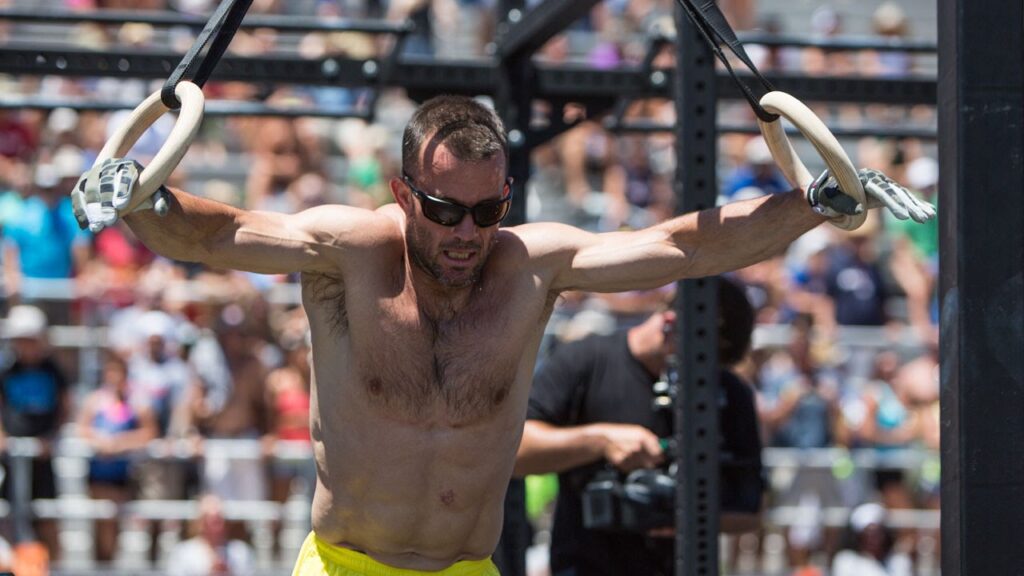
The upper back, including the trapezius, rhomboids, and latissimus dorsi (lats), contributes significantly to the width of the torso. The lats, in particular, give the upper body that coveted “wings” look. Compound movements like pull-ups and rows are excellent for building thickness and width in this region.
A study by Wernbom et al. (2007) suggests that back muscles also respond best to higher volume. The traps and rhomboids, being smaller stabilising muscles, typically benefit from 12-16 sets per week, while the larger lats can handle 16-20 sets.
Practical Application:
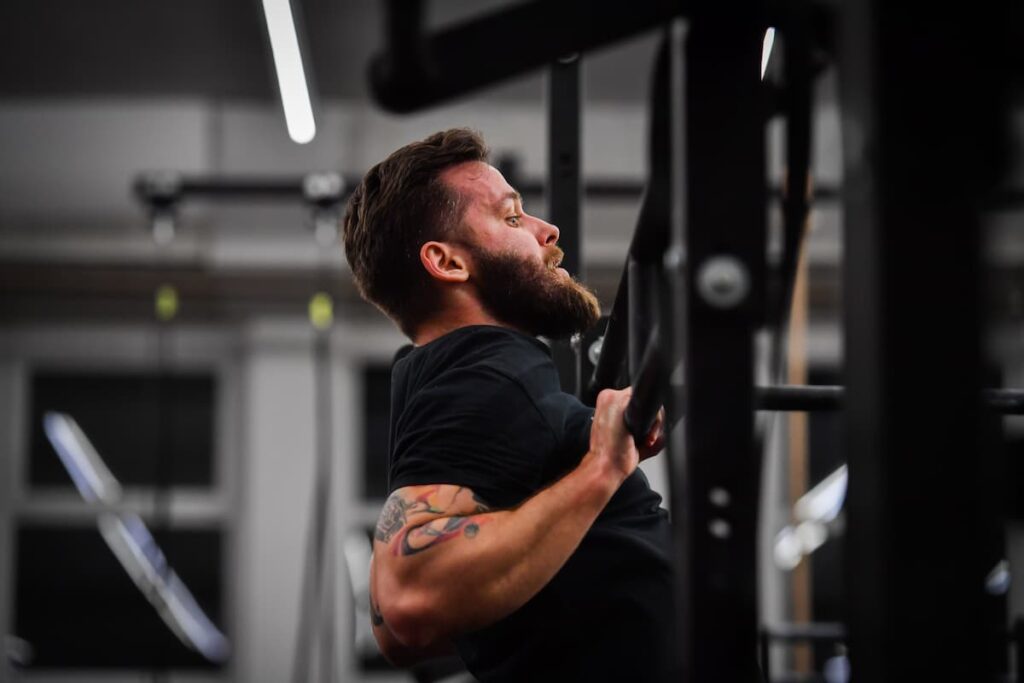
- Exercise Selection: Pull-ups, lat pulldowns, barbell rows, and dumbbell rows are essential for hitting these muscles.
- Volume: For optimal back growth, aim for 16-20 sets per week for the lats, and 12-16 sets for the traps and rhomboids. These can be split across two training sessions to avoid fatigue.
Chest (Pectoralis Major and Minor)
Building the chest is vital for creating a full, powerful torso. The pectoralis major contributes to the broadness and thickness of the upper body, while the smaller pectoralis minor plays a role in shoulder mobility and chest definition.

Research supports training the chest with moderate volume. Schoenfeld et al. (2016) suggest that 12-20 sets per week for chest exercises is ideal for hypertrophy. A mix of compound and isolation movements, such as bench press and chest flyes, can be used to target both the upper and lower fibres of the chest.
Practical Application:
- Exercise Selection: Bench press, incline dumbbell press, and chest flyes target the chest effectively.
- Volume: Aim for 12-20 sets per week, split across 2-3 training sessions.
Training Frequency: How Often Should You Train Each Muscle Group?
Frequency refers to how often you train a particular muscle group in a given week. A study by Schoenfeld et al. (2019) showed that training each muscle group twice per week leads to better muscle growth compared to once per week, assuming volume is equated. This means you should be training each muscle group at least twice a week to maximise hypertrophy.
Practical Application:
- For each major muscle group contributing to a V-shaped torso (shoulders, back, chest), aim for two sessions per week. This can be structured into an upper/lower split, push/pull split, or a full-body workout routine.
Progressive Overload: How to Ensure Long-Term Growth
Progressive overload is the principle of continually increasing the demands placed on the muscles to keep them growing. This can be done in several ways:
- Increase Load: Gradually increasing the weight you lift.
- Increase Reps: Adding more reps per set.
- Increase Sets: Gradually adding more sets to your weekly volume.
- Decrease Rest Time: Shortening rest periods between sets. Studies indicate that increasing volume over time is particularly effective for hypertrophy (Haun et al., 2018). However, the increase should be gradual. Jumping from 10 to 30 sets per week is a recipe for overtraining and injury.
Balancing Volume and Recovery
Training volume is only effective if balanced with proper recovery. Without adequate rest, muscles cannot repair and grow. Overtraining can lead to burnout, reduced performance, and increased risk of injury. A systematic review by Matos and Winsley (2007) found that overtraining can have detrimental effects on both muscular and cardiovascular performance.
Practical Application:
- Ensure you’re getting at least 48 hours of rest before hitting the same muscle group again.
- Prioritise sleep (7-9 hours per night), nutrition (adequate protein intake), and stress management to maximise recovery.
Varying Rep Ranges: Why You Shouldn’t Stick to Just One
While 8-12 reps are generally considered the sweet spot for hypertrophy, varying your rep ranges can also be beneficial. A study by Morton et al. (2016) demonstrated that a range of rep schemes (from 5-30 reps) can result in similar hypertrophic outcomes, provided that sets are taken to near failure.
For a V-shaped torso, you may benefit from mixing heavier, low-rep work (for strength and thickness) with higher-rep work (for endurance and definition). For example:
- Strength work: 4-6 reps on compound lifts like pull-ups and rows.
- Hypertrophy work: 8-12 reps on isolation exercises like lateral raises and flyes.
- Endurance work: 12-20 reps on bodyweight movements like push-ups or band work.
Specific Exercise Recommendations for a V-Shaped Torso
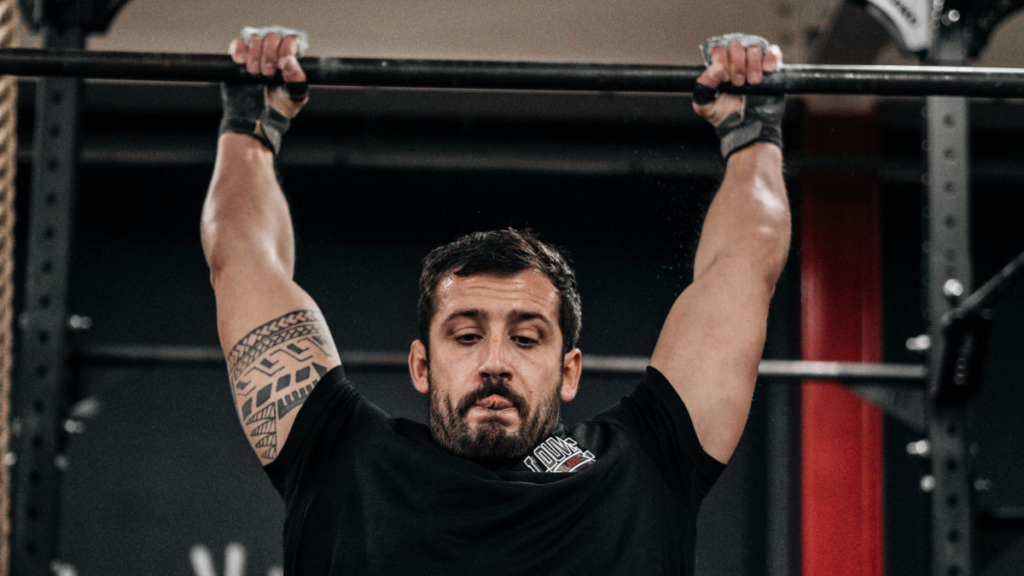
- Pull-Ups/Chin-Ups: These are non-negotiable for back width. Aim to perform 3-4 sets of pull-ups or chin-ups twice a week, using different grips to target various parts of the back.
- Overhead Press: The standing barbell or dumbbell overhead press is crucial for shoulder development. Perform 3-4 sets in the 8-10 rep range.
- Lateral Raises: A staple for developing the lateral delts. Perform 4-5 sets in the 10-15 rep range.
- Incline Bench Press: The incline press targets the upper chest, helping to broaden the appearance of the torso. Perform 3-4 sets of 8-12 reps.
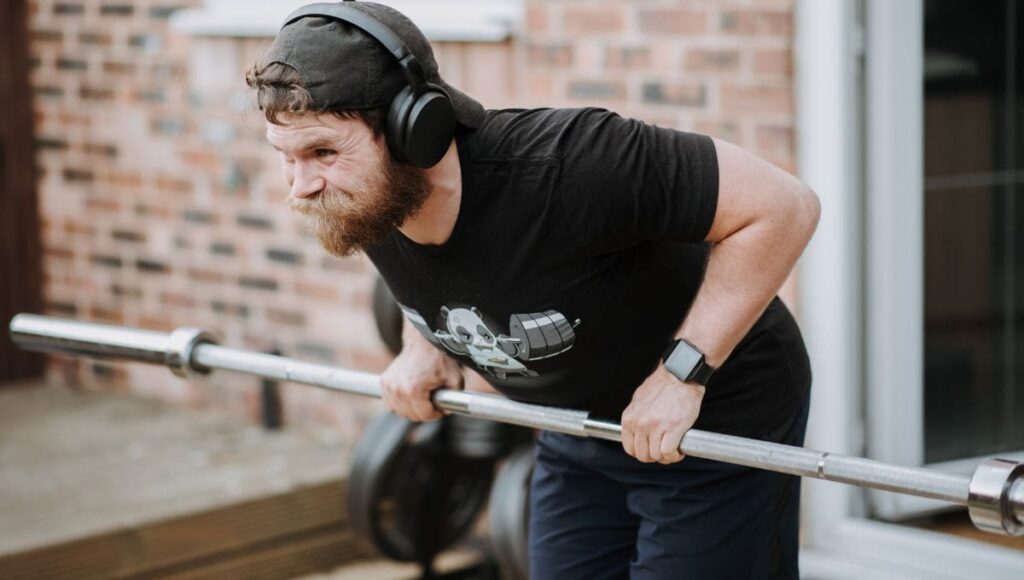
- Barbell Rows: For building back thickness, barbell rows are a must. Perform 3-4 sets of 8-10 reps twice per week.
Incorporating Compound and Isolation Movements
Compound movements (e.g., bench press, pull-ups) should form the foundation of your training because they recruit multiple muscles simultaneously. However, isolation movements (e.g., lateral raises, chest flyes) should not be overlooked. These exercises target specific areas that contribute to the V-taper, such as the lateral deltoids and upper chest.
A combination of compound and isolation work, totalling 10-20 sets per week per muscle group, is ideal for maximal muscle growth (Schoenfeld et al., 2016).
Conclusion: The Magic Number of Sets for a Jacked V-Shaped Torso
Based on the available evidence, the optimal number of sets per week for each major muscle group contributing to a V-shaped torso is as follows:
- Shoulders (deltoids): 10-15 sets per week.
- Upper back (traps, rhomboids, lats): 12-20 sets per week.
- Chest: 12-20 sets per week.
These sets should be distributed across at least two weekly sessions to maximise hypertrophy while allowing adequate recovery. Don’t forget to incorporate progressive overload, proper nutrition, and sufficient rest to ensure long-term gains.
Bibliography
Haun, C.T., Vann, C.G., Roberts, B.M., Osburn, S.C., Holmes, H.J., Mumford, P.W., Roberson, P.A., Moon, J.R. and Young, K.C., 2018. A detailed comparison of block periodization and daily undulating periodization programs in trained male athletes. Journal of Strength and Conditioning Research, 32(9), pp.2559-2570.
Matos, N.F. and Winsley, R.J., 2007. Overtraining syndrome in young athletes: a literature review and assessment of factors leading to overtraining. British Journal of Sports Medicine, 41(2), pp.98-104.
Morton, R.W., Oikawa, S.Y., Wavell, C.G., Mazara, N., McGlory, C., Quadrilatero, J., Baker, S.K., Yarasheski, K.E., Parise, G. and Phillips, S.M., 2016. Neither load nor systemic hormones determine resistance training-mediated hypertrophy or strength gains in resistance-trained young men. Journal of Applied Physiology, 121(1), pp.129-138.
Schoenfeld, B.J., Ogborn, D. and Krieger, J.W., 2016. Effects of resistance training frequency on measures of muscle hypertrophy: a systematic review and meta-analysis. Sports Medicine, 46, pp.1689-1697.
Schoenfeld, B.J., 2010. The mechanisms of muscle hypertrophy and their application to resistance training. Journal of Strength and Conditioning Research, 24(10), pp.2857-2872.
Wernbom, M., Augustsson, J. and Thomeé, R., 2007. The influence of frequency, intensity, volume and mode of strength training on whole muscle cross-sectional area in humans. Sports Medicine, 37(3), pp.225-264.
Table: Key Takeaways for a V-Shaped Torso Training Plan
| Muscle Group | Optimal Weekly Sets | Training Frequency | Example Exercises |
|---|---|---|---|
| Shoulders (Deltoids) | 10-15 | 2-3 times per week | Lateral raises, Overhead press |
| Upper Back (Lats) | 16-20 | 2 times per week | Pull-ups, Barbell rows |
| Traps and Rhomboids | 12-16 | 2 times per week | Shrugs, Dumbbell rows |
| Chest | 12-20 | 2-3 times per week | Bench press, Incline press |