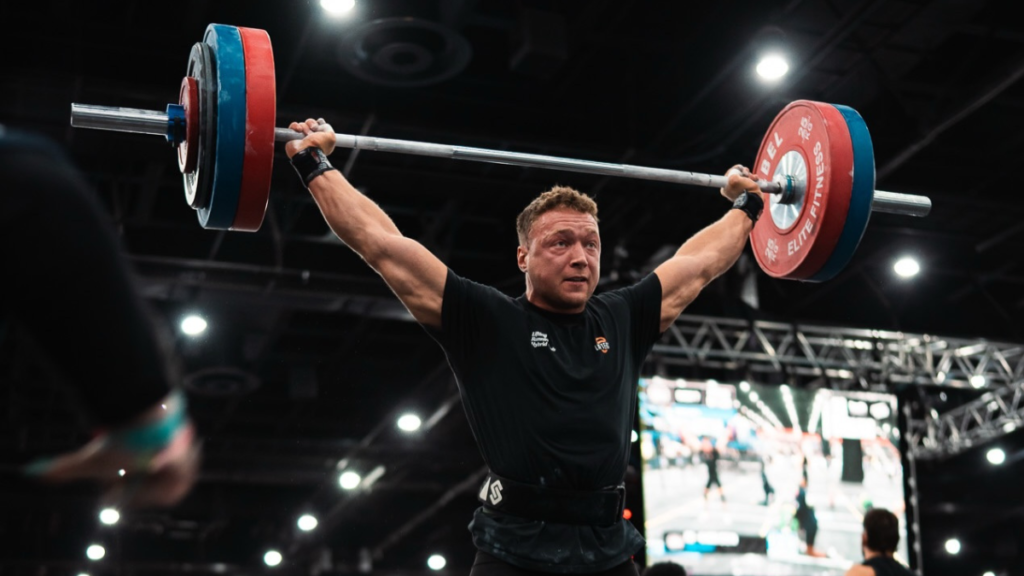
Developing strong and jacked shoulders is a common goal for many fitness enthusiasts. Strong shoulders not only enhance your physical appearance but also play a critical role in improving overall upper body strength and stability. While there are numerous exercises that target the shoulders, focusing on compound movements can be particularly effective. Compound exercises work multiple muscle groups simultaneously, leading to more efficient workouts and better overall strength gains.
In this article, we will explore the three most effective compound exercises for building powerful and well-defined shoulders. Each exercise is backed by scientific research, ensuring that you are following evidence-based recommendations to achieve your goals.


1. Overhead Press
The overhead press, also known as the shoulder press or military press, is one of the most fundamental exercises for shoulder development. It primarily targets the deltoids, triceps, and upper chest, making it a comprehensive upper body workout.
How to Perform the Overhead Press
- Setup: Stand with your feet shoulder-width apart and hold a barbell at shoulder height with an overhand grip. Your hands should be slightly wider than shoulder-width apart.
- Execution: Press the barbell overhead until your arms are fully extended. Ensure that your core is engaged and your back remains straight throughout the movement.
- Return: Slowly lower the barbell back to shoulder height, maintaining control and avoiding any jerky movements.
- Repetitions: Aim for 3-4 sets of 8-12 repetitions, depending on your strength and fitness level.
Benefits of the Overhead Press
The overhead press is highly effective for building shoulder strength and mass. A study published in the Journal of Strength and Conditioning Research found that the overhead press activates the anterior deltoid significantly more than other shoulder exercises, such as the lateral raise (Paoli, Marcolin, & Petrone, 2010). This makes it an essential movement for those looking to maximise shoulder development.
Additionally, the overhead press enhances core stability. The requirement to stabilise the weight overhead engages the core muscles, leading to improved overall strength and balance. A study from the European Journal of Applied Physiology highlighted that overhead pressing exercises engage the core musculature more than many traditional core exercises (McGill, McDermott, & Fenwick, 2009).
2. Push Press
The push press is a dynamic variation of the overhead press that incorporates lower body power to help drive the weight overhead. This exercise not only targets the shoulders but also engages the legs, glutes, and core, making it a full-body workout.
How to Perform the Push Press
- Setup: Begin in the same position as the overhead press, with the barbell at shoulder height and your feet shoulder-width apart.
- Dip: Perform a slight dip by bending your knees and hips, similar to a quarter squat.
- Drive: Explosively extend your knees and hips while simultaneously pressing the barbell overhead. Use the momentum from your lower body to help lift the weight.
- Lockout: Fully extend your arms overhead, ensuring your core remains engaged and your back straight.
- Return: Lower the barbell back to shoulder height under control, ready for the next repetition.
- Repetitions: Perform 3-4 sets of 6-10 repetitions.
Benefits of the Push Press
The push press allows for the use of heavier weights compared to the strict overhead press, due to the involvement of the lower body. This increased load can lead to greater muscle hypertrophy and strength gains in the shoulders. A study published in the Journal of Sports Sciences demonstrated that the push press significantly increases power output and muscle activation compared to the overhead press (Haff et al., 2003).
Moreover, the push press improves athletic performance by enhancing explosive power and coordination. The use of lower body momentum to drive the weight overhead mimics the movements required in many sports, making it a functional exercise for athletes.
3. Bent-Over Row
While the bent-over row is primarily known for targeting the back muscles, it also plays a crucial role in shoulder development. This compound exercise engages the rear deltoids, rhomboids, and trapezius muscles, contributing to a balanced and powerful shoulder profile.
How to Perform the Bent-Over Row
- Setup: Stand with your feet hip-width apart and hold a barbell with an overhand grip. Bend at the hips and knees, keeping your back straight, until your torso is nearly parallel to the ground.
- Row: Pull the barbell towards your lower chest or upper abdomen, squeezing your shoulder blades together at the top of the movement.
- Return: Lower the barbell back to the starting position, maintaining control throughout the descent.
- Repetitions: Aim for 3-4 sets of 8-12 repetitions.
Benefits of the Bent-Over Row
The bent-over row is essential for developing the rear deltoids, which are often neglected in shoulder training. Strengthening the rear deltoids is crucial for achieving balanced shoulder development and preventing injuries. According to a study in the Journal of Applied Biomechanics, the bent-over row effectively targets the rear deltoids and upper back muscles, making it a vital exercise for overall shoulder health (Saeterbakken et al., 2011).
Additionally, the bent-over row improves posture and upper body strength. By engaging the muscles of the upper back and shoulders, this exercise helps counteract the effects of prolonged sitting and poor posture, which are common in modern lifestyles.
Integrating These Exercises into Your Routine
To maximise the benefits of these compound exercises, it is essential to integrate them effectively into your workout routine. Here are some tips for incorporating the overhead press, push press, and bent-over row into your shoulder training:
Frequency and Volume
- Aim to train your shoulders twice a week, allowing at least 48 hours of rest between sessions to ensure adequate recovery.
- Include 3-4 sets of each exercise in your routine, adjusting the repetitions based on your specific goals (strength vs hypertrophy).

Progression
- Gradually increase the weight as you become stronger, ensuring that you maintain proper form throughout each exercise.
- Consider using progressive overload techniques, such as increasing the number of sets or repetitions, to continue challenging your muscles.
Variations
- Incorporate variations of these exercises to target the shoulders from different angles and prevent plateaus. For example, try the seated overhead press or the dumbbell bent-over row for a change of pace.
Supporting Exercises
- Complement these compound movements with accessory exercises that target the shoulders, such as lateral raises, front raises, and face pulls. These exercises can help enhance muscle definition and address any weaknesses.
Conclusion
Building jacked and strong shoulders requires dedication, consistency, and a well-structured workout plan. By focusing on compound exercises like the overhead press, push press, and bent-over row, you can effectively target all areas of the shoulders while also engaging other muscle groups. These exercises are backed by scientific research, ensuring that you are following evidence-based recommendations to achieve your fitness goals.
Remember to prioritise proper form, gradually increase the weight, and incorporate variations and accessory exercises to optimise your shoulder training. With these strategies, you will be well on your way to developing powerful, well-defined shoulders that enhance both your physique and overall strength.
Key Takeaways
| Exercise | Primary Muscles Targeted | Benefits | Sets & Reps |
|---|---|---|---|
| Overhead Press | Anterior Deltoid, Triceps, Upper Chest | Builds shoulder strength and mass, improves core stability | 3-4 sets of 8-12 repetitions |
| Push Press | Deltoids, Triceps, Lower Body | Enhances power output, increases shoulder hypertrophy | 3-4 sets of 6-10 repetitions |
| Bent-Over Row | Rear Deltoid, Rhomboids, Trapezius | Balances shoulder development, improves posture | 3-4 sets of 8-12 repetitions |
Bibliography
Haff, G. G., Stone, M. H., O’Bryant, H. S., Harman, E., Dinan, C., Johnson, R., & Han, K.-H. (2003). Force-time dependent characteristics of dynamic and isometric muscle actions. Journal of Strength and Conditioning Research, 17(2), 323-331.
McGill, S. M., McDermott, A., & Fenwick, C. M. J. (2009). Comparison of different rowing exercises: Trunk muscle activation and lumbar spine motion, load, and stiffness. European Journal of Applied Physiology, 106(5), 749-754.
Paoli, A., Marcolin, G., & Petrone, N. (2010). Influence of different ranges of motion on selective recruitment of shoulder muscles in the sitting military press: An electromyographic study. Journal of Strength and Conditioning Research, 24(6), 1578-1583.
Saeterbakken, A. H., Andersen, V., Brudeseth, A., & Lund, H. (2011). The Effect of Grip Width on Muscle Strength and Activation in the Lat Pull-Down. Journal of Applied Biomechanics, 27(2), 166-172.