Have you ever wondered if there’s just one food or type of food that could derail all your hard work on a diet? It’s not always about a single item, but the combination of things that can really throw a spanner in the works.
The truth is, certain combinations of fats and carbohydrates are the worst things you can eat when trying to lose weight. Stick around, and let’s dive into why these combinations can sabotage your weight loss efforts and what you can do about it.


The information below was extracted from a video shared by Thomas DeLauer, a celebrity trainer and health author. His YouTube Channel has more than 3.5 million subscribers and he has been on the cover of numerous international magazines.
Table of Contents
Why Calories Still Matter
Let’s get this straight: to lose weight, the most crucial thing is staying in a calorie deficit. That means you need to burn more calories than you consume. Whether you’re following a low-carb diet or something else, keeping your macronutrients balanced is essential. You may already know this, but when you’re in a calorie deficit, your body becomes much more sensitive to whatever you’re fueling it with.
So, what’s the deal? It’s not just about watching calories but also about what those calories are made up of.
The Worst Thing to Eat If You Are Trying to Lose Weight
Ever been told that carbs alone are the enemy? Or that eating fats will halt your weight loss? Well, it’s not that simple. The real issue arises when you mix high amounts of fats and carbohydrates in the same meal. When fats and carbs come together in large quantities, it creates a kind of metabolic traffic jam, making it difficult for your body to decide which fuel to burn. This confusion leads to increased oxidative stress and higher levels of reactive oxygen species (ROS), which can lead to cellular damage.
In simple terms: too many fats and carbs at once can shut down fat burning and even encourage fat storage.
What Happens at the Cellular Level?
Your mitochondria, the powerhouse of your cells, can either use fats or carbs for energy, but not both at the same time. They’re what’s called “reciprocally regulated,” meaning when one is being used, the other isn’t. Think of it as a one-way street: when carbohydrates flood your system, your body switches off fat burning to deal with the carbs. Now, that’s fine when carbs are used up quickly. But when you’ve got a bunch of fat and carbs entering your system at the same time, your cells become overwhelmed. That’s when things get complicated.
Overloading your system with both fuels creates something called “metabolic gridlock.” It’s like your body has too much of both and doesn’t know what to do with them. This can lead to insulin resistance, increased fat storage, and, more importantly, slow down fat burning significantly.
The Role of Insulin
A lot of people worry about insulin’s effect on fat burning, and for a good reason. Insulin is a hormone that regulates your blood sugar, but it also impairs the action of fat-burning enzymes. When insulin spikes after a carb-heavy meal, your body goes into storage mode rather than burning mode. But here’s the kicker: combining high-fat foods with high-carb foods could lead to a more significant and sustained insulin spike, further preventing fat breakdown.
The Junk Food Effect

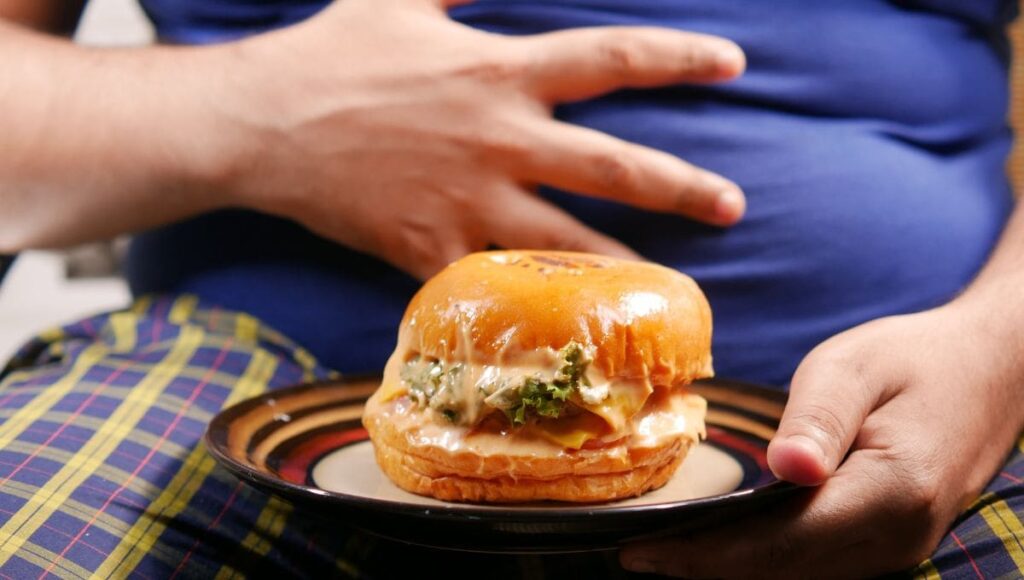
Think about your typical hyper-palatable, ultra-processed foods: pizza, ice cream, French fries. What do they all have in common? Yep, high amounts of fats and carbs. Studies have even shown that the brain lights up like a Christmas tree when these foods are eaten together, leading to overeating.
One experiment showed that people were willing to pay more for foods that combined fats and carbs than for foods that only contained one or the other. The brain finds this combo irresistible, which is probably why fast food is so popular. Unfortunately, these foods are the worst culprits when you’re trying to lose weight.
I tried Getting Lean by Eating Only Fast Food, Here’s What Happened
So, What’s the Solution?
The good news is you don’t need to give up all your favourite foods. It’s about being smart with how you eat. One strategy is to replace your carbs with protein. Protein not only helps with fat loss but also keeps you full longer. In one study, when carbs were swapped for protein, participants burned significantly more fat throughout the day, even when calories were kept the same.
Why Protein Makes a Difference
Protein doesn’t spike insulin in the same way carbs do, which means you can keep burning fat after a protein-heavy meal, especially if you’re exercising. It’s one of the simplest ways to help your body stay in fat-burning mode for longer. If you’re on a calorie deficit, swapping carbs for protein could help you lose more fat, maintain muscle mass, and keep those cravings at bay.
Related: 3 High Protein Evening Snacks for Quicker Weight Loss
Watch Out for Trans Fats
Another critical point: not all fats are created equal. Trans fats, found in many processed foods, are particularly harmful. Studies have shown that trans fats not only lead to more significant fat accumulation but also mess with your body’s ability to break down fats effectively. In essence, they clog up the system and lead to metabolic gridlock faster than healthier fats.
So if you’re indulging in foods high in carbs and fats—especially trans fats—you’re setting yourself up for metabolic trouble. Avoiding these “junk” combinations is one of the best things you can do to keep your fat-burning engine running smoothly.

Practical Tips for Real Life
- Stick to one macronutrient per meal – If you’re going to eat carbs, keep the fats low, and vice versa. Don’t overload both at once.
- Focus on whole foods – Highly processed foods are where you usually find these dangerous combinations. Choose foods that are nutrient-dense and provide a balance of macronutrients.
- Increase your protein intake – Swap out some of your carbs for protein to help your body burn more fat and stay fuller for longer.
- Avoid trans fats – Always check labels and steer clear of processed foods containing trans fats. They are known to slow fat burning and contribute to weight gain.
- Keep moving – Incorporate exercise, especially strength training, to boost your metabolism and further encourage fat burning.
Conclusion
So, what’s the worst thing you can eat if you’re trying to lose weight? It’s not just one food but a combination of high fats and high carbs, especially when found in processed junk food. The key to successful weight loss is staying mindful of your macros, avoiding those harmful combinations, and focusing on protein and whole foods. By doing this, you’ll keep your metabolism humming and your fat-burning system in top gear.
Remember, it’s not about perfection. It’s about making small changes that lead to lasting results.
11 Foods to Eat Daily to Lose Fat and Build Muscle
References
Metabolic Inflexibility: When Mitochondrial Indecision Leads to Metabolic Gridlock
Metabolic Flexibility and Its Impact on Health Outcomes
Supra-Additive Effects of Combining Fat and Carbohydrate on Food Reward
Leaky β-Oxidation of a trans-Fatty Acid
Impaired mitochondrial fat oxidation induces adaptive remodeling of muscle metabolism