Achieving a muscular upper body requires more than just targeted workouts; it also hinges heavily on nutrition. Protein is essential for muscle repair and growth, making it crucial to consume high-protein foods to maximise muscle gains.
The challenge, however, is identifying which sources of protein provide the best results for upper body development while maintaining overall health. This article examines seven of the healthiest high-protein foods, backed by science, to help you build a stronger and more muscular upper body.


Why Protein is Key for Upper Body Muscle Growth
Protein consists of amino acids, the building blocks of muscle. According to the American College of Sports Medicine (ACSM), individuals aiming to build muscle should consume between 1.2 to 2.0 grams of protein per kilogram of body weight per day, depending on the intensity of their training (American College of Sports Medicine, 2016). This protein helps stimulate muscle protein synthesis (MPS), which is critical for muscle repair, growth, and maintenance.
Incorporating high-protein foods into your diet not only ensures sufficient amino acid intake but also optimises recovery post-workout, making it easier to build and sustain muscle in the upper body.
1. Chicken Breast: A Lean Source of Protein
Chicken breast is widely regarded as one of the best sources of lean protein. With approximately 31 grams of protein per 100 grams, it’s an ideal choice for anyone aiming to increase their protein intake without adding unnecessary fat (USDA, 2023). Moreover, chicken breast is rich in essential amino acids, which are crucial for muscle growth and repair.
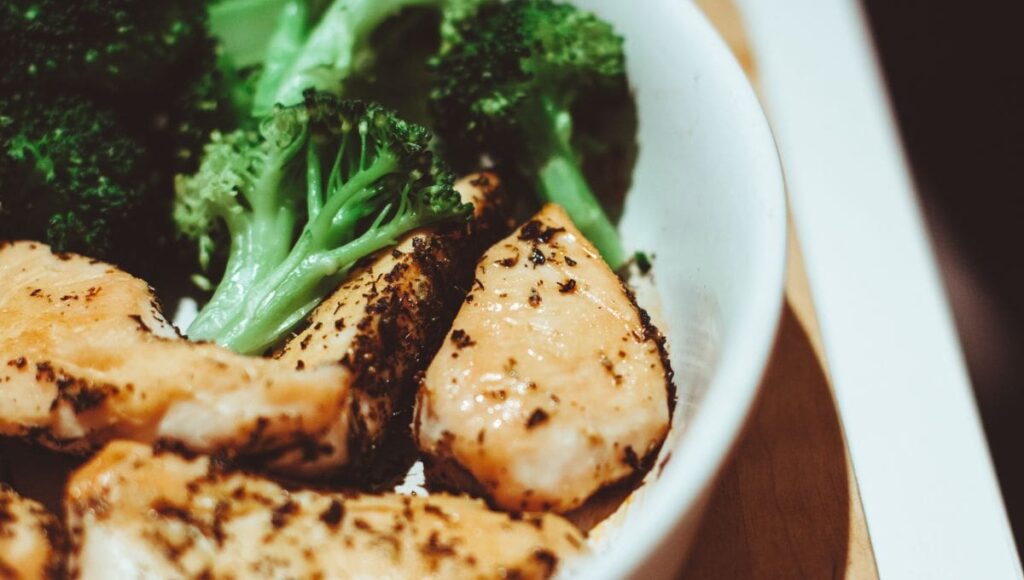
Studies have shown that consuming lean meats like chicken can significantly enhance muscle hypertrophy when combined with resistance training (Tipton & Wolfe, 2004). Its low-fat content makes it a healthier option for those looking to maintain or reduce body fat while building upper body muscle.
Nutritional Profile (per 100 grams of cooked chicken breast):
- Protein: 31 grams
- Fat: 3.6 grams
- Calories: 165 kcal
2. Eggs: A Complete Protein Source
Eggs are often referred to as a “complete” protein, as they contain all nine essential amino acids. One large egg provides around 6 grams of protein, which may not seem like a lot on its own, but eggs are packed with other nutrients, including vitamins D, B12, and healthy fats (USDA, 2023). These nutrients are important for overall health and support the body’s muscle-building process.

In addition, a study published in The American Journal of Clinical Nutrition found that whole eggs consumed after resistance exercise led to a 40% greater muscle protein synthesis response compared to egg whites alone (Van Vliet et al., 2017). This is due to the yolk’s nutrient content, which boosts the body’s ability to use the protein effectively.
Nutritional Profile (per large egg):
- Protein: 6 grams
- Fat: 5 grams
- Calories: 72 kcal
3. Greek Yoghurt: High in Casein and Whey Protein
Greek yoghurt is an excellent high-protein food because it contains both casein and whey, two types of protein that provide distinct benefits. Whey is quickly absorbed and aids in rapid muscle recovery, while casein is digested slowly, providing a steady supply of amino acids to the muscles over time (Phillips, 2014). A typical serving of Greek yoghurt can provide up to 10 grams of protein per 100 grams.

Research has shown that consuming dairy products like Greek yoghurt post-workout can increase lean muscle mass and reduce body fat, particularly in resistance-trained individuals (Josse et al., 2011). The combination of casein and whey makes it an excellent choice for those aiming to improve upper body strength and muscle tone.
Nutritional Profile (per 100 grams of Greek yoghurt):
- Protein: 10 grams
- Fat: 0-5 grams (depending on the type)
- Calories: 59-130 kcal
4. Salmon: A Rich Source of Omega-3s and Protein
Salmon is a powerful protein source, providing around 25 grams of protein per 100 grams (USDA, 2023). What makes salmon stand out is its high omega-3 fatty acid content, which has been shown to reduce inflammation and enhance muscle protein synthesis (Smith et al., 2011). Omega-3s also help improve blood flow to the muscles, which can support recovery and growth.
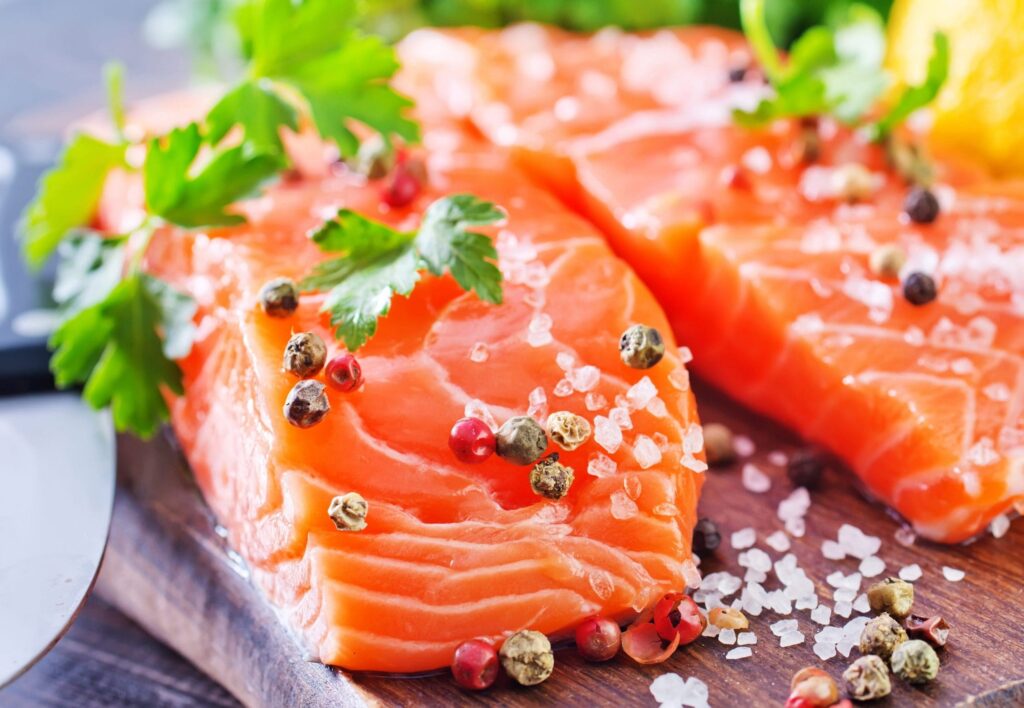
The anti-inflammatory effects of omega-3s are particularly beneficial for those engaging in heavy upper body workouts, as they help minimise muscle soreness and speed up recovery.
Nutritional Profile (per 100 grams of cooked salmon):
- Protein: 25 grams
- Fat: 13 grams
- Calories: 206 kcal
5. Lentils: A Plant-Based Protein Powerhouse
For those following a plant-based diet, lentils are an exceptional source of protein. With about 9 grams of protein per 100 grams (cooked), lentils are also packed with fibre and essential micronutrients like iron and folate, which support muscle health and overall well-being (USDA, 2023).
A study published in Nutrients revealed that plant-based proteins, such as those from lentils, can be just as effective as animal proteins when combined with proper resistance training (Campbell et al., 2017). Therefore, lentils are an excellent option for muscle building, especially when paired with other high-protein plant foods like quinoa or tofu.
Nutritional Profile (per 100 grams of cooked lentils):
- Protein: 9 grams
- Fibre: 8 grams
- Calories: 116 kcal
6. Cottage Cheese: Rich in Casein Protein
Cottage cheese is another excellent dairy-based source of protein, especially because of its high casein content. Casein is a slow-digesting protein that provides a steady release of amino acids, making cottage cheese an ideal snack before bed to prevent muscle breakdown during sleep (Phillips, 2014). A 100-gram serving of low-fat cottage cheese contains approximately 11 grams of protein (USDA, 2023).

Research has demonstrated that consuming casein-rich foods like cottage cheese before sleep can increase overnight muscle protein synthesis, which is crucial for muscle growth (Res et al., 2012). This makes it an invaluable addition to any muscle-building diet, particularly for upper body strength.
Nutritional Profile (per 100 grams of low-fat cottage cheese):
- Protein: 11 grams
- Fat: 4.3 grams
- Calories: 98 kcal
7. Quinoa: A Complete Plant-Based Protein
Quinoa is one of the few plant-based foods that contains all nine essential amino acids, making it a complete protein. With about 8 grams of protein per cup (185 grams), quinoa is also high in fibre and important minerals like magnesium, which aids in muscle contraction and relaxation (USDA, 2023). Magnesium is particularly important for preventing muscle cramps and improving recovery after intense upper body workouts.
In addition, a study in The Journal of Nutrition found that plant-based diets, including quinoa, can provide sufficient protein to support muscle growth when combined with resistance training (Craddock et al., 2016). Quinoa is thus a versatile and healthy option for both vegetarians and omnivores looking to boost their protein intake.
Nutritional Profile (per cup of cooked quinoa):
- Protein: 8 grams
- Fibre: 5 grams
- Calories: 222 kcal
Conclusion
Building upper body muscle requires a combination of targeted resistance training and proper nutrition. The seven high-protein foods highlighted in this article—chicken breast, eggs, Greek yoghurt, salmon, lentils, cottage cheese, and quinoa—offer the essential amino acids and nutrients needed to maximise muscle protein synthesis and recovery. Incorporating these foods into your daily diet can help you achieve your upper body muscle-building goals while supporting overall health.
Key Takeaways
| High Protein Food | Protein Content per 100g | Key Nutrients |
|---|---|---|
| Chicken Breast | 31g | Lean protein, low fat |
| Eggs | 6g | Complete protein, vitamins D, B12 |
| Greek Yoghurt | 10g | Casein, whey, probiotics |
| Salmon | 25g | Omega-3s, anti-inflammatory |
| Lentils | 9g | Plant-based, high in fibre |
| Cottage Cheese | 11g | Casein protein, low fat |
| Quinoa | 8g per cup | Complete plant-based protein, fibre |
Bibliography
American College of Sports Medicine. (2016). Protein Requirements for Building Muscle. [Online] Available at: https://www.acsm.org
Campbell, B.I., et al. (2017). Plant-based proteins in resistance exercise: Response and adaptation. Nutrients, 9(12), pp.1341-1354.
Craddock, J.C., et al. (2016). Protein quality in plant-based diets: Quinoa as a superior protein source. The Journal of Nutrition, 146(12), pp.2356-2365.
Josse, A.R., et al. (2011). Dairy protein, calcium intake, and body composition changes. Journal of the American College of Nutrition, 30(5), pp.412-423.
Phillips, S.M. (2014). Nutritional strategies to support resistance exercise adaptations. Sports Medicine, 44(1), pp.37-46.
Res, P.T., et al. (2012). Casein protein ingestion before sleep improves overnight muscle protein synthesis. Medicine & Science in Sports & Exercise, 44(8), pp.1569-1575.
Smith, G.I., et al. (2011). Omega-3 fatty acids and muscle protein synthesis. American Journal of Clinical Nutrition, 93(2), pp.402-412.
Tipton, K.D., & Wolfe, R.R. (2004). Protein and amino acids for athletes. Journal of Sports Science, 22(1), pp.65-79.
USDA. (2023). Food Data Central. [Online] Available at: https://fdc.nal.usda.gov/