If you’ve ever looked at a well-developed physique and noticed that neat “finger-like” muscles on the sides of the rib cage, that’s the serratus anterior. Often overlooked, the serratus anterior is a critical muscle that not only gives your torso that defined, athletic look but also plays a significant role in shoulder stability and upper body movement.
Why is the serratus anterior so important? This muscle assists in movements such as pushing, punching, and lifting your arms overhead. It’s responsible for protracting the scapula (moving it forward), which stabilises the shoulder blade during movements. Training it can improve your posture, enhance athletic performance, and prevent shoulder injuries.


In this article, we’ll explore the best way to train your serratus anterior with three highly effective exercises, along with how to incorporate them into a full workout. Whether you’re an athlete looking to improve your performance or just want to build a stronger, more balanced upper body, understanding and working this muscle is essential.
Key Benefits of Training the Serratus Anterior
- Improves shoulder stability and reduces the risk of injury
- Enhances posture by supporting shoulder retraction and scapular control
- Adds a more defined, athletic look to your torso
- Increases overall strength in pushing and overhead movements
The Anatomy and Function of the Serratus Anterior
Before jumping into the exercises, it’s helpful to understand where the serratus anterior is located and what it does. The muscle originates from the first to the eighth or ninth ribs and inserts along the inner border of the scapula (shoulder blade). Its primary function is to protract the scapula, allowing for overhead and forward movements. Think of actions like pushing a door open or raising your arms during a press – that’s the serratus anterior working.

How to Effectively Train the Serratus Anterior
Unlike some muscles, the serratus anterior doesn’t get much direct attention during common exercises like bench presses or pull-ups. To properly train this muscle, you need exercises that specifically target scapular movement and protraction.
1. Serratus Wall Slides
Serratus wall slides are a great isolation exercise for the serratus anterior, as they focus on scapular protraction and upward rotation. This movement trains the muscle to engage during overhead actions.
How to perform:
- Stand facing a wall, feet about hip-width apart.
- Place your forearms against the wall, with your elbows bent at 90 degrees and your hands pointing upwards.
- Slowly slide your arms up the wall, keeping your forearms in contact with it.
- As you slide, focus on pushing your shoulders forward and upward, protracting your scapula.
- Pause at the top, feeling the activation of the serratus anterior, then slowly slide back down.
Sets & Reps: 3 sets of 12-15 reps
2. Push-Up Plus
The push-up plus is a variation of the traditional push-up that incorporates an additional scapular protraction at the top of the movement, which heavily engages the serratus anterior. This exercise is excellent for improving scapular stability during pushing movements.
How to perform:
- Start in a regular push-up position, with your hands shoulder-width apart and your body in a straight line.
- Lower yourself down to perform a push-up, keeping your elbows close to your body.
- As you push back up to the starting position, extend the movement by pushing your shoulders forward, rounding your upper back (protracting your scapula).
- Hold this position for a second, then return to the starting position.
Sets & Reps: 3 sets of 10-12 reps
3. Dumbbell Pullover with Serratus Focus
The dumbbell pullover is traditionally known for working the lats and chest, but when performed with a focus on the serratus anterior, it becomes an excellent exercise for strengthening this muscle.
How to perform:
- Lie on a flat bench with your feet planted firmly on the floor.
- Hold a dumbbell with both hands, palms facing upwards, and extend it over your chest.
- Slowly lower the dumbbell behind your head, keeping a slight bend in your elbows.
- As you lower the weight, focus on maintaining tension in your serratus anterior by controlling the movement and avoiding excessive arching of your back.
- Once you feel a stretch, pull the dumbbell back to the starting position by engaging your serratus anterior and chest.
Sets & Reps: 3 sets of 8-10 reps
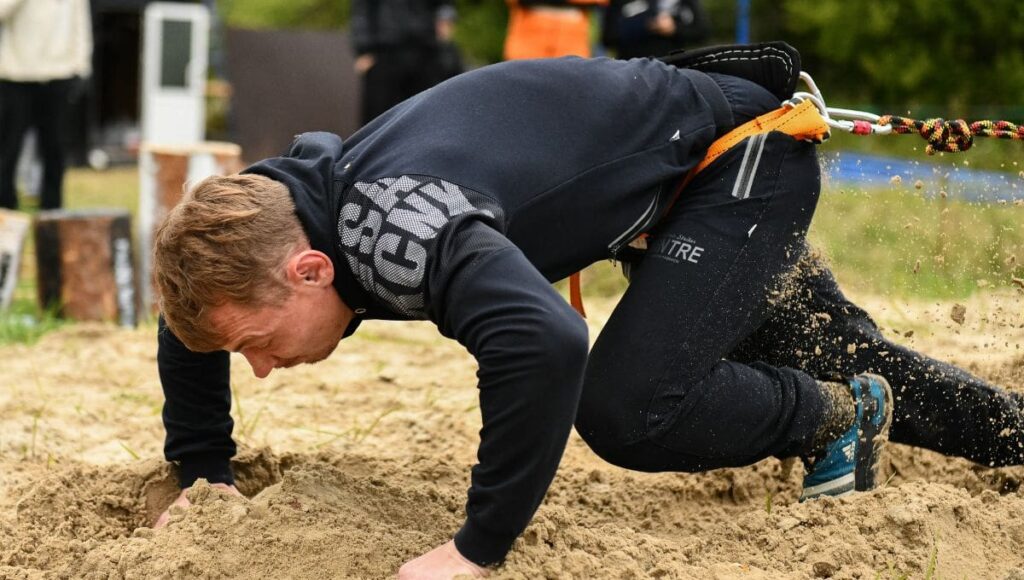
4. Bear Crawl
Bear crawls might seem like a basic movement, but they are surprisingly effective for engaging the serratus anterior. This full-body exercise works the shoulder girdle in a stabilising role, particularly the serratus anterior, as you move.
How to perform:
- Start on your hands and knees, with your hands directly under your shoulders and knees under your hips.
- Lift your knees off the ground so that you’re on your hands and toes, with your back flat.
- Begin crawling forward by moving your opposite hand and foot simultaneously, keeping your hips low and torso stable.
- Focus on maintaining shoulder protraction and keeping your body controlled.
Sets & Reps: 3 sets of 30-second crawls
The Only 5 Animal Movements you Need
5. Cable Scapular Protractions
This isolation movement allows you to focus solely on the scapular protraction needed to engage the serratus anterior without involving other muscles.
How to perform:
- Attach a handle to a low cable machine and stand facing the machine.
- Grab the handle with one hand, keeping your arm straight and your feet shoulder-width apart.
- Without bending your arm, pull your shoulder blade forward (protract your scapula) by moving your shoulder in front of your body.
- Hold the position for a second and then retract your shoulder blade back.
Sets & Reps: 3 sets of 12-15 reps per side
Full Serratus Anterior Workout
Now that you know the key exercises, here’s a full workout designed to target your serratus anterior. This workout combines isolation exercises and functional movements to build both strength and stability.
Warm-up:
- 5-10 minutes of light cardio (cycling, brisk walking, or dynamic stretching)
- 2 sets of shoulder mobility drills (arm circles, scapular retractions)
Workout:
- Serratus Wall Slides – 3 sets of 12-15 reps
- Push-Up Plus – 3 sets of 10-12 reps
- Dumbbell Pullover with Serratus Focus – 3 sets of 8-10 reps
- Bear Crawl – 3 sets of 30 seconds (rest 30-60 seconds between sets)
- Cable Scapular Protractions – 3 sets of 12-15 reps per side
Cooldown:
- 5 minutes of stretching, focusing on the shoulders and chest.
- Perform scapular retraction and protraction drills to keep the serratus anterior activated.
Tips for Progression
- Increase resistance: Gradually add weight or resistance bands to exercises like the dumbbell pullover or cable protractions to challenge the muscle further.
- Focus on form: The serratus anterior can be difficult to engage, so focus on the mind-muscle connection during each movement.
- Consistency is key: Aim to include serratus anterior work in your routine at least twice a week to see improvements in strength, posture, and muscle definition.
Conclusion
Training your serratus anterior is essential for shoulder stability, improved posture, and overall upper body strength. By incorporating exercises like serratus wall slides, push-up plus, and the dumbbell pullover into your routine, you can build a strong and well-defined serratus anterior. Not only will this help you achieve that athletic look, but it will also support your performance in various exercises and sports.
Remember, like any other muscle, the serratus anterior needs regular attention and proper technique to grow stronger. Focus on quality reps, maintaining proper form, and gradually increasing the difficulty of your workouts.
By following the full workout outlined in this article and staying consistent, you’ll be well on your way to building a stronger, more functional upper body.
Key Takeaways Table
| Point | Description |
|---|---|
| Why train the serratus anterior? | Improves shoulder stability, enhances posture, and contributes to a defined torso. |
| Top exercises | Serratus wall slides, push-up plus, dumbbell pullover, bear crawl, cable protractions. |
| Workout frequency | Incorporate serratus training at least twice a week for best results. |
| Form and progression | Focus on proper scapular movement and gradually increase resistance. |
| Functional benefits | Enhances performance in overhead movements and pushing exercises. |
References
- Kibler, W. B., & Sciascia, A. D. (2010). Current concepts: scapular dyskinesis. British Journal of Sports Medicine, 44(5), 300-305.
- Ekstrom, R. A., Donatelli, R. A., & Soderberg, G. L. (2003). Surface electromyographic analysis of exercises for the trapezius and serratus anterior muscles. Journal of Orthopaedic & Sports Physical Therapy, 33(5), 247-258.
- Phadke, V., Camargo, P., & Ludewig, P. M. (2009). Scapular muscle imbalances in subjects with rotator cuff tendinopathy. Journal of Orthopaedic & Sports Physical Therapy, 39(2), 94-104.