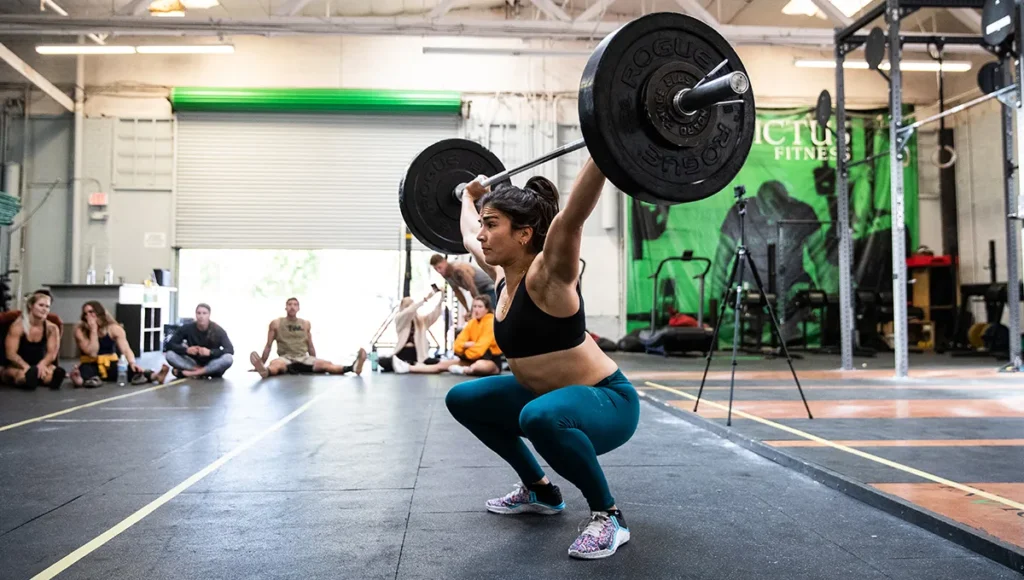
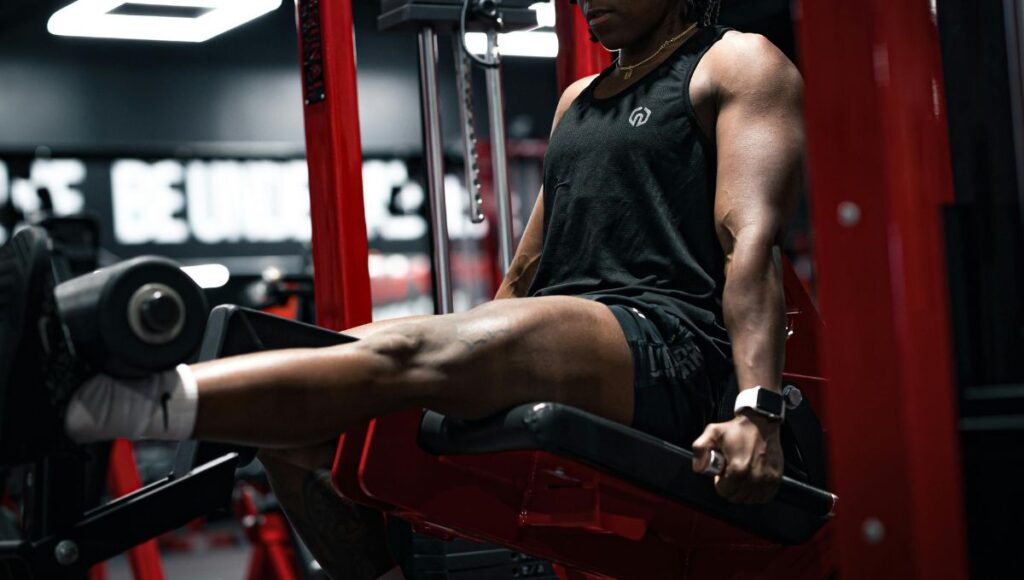
Building muscle in the lower body requires more than just traditional squats and deadlifts. For individuals looking to accelerate muscle growth or overcome plateaus, it may be time to explore unconventional techniques that target the lower body in unique ways.
This article will explore five scientifically backed but less commonly used strategies to enhance lower body muscle development. These methods can complement existing training routines, offering new stimuli to promote hypertrophy.


1. Blood Flow Restriction (BFR) Training
Blood Flow Restriction (BFR) training, also known as occlusion training, is a technique that involves restricting venous blood flow while maintaining arterial blood flow to the muscles being worked.
This can be achieved by wrapping a band or cuff around the top of the working limb. BFR training is typically performed with lighter weights (20-30% of your 1RM), but it can still stimulate significant muscle growth.
BFR training works by creating a hypoxic (low oxygen) environment within the muscle, which leads to increased lactate production, greater metabolic stress, and heightened activation of growth factors like mTOR and IGF-1. These conditions are ideal for promoting hypertrophy, even with low external loads. According to a study published in the Journal of Applied Physiology, BFR training can lead to similar gains in muscle mass as traditional resistance training but with significantly less weight, reducing the risk of joint and tendon injury (Loenneke et al., 2012).
How to Incorporate BFR Training:
- Perform 3-4 sets of lower-body exercises such as leg presses, leg extensions, or hamstring curls.
- Use 20-30% of your one-rep max (1RM).
- Keep rest periods short (30-60 seconds).
- Wrap a cuff or band around the upper thigh to restrict blood flow, ensuring it’s tight enough to reduce venous return but not so tight that it completely cuts off circulation.
2. Tempo Training
Tempo training refers to the controlled manipulation of the speed at which you perform each phase of a lift. By extending the eccentric (lowering) phase of an exercise and possibly adding a pause at the bottom, you can dramatically increase time under tension (TUT). Increased TUT is linked to greater muscle fibre recruitment, particularly in the type I and type II fibres responsible for hypertrophy.
Research published in the European Journal of Applied Physiology indicates that prolonged TUT during the eccentric phase enhances muscle protein synthesis and contributes to muscle hypertrophy more effectively than conventional lifting speeds (Schoenfeld et al., 2015). This technique is especially useful for exercises like squats, lunges, and deadlifts.
How to Incorporate Tempo Training:
- Focus on using a 4-1-1 or 4-2-1 tempo. For example, take 4 seconds to lower the weight, pause for 1 or 2 seconds at the bottom, and then lift explosively.
- Incorporate this technique into exercises like back squats, Romanian deadlifts, and split squats to maximise TUT.
3. Isometric Holds
Isometric training involves holding a muscle in a contracted position without movement. When applied strategically, isometric holds can enhance lower body muscle growth by increasing metabolic stress and improving the mind-muscle connection. This technique forces your muscles to maintain tension for longer periods, leading to greater fatigue and subsequent hypertrophy.
Isometric holds have been shown to be effective for strength gains, which are a precursor to muscle growth. A study published in the Journal of Strength and Conditioning Research demonstrated that isometric training could significantly improve muscular endurance and hypertrophy, particularly in the quadriceps (Lum et al., 2016).
How to Incorporate Isometric Holds:
- Use exercises like wall sits or static lunges.
- Hold the position at the point of greatest tension for 30-60 seconds.
- Incorporate 3-4 sets of isometric holds at the end of your lower body workout to maximise muscle fatigue.
4. Cluster Sets
Cluster sets involve breaking up a traditional set into smaller “clusters” of reps with short rest intervals between them. For example, instead of performing 10 straight reps, you might do 4 sets of 3 reps, with 20-30 seconds of rest between each cluster. This technique allows for greater intensity and volume to be achieved without excessive fatigue.
Cluster sets have been shown to improve both strength and hypertrophy. A study in the Journal of Sports Sciences found that cluster set training could increase muscle growth and strength more effectively than traditional set structures due to the ability to lift heavier weights with more consistent quality of movement (Tufano et al., 2017).
How to Incorporate Cluster Sets:
- Choose a weight that is around 85-90% of your 1RM.
- Perform 3-4 reps, rest for 20-30 seconds, then repeat until you complete the total number of desired reps (e.g., 12-15 reps).
- Incorporate cluster sets into compound lower body exercises like squats and deadlifts for maximum benefits.
5. Partial Range of Motion (ROM) Training
Partial ROM training involves performing an exercise through only part of the movement. This can be used to target specific areas of a muscle or to focus on the point of maximum tension. For example, performing squats from the bottom third of the range of motion can place greater emphasis on the quadriceps and glutes, helping to overcome strength plateaus and stimulate new growth.
Partial ROM has been shown to be effective for hypertrophy when combined with full-ROM training. A study published in the Journal of Strength and Conditioning Research found that partial ROM training could enhance muscle activation and promote hypertrophy in advanced trainees when used strategically alongside traditional training methods (McMahon et al., 2014).
How to Incorporate Partial ROM Training:
- Use partial ROM as a finisher after completing full ROM exercises.
- Focus on the portion of the exercise where the muscle is under the most tension (e.g., the bottom third of a squat or leg press).
- Perform 3-4 sets of 8-10 reps using a weight that is approximately 70-80% of your 1RM.
Conclusion
Incorporating unconventional techniques like BFR training, tempo manipulation, isometric holds, cluster sets, and partial ROM training can help break through plateaus and stimulate new muscle growth in the lower body. Each of these methods provides a unique stimulus, targeting the muscles in ways that traditional training methods may not. Backed by scientific research, these techniques offer practical strategies to enhance lower body hypertrophy and improve overall strength and muscle mass.
Key Takeaways
| Technique | Key Benefit |
|---|---|
| Blood Flow Restriction | Increases muscle growth with lighter weights, reducing joint stress. |
| Tempo Training | Maximises time under tension, promoting hypertrophy through controlled lifting. |
| Isometric Holds | Enhances mind-muscle connection and increases metabolic stress. |
| Cluster Sets | Allows for more volume and intensity, improving strength and hypertrophy. |
| Partial Range of Motion | Targets specific areas of the muscle, overcoming plateaus and enhancing growth. |
Bibliography
Loenneke, J.P., Wilson, J.M., Marín, P.J., Zourdos, M.C., and Bemben, M.G., 2012. Blood flow restriction: the metabolite/volume threshold theory. Medical Hypotheses, 78(4), pp.523-527.
Schoenfeld, B.J., Contreras, B., Krieger, J.W., Grgic, J., Delcastillo, K., Belliard, R., and Alto, A., 2015. Resistance training volume enhances muscle hypertrophy but not strength in trained men. Medicine and Science in Sports and Exercise, 47(12), pp.2584-2593.
Lum, D., Tan, F., and Pang, J., 2016. Effects of intermittent isometric contractions on muscle hypertrophy. Journal of Strength and Conditioning Research, 30(2), pp.396-402.
Tufano, J.J., Brown, L.E., and Haff, G.G., 2017. Theoretical and practical aspects of different cluster set structures: A systematic review. Journal of Sports Sciences, 35(20), pp.2019-2026.
McMahon, G.E., Morse, C.I., Burden, A., Winwood, K., and Onambélé, G.L., 2014. Impact of range of motion during ecologically valid resistance training protocols on muscle size, subcutaneous fat, and strength. Journal of Strength and Conditioning Research, 28(1), pp.245-255.