Everyone dreams of having a powerful, well-defined chest, but many people find it challenging to achieve the size and strength they want. The good news is that you don’t need to spend hours in the gym to build a massive chest. In fact, by focusing on the right exercises, you can maximise your gains in less time. Whether you’re a beginner or a seasoned gym-goer, these three shortcut exercises can significantly boost chest muscle growth while also enhancing overall strength.
In this article, we’ll break down three of the most effective exercises for chest development. These exercises will target different areas of the chest, ensuring you hit all the key muscles while cutting down on unnecessary time and effort.


Why Targeted Chest Exercises Matter
Before diving into the exercises, it’s essential to understand why focusing on specific movements can make all the difference in your workout routine. The chest, or the pectoralis major, is made up of two main parts – the upper chest (clavicular head) and the lower chest (sternal head). To develop a balanced, massive chest, you need to work both areas effectively.
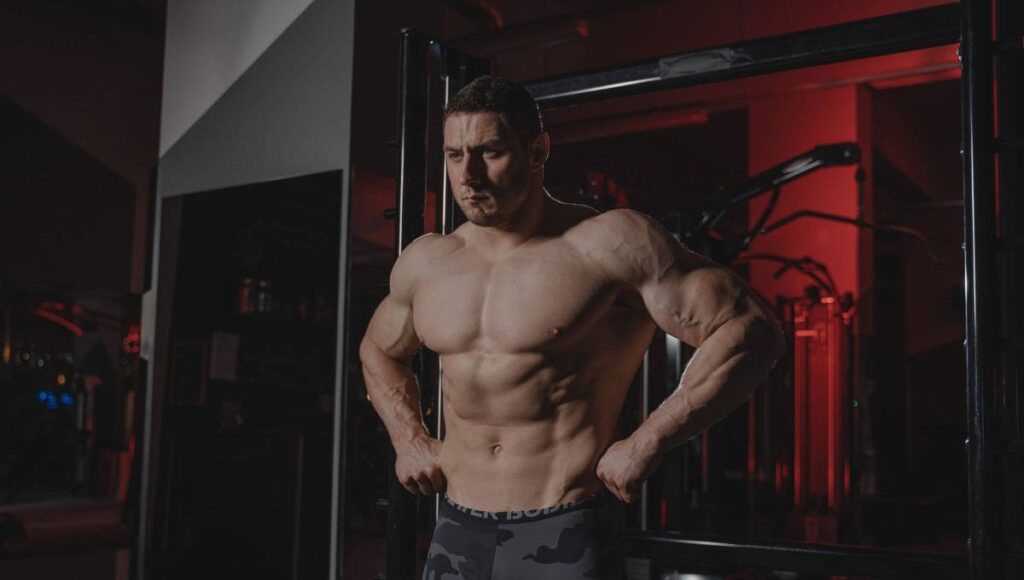
Traditional chest routines often have you performing multiple sets of various exercises that might not directly target your chest’s growth potential. But with the right exercises, you can activate more muscle fibres, leading to faster and more noticeable results.
So, let’s get into the top three exercises that will shortcut your way to a bigger, stronger chest.
1. Incline Barbell Bench Press – Target the Upper Chest
The incline barbell bench press is a fantastic exercise for targeting the upper chest, which can often be neglected in regular flat bench presses. Working this area will give your chest a fuller, more powerful appearance.
Why it’s effective:
- Focuses on the upper part of the pectoralis major.
- Allows you to lift heavier weights compared to other incline exercises.
- Enhances shoulder stability while working the chest.
How to do it:
- Set the bench at a 30-45 degree incline.
- Lie on the bench with your feet flat on the floor and your back arched slightly.
- Grip the barbell slightly wider than shoulder-width apart.
- Lower the barbell slowly to your upper chest, just below your collarbone.
- Press the barbell back up in a controlled motion, making sure to engage your chest muscles throughout the lift.
Tips for success:
- Keep your elbows slightly tucked in to avoid straining your shoulders.
- Focus on squeezing your chest muscles at the top of the movement.
- Avoid going too heavy right away; form is key to avoiding injury.
The incline barbell bench press is excellent for building that much-desired upper chest shelf, which will make your chest pop in both T-shirts and tank tops.
How to Build Muscle: The 4 Day Split Program
2. Dumbbell Bench Press – Boost Chest Thickness
The dumbbell bench press is a classic exercise that’s perfect for building overall chest thickness. Using dumbbells allows for a greater range of motion than a barbell, leading to better muscle activation and growth.
Why it’s effective:
- Targets the entire pectoralis major, focusing on overall size.
- Engages stabiliser muscles, improving strength and balance.
- Allows for a deeper stretch, maximising muscle fibre engagement.
How to do it:
- Lie flat on a bench with a dumbbell in each hand, palms facing forward.
- Start with the dumbbells at chest level, with your elbows bent at a 90-degree angle.
- Press the dumbbells upwards in a smooth, controlled movement until your arms are fully extended, but don’t lock your elbows.
- Slowly lower the weights back down to your chest, feeling the stretch in your pectoral muscles.
Tips for success:
- Keep your shoulder blades retracted to protect your shoulders and enhance chest engagement.
- Don’t let the dumbbells touch at the top; keep the tension on your chest.
- Control the movement throughout; rushing the exercise can lead to poor form and reduced muscle activation.
Because dumbbells require more stabilisation, this exercise will engage more muscle fibres, leading to increased chest size and overall strength. Plus, it’s versatile – you can adjust the angle of the bench to hit different parts of your chest.
3. Chest Dips – Develop Lower Chest Definition
Chest dips are a powerful bodyweight exercise that targets the lower chest while also working the triceps and shoulders. Dips can add definition and mass to the lower portion of your chest, giving you that chiselled look.
Why it’s effective:
- Primarily targets the lower chest, an often neglected area.
- Uses your body weight, allowing for natural resistance progression.
- Strengthens multiple muscle groups, improving overall upper-body strength.
How to do it:
- Find parallel bars or a dip station.
- Grip the bars with your palms facing inward and arms extended.
- Lean slightly forward, keeping your core tight.
- Lower your body by bending your elbows, keeping your chest forward.
- Press yourself back up by straightening your arms, focusing on engaging your chest throughout the movement.
Tips for success:
- Leaning forward helps target the chest more effectively.
- Keep your elbows at a 45-degree angle to avoid shoulder strain.
- If bodyweight dips become too easy, add extra resistance with a dip belt or a weighted vest.
Chest dips are one of the best exercises for building lower chest mass and creating that “V” shape at the bottom of the pecs. The forward-leaning position ensures that the chest, not the triceps, does most of the work.
Maximising Your Chest Gains with Proper Form and Frequency
These exercises will set you on the right path to a massive chest, but to get the best results, it’s essential to focus on proper form and workout frequency. Here’s how you can maximise your chest workouts:
Form Matters More Than Weight
- Always prioritise form over how much weight you’re lifting. Poor form not only reduces the effectiveness of the exercise but also increases the risk of injury. Slow, controlled movements will engage the chest muscles better than rushing through your reps.
Train 2-3 Times a Week
- For optimal growth, aim to train your chest 2-3 times a week. This frequency allows enough recovery time for your muscles to grow while still providing enough stimulus for hypertrophy.
Use Progressive Overload
- To continue seeing progress, progressively increase the weight or the number of reps over time. Progressive overload is crucial for muscle growth because it forces your muscles to adapt to increasing levels of stress.
How To Force Muscle Growth – 5 Best Methods To Accomplish That
Rest and Recovery
- Don’t underestimate the importance of recovery. Ensure you’re getting adequate rest between chest workouts, as muscle growth occurs during recovery periods. Aim for at least 48 hours of rest before hitting your chest again.
Conclusion
Building a massive chest doesn’t have to be complicated or time-consuming. By focusing on these three shortcut exercises – the incline barbell bench press, dumbbell bench press, and chest dips – you’ll be able to effectively target all areas of the chest, leading to faster and more noticeable muscle growth. Remember, proper form and consistent training are key to getting the results you want.
By incorporating these exercises into your routine, sticking with a regular training schedule, and progressively challenging yourself, you’ll be well on your way to achieving that strong, impressive chest you’ve always wanted.
Key Takeaways Table
| Shortcut Exercise | Target Area | Why It Works | Tips for Success |
|---|---|---|---|
| Incline Barbell Bench Press | Upper chest | Focuses on the often neglected upper chest | Use a 30-45 degree incline; keep elbows slightly tucked |
| Dumbbell Bench Press | Overall chest | Engages stabiliser muscles, increases chest size | Avoid locking elbows; maintain controlled movement |
| Chest Dips | Lower chest | Develops lower chest definition and strength | Lean forward slightly; add resistance when bodyweight is easy |
References
- Schoenfeld, B.J., 2010. The mechanisms of muscle hypertrophy and their application to resistance training. Journal of Strength and Conditioning Research, 24(10), pp.2857-2872.
- Fisher, J.P., Steele, J. and Smith, D., 2013. High- and low-load resistance training: the role of intensity on muscle adaptations. European Journal of Applied Physiology, 113(8), pp.2031-2042.
- McCall, G.E., Byrnes, W.C., Fleck, S.J., Dickinson, A. and Kraemer, W.J., 1999. Muscle fiber hypertrophy, hyperplasia, and capillary density in college men after resistance training. Journal of Applied Physiology, 81(5), pp.2004-2012.