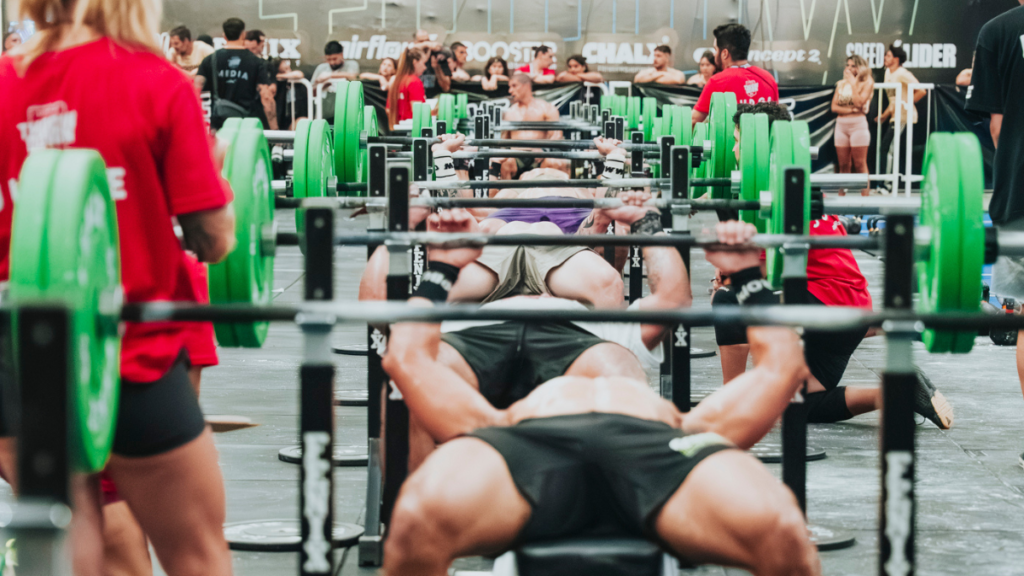
For lifters who have moved past the beginner stage, progress can start to slow. Reaching the intermediate phase requires more strategic adjustments to continue making meaningful gains.
Below are five scientifically backed tips that intermediate lifters can employ to maximise their results and overcome common plateaus.


Tip 1: Optimise Progressive Overload
Progressive overload remains a cornerstone of strength training, yet it becomes increasingly nuanced at the intermediate level. Intermediate lifters often benefit from diversifying how they apply overload. Rather than only adding weight to the bar, adjustments to volume, intensity, and frequency can enhance adaptation and reduce injury risk.
For example, research has shown that alternating between periods of high volume and high intensity (known as periodisation) can yield superior strength gains compared to non-periodised training (Kraemer et al., 2002). Studies also indicate that implementing “microloading” — increasing weight in very small increments — is beneficial for continued progress (Schoenfeld, 2010). Lastly, incorporating variations such as pauses, slower eccentric phases, or even extended range-of-motion exercises can add different types of stress, which encourage further muscular adaptation (Haff and Triplett, 2016).
Tip 2: Master the Mind-Muscle Connection
The mind-muscle connection (MMC) refers to the conscious focus on the target muscle during exercise execution. Studies indicate that an enhanced MMC can significantly increase muscle activation, particularly in isolation movements like bicep curls and leg extensions (Snyder and Fry, 2012). Although compound movements require stable execution, intermediate lifters can benefit from utilising MMC in isolation exercises to improve form and recruit more muscle fibres.
To improve MMC, focus on slowing down each repetition, visualising the muscle contraction, and contracting the muscle intentionally at the peak of each rep. Recent research shows that engaging the MMC leads to greater hypertrophy in certain muscle groups over time (Calatayud et al., 2015).
Tip 3: Embrace Compound and Isolation Exercise Balance
Intermediate lifters should carefully balance compound and isolation exercises in their routine to address specific weaknesses while continuing to build overall strength. Compound exercises remain critical for strength development and efficient workout sessions, yet adding selective isolation work can help target underdeveloped muscles.

Research supports the idea that combining compound and isolation exercises leads to better hypertrophic outcomes, as the mix of these types of exercises can optimise muscle recruitment patterns (Gentil et al., 2015). For example, adding exercises like tricep extensions or leg curls to complement bench presses or squats can reduce muscular imbalances and facilitate overall strength improvements.
Programming-wise, placing compound exercises at the start of a workout ensures sufficient energy for these demanding moves, while isolation exercises can round out the session by focusing on specific muscle groups.
Tip 4: Implement Advanced Training Techniques Sparingly
Intermediate lifters are often tempted by advanced techniques, such as drop sets, supersets, and rest-pause training. While effective, these techniques should be used strategically to avoid overtraining and burnout. Research highlights that advanced techniques, when employed periodically, can yield significant hypertrophic benefits by increasing metabolic stress and time under tension (Goto et al., 2005). For instance, rest-pause training, which incorporates mini-breaks within a set, has been found to increase muscle fibre recruitment and metabolic stress, both of which promote muscle growth (Dankel et al., 2017). Implementing these techniques occasionally, such as in the final sets of an exercise or during specific hypertrophy blocks, allows intermediate lifters to capitalise on their benefits without compromising recovery or risking injury.
Tip 5: Prioritise Recovery Through Sleep and Nutrition
Intermediate lifters are at a stage where their gains are increasingly impacted by recovery practices. Research shows that sleep deprivation impairs muscle recovery and reduces overall performance, with 7–9 hours per night recommended for optimal results (Dattilo et al., 2011). Additionally, nutrient timing can enhance recovery, especially if meals are consumed within a 2-hour window post-training to replenish glycogen and initiate protein synthesis (Ivy, 2004). For intermediate lifters, aiming for 1.6–2.2 grams of protein per kilogram of body weight daily helps maximise muscle protein synthesis (Morton et al., 2018). Ensuring adequate hydration, managing stress levels, and incorporating regular deload weeks — periods with reduced training intensity — are other key recovery strategies that support sustained progress.
Key Takeaways Table
| Key Takeaway | Description |
|---|---|
| Optimise Progressive Overload | Use a mix of volume, intensity, and frequency adjustments, including periodisation and microloading. |
| Enhance the Mind-Muscle Connection | Focus on activating target muscles during isolation exercises to improve muscle recruitment and hypertrophy. |
| Balance Compound and Isolation Exercises | Use both exercise types to address weaknesses while building strength; place compound lifts at the beginning of workouts. |
| Use Advanced Techniques Sparingly | Include techniques like drop sets and rest-pause strategically to increase metabolic stress without overtraining. |
| Prioritise Recovery | Ensure adequate sleep, protein intake, hydration, and periodic deloads to support muscle repair and growth. |