TRX suspension training has gained immense popularity for its versatility, convenience, and ability to offer a full-body workout using only a set of adjustable straps. While TRX is widely known for its core and upper body exercises, it can be equally effective for developing a strong, balanced lower body. With TRX, you can target your glutes, quads, hamstrings, calves, and stabilising muscles to build strength, improve balance, and enhance joint stability.
This article will dive into TRX exercises tailored specifically for lower body training, explaining how to execute each move with proper form, modifications, and key benefits. Whether you’re aiming to boost athletic performance, improve mobility, or simply tone your legs, a TRX can be a valuable tool. Let’s explore how to make the most of it.


Benefits of Using TRX for Lower Body Training
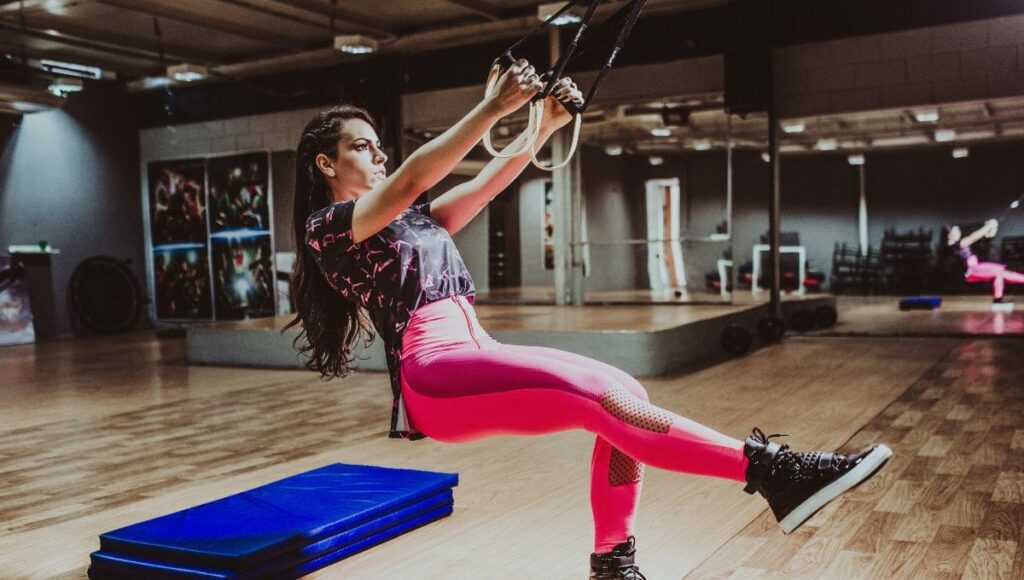
Training your lower body with TRX comes with unique benefits that set it apart from traditional gym equipment.
- Core Engagement: Since TRX exercises require stabilisation, your core muscles stay engaged throughout, promoting core strength alongside lower body gains.
- Reduced Joint Impact: Suspension training allows for low-impact movements, which can be gentler on the joints, ideal for injury prevention and rehab.
- Enhanced Balance and Stability: TRX exercises often require balance, activating stabiliser muscles and improving coordination.
- Adaptable to All Levels: By adjusting the angle of your body, you can modify the resistance and intensity of each movement, making TRX suitable for beginners and advanced athletes alike.
- Functional Strength: TRX exercises mimic real-life movements, which can be beneficial for daily activities and sports performance.
Suspension Training: The Ultimate Guide for Beginners, Intermediate and Experienced Athletes
Essential TRX Lower Body Exercises
1. TRX Squat
A foundational move, the TRX squat targets the glutes, quads, hamstrings, and core, while minimising the impact on your knees.
- Execution: Stand facing the anchor point, holding the handles with arms fully extended and feet shoulder-width apart. Bend at the knees and hips to lower into a squat, keeping your chest lifted and weight in your heels. Press through your heels to return to standing.
- Form Tips: Keep your back straight and avoid leaning too far forward. Engage your core and maintain a slight tension in the straps.
- Benefits: Builds strength in the lower body, especially the glutes and quads, while promoting proper squat mechanics.
2. TRX Lunge
The TRX lunge improves single-leg strength, balance, and stability by focusing on each leg individually.
- Execution: Stand with one foot in the TRX loop behind you, with your other leg firmly planted. Bend the front knee to lower your body into a lunge, ensuring your front knee doesn’t extend past your toes. Push through the front heel to return to the starting position.
- Form Tips: Keep your torso upright and focus on controlling the movement, especially when lowering.
- Benefits: Enhances strength and stability in the quads, hamstrings, and glutes, while engaging core stabilisers.
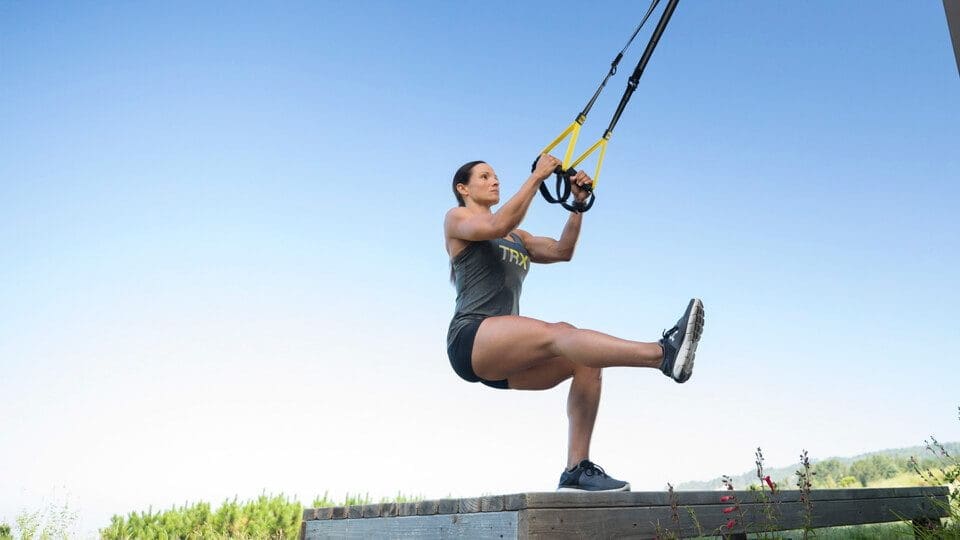
3. TRX Single-Leg Squat
Also known as the pistol squat, this exercise challenges balance, stability, and lower body strength, targeting the quads and glutes intensely.
- Execution: Stand facing the anchor point with one leg extended in front of you and the other leg firmly on the ground. Hold the TRX handles and squat down on your supporting leg, keeping the extended leg raised. Return to standing by pushing through the heel of your grounded leg.
- Form Tips: Avoid leaning too heavily on the TRX straps; aim to let your leg muscles do most of the work.
- Benefits: Builds single-leg strength and balance, improving symmetry and coordination between both legs.
4. TRX Hamstring Curl
This exercise isolates the hamstrings while engaging your core and glutes, making it a great option for targeting the back of your legs.
- Execution: Lie on your back with your heels in the TRX straps and your legs extended. Lift your hips off the ground, creating a straight line from your shoulders to your knees. Pull your heels toward your glutes, bending your knees and squeezing your hamstrings. Extend your legs back out.
- Form Tips: Keep your hips lifted throughout the movement, engaging your glutes to maintain alignment.
- Benefits: Strengthens the hamstrings and glutes, helping to prevent injuries and improve hip stability.
5. TRX Curtsy Lunge
The TRX curtsy lunge is a dynamic movement that targets the glutes, quads, and adductors while engaging stabiliser muscles for improved balance.
- Execution: Stand facing the TRX anchor with your feet hip-width apart, holding the handles with your arms extended. Step one leg behind you and to the side, lowering into a curtsy lunge. Push through the front heel to return to standing.
- Form Tips: Maintain an upright posture and avoid twisting your torso.
- Benefits: Works the inner and outer thighs, glutes, and core, while challenging balance and stability.
6. TRX Calf Raise
This move focuses specifically on building calf strength and stability in the ankles.
- Execution: Stand facing the anchor point with feet shoulder-width apart, holding the TRX handles with a slight bend in your elbows. Rise onto the balls of your feet, contracting your calves, then lower back down.
- Form Tips: Keep your movements controlled to fully engage the calf muscles and maintain balance.
- Benefits: Strengthens the calves and ankles, which can improve running performance and reduce the risk of ankle injuries.
15 MUST-DO Abs Exercises with TRX (Suspension Training)
Advanced TRX Lower Body Variations
Once you’ve mastered the basics, you can progress to more challenging variations for continued strength gains and balance improvements.
1. TRX Pistol Squat with Jump
Adding a jump to the pistol squat introduces explosive power and increases the intensity for greater strength gains.
- Execution: Begin in a single-leg squat position, then push through your grounded heel to jump up, keeping the other leg extended. Land softly and return to the squat.
- Form Tips: Focus on controlling the landing to prevent excessive stress on your knee.
- Benefits: Builds lower body power and enhances athletic performance.
2. TRX Bulgarian Split Squat with Pause
This variation of the split squat introduces an isometric hold, increasing time under tension for more muscle activation.
- Execution: Stand with one foot in the TRX loop behind you, and perform a lunge with a three-second pause at the bottom. Push through your front heel to return to standing.
- Form Tips: Keep your torso upright and avoid collapsing your chest.
- Benefits: Enhances muscular endurance and strength, especially in the glutes and quads.
3. TRX Skater Jump
The TRX skater jump is a lateral movement that mimics the skating motion, targeting glutes, quads, and adductors while also challenging coordination and balance.
- Execution: Stand on one leg, holding the TRX handles. Hop laterally to the opposite leg while maintaining control and balance, engaging the core and glutes.
- Form Tips: Land softly on each leg and avoid excessive twisting.
- Benefits: Improves lateral movement skills, targeting stabilising muscles for overall athleticism.
TRX Lower Body Workout Routine
To maximise your TRX training, here’s a sample workout routine targeting the lower body. Aim for 3 rounds of each exercise, resting as needed.
- TRX Squat – 12 reps
- TRX Lunge (per leg) – 10 reps
- TRX Single-Leg Squat – 8 reps
- TRX Hamstring Curl – 12 reps
- TRX Curtsy Lunge – 10 reps
- TRX Calf Raise – 15 reps
As you progress, increase the number of rounds or try more advanced variations for added intensity.
Tips for Effective TRX Lower Body Training
- Maintain Consistent Tension: Keep tension in the TRX straps to ensure stability and maximise muscle engagement.
- Use Proper Foot Positioning: Correct foot placement will prevent unnecessary strain on the knees and improve alignment.
- Control Your Movements: Avoid rushing through exercises; slow, controlled motions are key to activating the target muscles effectively.
- Incorporate Core Activation: Engage your core throughout each move, as it’s essential for maintaining balance and stabilisation in TRX exercises.
Conclusion
Using TRX for lower body training offers a versatile, joint-friendly way to build strength, stability, and balance. From basic squats to advanced pistol squat jumps, TRX exercises provide a range of modifications and progressions to suit all fitness levels. By incorporating a few key TRX exercises into your regular workout routine, you can develop a powerful lower body that supports better performance, stability, and overall fitness.
Key Takeaways Table
| Exercise | Primary Muscles Targeted | Difficulty Level | Benefits |
|---|---|---|---|
| TRX Squat | Glutes, Quads | Beginner | Builds lower body strength, joint-friendly |
| TRX Lunge | Glutes, Hamstrings, Quads | Intermediate | Enhances single-leg strength, balance |
| TRX Single-Leg Squat | Quads, Glutes | Advanced | Improves balance, unilateral strength |
| TRX Hamstring Curl | Hamstrings, Glutes | Intermediate | Isolates hamstrings, core stability |
| TRX Curtsy Lunge | Glutes, Adductors, Quads | Intermediate | Engages inner thighs, boosts stability |
| TRX Calf Raise | Calves | Beginner | Strengthens calves, ankle stability |
| TRX Pistol Squat Jump | Quads, Glutes | Advanced | Develops power and explosive strength |
| TRX Bulgarian Split Squat | Glutes, Quads, Hamstrings | Advanced | Increases strength with time under tension |
References
- Beach, P., & Pacheco, E., 2017. TRX Suspension Training for Functional Strength. Journal of Strength and Conditioning Research, 31(2), pp.436-447.
- Camara, K., 2020. The Impact of Suspension Training on Balance and Core Stability. International Journal of Exercise Science, 13(1), pp.10-20.
- Meyers, J., & Snarr, R.L., 2016. Effectiveness of TRX Training on Lower Body Strength Development. Journal of Sports Science and Medicine, 15(3), pp.234-240.