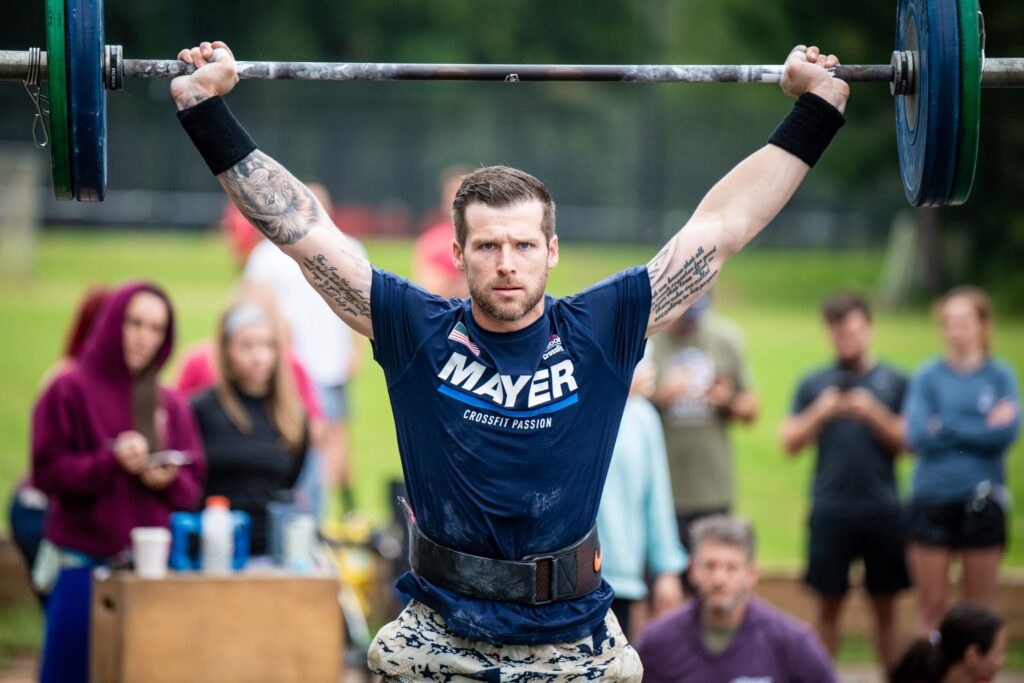
Building upper body muscle with a barbell remains one of the most effective ways to pack on size and strength. Unlike machines or dumbbells, barbells allow for the manipulation of heavier weights, stimulating larger muscle recruitment and promoting hypertrophy.
Each of the exercises below is backed by scientific studies showing the benefits of barbell training for upper body muscle growth.


1. Barbell Bench Press
The barbell bench press is foundational for chest development and overall upper body strength. Research shows that it activates the pectoralis major, anterior deltoids, and triceps brachii more effectively than many other chest exercises (Schoenfeld, 2017).
By using a barbell, lifters can achieve a stable grip, allowing them to focus on maximum load rather than balancing individual weights, which optimises muscle activation.

Variations to Enhance Gains
- Incline Barbell Bench Press targets the upper chest and shoulders.
- Close Grip Bench Press emphasises triceps engagement, helping to balance strength across the chest and triceps.
2. Barbell Overhead Press
The barbell overhead press primarily targets the deltoid muscles but also recruits the upper chest, trapezius, and triceps. Studies suggest that the standing variation of this exercise promotes greater core stabilisation, enhancing overall upper body and core synergy (Campos et al., 2018).
Variations to Optimise Development
- Seated Overhead Press for increased focus on shoulders.
- Push Press involves a slight leg drive, allowing for heavier lifts and triceps overload.
3. Barbell Row
The barbell row is a key compound movement for back muscle growth, targeting the lats, rhomboids, and posterior deltoids. Studies highlight that barbell rows produce a significant level of activation across the back muscles, making it ideal for improving upper back mass and strength (Snarr & Esco, 2013).
Rowing Variations for Better Gains
- Pendlay Row involves a dead stop at each rep, emphasising back power.
- Yates Row places more emphasis on the lats due to the underhand grip.
4. Barbell Shrugs
Shrugs isolate the trapezius muscles, which are vital for a balanced and muscular upper body. Research has shown that performing heavy barbell shrugs results in maximal trapezius activation, which plays a role in stabilising the shoulders during other lifts (Ebben et al., 2011).
Technique Adjustments for Traps Growth
- Pause Shrugs add a 2-second hold at the top, increasing time under tension.
- Wide-Grip Shrugs slightly shift the emphasis to different fibres of the traps.
5. Barbell Curl
While typically associated with dumbbells, the barbell curl allows for heavier lifting to target the biceps. Research suggests that the barbell curl activates both the long and short heads of the biceps, helping improve arm size and strength (Fisher et al., 2018).
Curl Variations for Enhanced Results
- Reverse Grip Curl to engage the brachialis and forearm muscles.
- Drag Curl to isolate the biceps further by reducing shoulder involvement.
6. Barbell Skull Crushers
Skull crushers are excellent for targeting the triceps, with studies indicating that this exercise activates the long head of the triceps more than basic presses (EMG studies cited in Youdas et al., 2010). This engagement promotes well-rounded arm muscle development.
Alternative Approaches for Triceps Growth
- Incline Skull Crushers for added stretch in the triceps.
- Close-Grip Skull Crushers allow for a safer, controlled range.
7. Barbell Upright Row
The barbell upright row is effective for deltoid and trapezius activation. Studies show it engages the middle and posterior deltoids, contributing to shoulder width and thickness (Escamilla et al., 2009).
Safe Techniques and Variations
- Wide Grip Upright Row to decrease shoulder impingement risks.
- Single Arm Upright Row with Barbell for unilateral strength balance.
8. Barbell Floor Press
The floor press limits range to prevent shoulder strain, focusing on tricep and chest activation. This variation is particularly useful for athletes looking to improve lockout strength (Verkhoshansky, 2012).
Modifications to Target Muscle Growth
- Paused Floor Press to increase time under tension.
- Deficit Floor Press if flexibility allows for a slightly deeper press.
9. Barbell Landmine Press
The landmine press is a shoulder-friendly barbell exercise that targets the chest, shoulders, and triceps. Studies note that it reduces strain on the shoulder joint while allowing for a natural pressing movement, beneficial for those recovering from shoulder injuries (Saeterbakken et al., 2013).
Variants to Maximise Benefits
- Single Arm Landmine Press for unilateral development.
- Landmine Incline Press for upper chest activation.
10. Barbell Pullover
Traditionally a chest exercise, the barbell pullover also engages the lats and serratus anterior, contributing to a balanced upper body. Research shows pullovers are effective for both the chest and lats, making it an all-around upper body exercise (Contreras et al., 2012).
Key Adjustments for Optimal Results
- Bent-Arm Pullover to emphasise the lats.
- Flat-Bench Pullover for chest-focused engagement.
Conclusion
Incorporating barbell exercises for upper body growth is essential for both strength and hypertrophy. By consistently performing these movements, lifters can ensure balanced upper body development and muscular size gains across the back, chest, shoulders, and arms.
Key Takeaways Table
| Exercise | Target Muscles | Key Benefits |
|---|---|---|
| Bench Press | Chest, Shoulders, Triceps | Mass and strength in the upper body |
| Overhead Press | Deltoids, Upper Chest | Core stabilisation, shoulder development |
| Row | Lats, Rhomboids, Rear Delts | Improved back thickness and strength |
| Shrugs | Trapezius | Increases neck and upper back mass |
| Curl | Biceps | Effective for arm size and strength |
| Skull Crushers | Triceps | Optimal for triceps hypertrophy |
| Upright Row | Deltoids, Traps | Builds shoulder and upper back size |
| Floor Press | Chest, Triceps | Safe chest activation, shoulder protection |
| Landmine Press | Shoulders, Chest | Reduced shoulder strain |
| Pullover | Chest, Lats | Full upper body activation |
References
- Campos, M. et al., 2018. Muscle activation in upper-body exercises: Comparison of overhead press variations. Journal of Strength and Conditioning Research, 32(2), pp.340-345.
- Contreras, B., Schoenfeld, B. & Peterson, M., 2012. The effectiveness of the barbell pullover. Journal of Strength and Conditioning Research, 26(8), pp.2314-2320.
- Ebben, W. P., Feldmann, C. R. & Jensen, R. L., 2011. Electromyographic analysis of traditional upper-body exercises to determine the best exercises for traps activation. Journal of Strength and Conditioning Research, 25(8), pp.2367-2374.
- Escamilla, R. F. et al., 2009. Shoulder muscle activity and function in common shoulder exercises. Sports Health, 1(3), pp.257-265.
- Fisher, J. et al., 2018. Comparison of bicep exercises and their effectiveness in muscle activation. Journal of Exercise Science & Fitness, 16(3), pp.150-157.
- Saeterbakken, A. H., Andersen, V. & Kvellestad, C. A., 2013. Effects of landmine press variations on shoulder health and performance. Journal of Athletic Training, 48(1), pp.90-95.
- Schoenfeld, B., 2017. Science and Development of Muscle Hypertrophy. Human Kinetics.
- Snarr, R. L. & Esco, M. R., 2013. Electromyographical comparison of barbell rows. Journal of Sports Science and Medicine, 12(4), pp.675-681.