Shoulder pain is a common complaint for many people who exercise regularly. Whether it’s from past injuries, poor posture, or simply overuse, shoulder pain can make training a challenge. However, you don’t have to give up on your fitness goals entirely. With some adjustments, you can train around shoulder pain, strengthen the surrounding muscles, and even prevent further injury.
In this guide, we’ll look at the anatomy of the shoulder, the types of exercises to avoid or modify, and specific workouts that can help you maintain strength and mobility without aggravating your shoulder. From the science of shoulder rehabilitation to practical training strategies, this guide will show you how to stay active and pain-free.


Understanding Shoulder Anatomy and Common Causes of Pain
- The Shoulder Joint Structure: The shoulder is a complex ball-and-socket joint, involving the clavicle, scapula, and humerus bones, and it is held together by a network of muscles, tendons, and ligaments.
- Types of Shoulder Pain:
- Rotator Cuff Injuries: Tears, strains, or inflammation in the rotator cuff tendons can result in significant pain and limited movement.
- Impingement Syndrome: When shoulder tendons are compressed during arm movements, causing pain and weakness.
- Arthritis and Osteoarthritis: Joint inflammation due to cartilage breakdown, leading to stiffness and discomfort.
- Shoulder Instability: Recurrent dislocations or general looseness of the shoulder joint can cause pain and limit exercise options.
- Tendinitis and Bursitis: Inflammation in the tendons or bursa can be caused by repetitive motions or sudden increases in activity.
Each condition requires a tailored approach to ensure that exercise doesn’t worsen the pain or lead to further injuries.
How to Fix Shoulder Pain and Impingement (FOREVER)
Precautions to Take Before Exercising with Shoulder Pain
Before embarking on a workout routine with shoulder pain, it’s essential to follow a few guidelines:
- Consult with a Healthcare Professional: Seeing a physiotherapist or sports physician can help determine the root cause of your shoulder pain.
- Warm-Up Thoroughly: A proper warm-up can prepare your muscles and joints for activity, reducing the risk of aggravating shoulder pain.
- Avoid Overhead Exercises: Movements that involve lifting weights above shoulder level can strain the shoulder joint.
- Focus on Pain-Free Range of Motion: Move within a comfortable range that doesn’t cause additional discomfort.
- Strengthen the Scapular Muscles: The muscles around the shoulder blade are crucial for stabilising the shoulder and can help reduce pain when strengthened.

Exercise Modifications to Protect Your Shoulder
Avoid or Modify These Common Exercises
- Overhead Press: Replace it with a front or lateral raise, performed with lighter weights and controlled movements to reduce shoulder strain.
- Bench Press: Use a neutral grip on dumbbells instead of a barbell, which can be less stressful on the shoulder joint.
- Push-Ups: Opt for incline push-ups or wall push-ups, which reduce the load on the shoulders.
- Pull-Ups and Lat Pulldowns: Replace these with seated rows or pull-downs with a close grip, as they provide shoulder engagement without over-stretching.
- Dips: Dips can place considerable pressure on the shoulder joint. Consider tricep pushdowns or close-grip bench presses as alternatives.
Exercises for Shoulder Stability and Pain-Free Strengthening
1. Scapular Retractions
- Purpose: Helps activate and strengthen the muscles that stabilise the shoulder blade.
- How to Do It: Stand or sit with a band or cable machine. Hold onto the handles, squeeze your shoulder blades together, and release slowly. Perform 3 sets of 10-12 reps.
2. Isometric External Rotation
- Purpose: Builds strength in the rotator cuff without excessive movement.
- How to Do It: Stand beside a wall, with your elbow bent to 90 degrees and pressed lightly against your side. Press your hand against the wall without moving your arm for 10-15 seconds. Repeat on both sides for 3 sets.
3. Banded Pull-Aparts
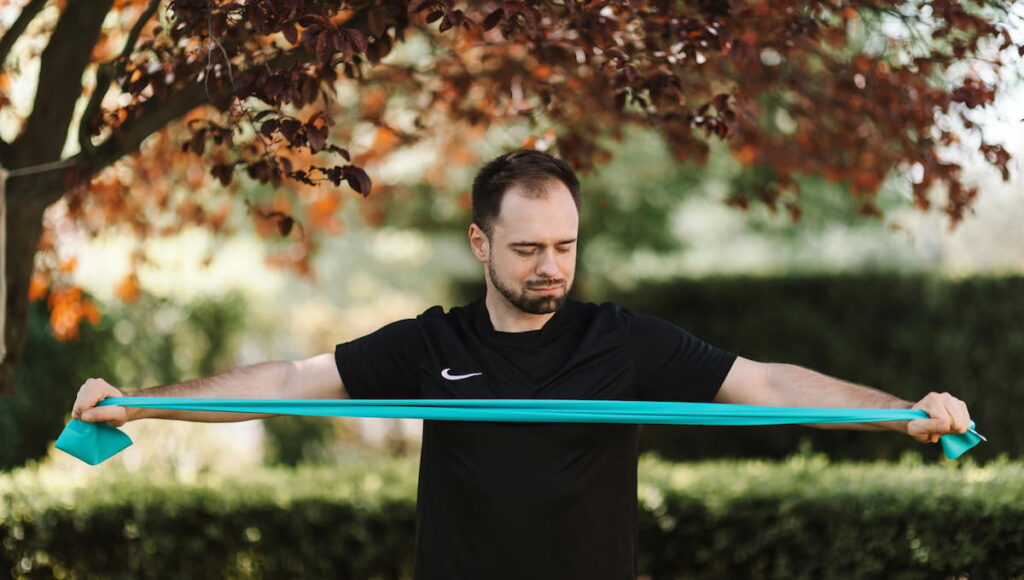
- Purpose: Strengthens the shoulder and upper back muscles.
- How to Do It: Hold a resistance band in front of you with arms extended. Pull the band apart while squeezing your shoulder blades together. Slowly release. Perform 3 sets of 15 reps.
4. Face Pulls
- Purpose: Engages the rear delts, traps, and rotator cuff.
- How to Do It: Attach a rope to a cable machine. Pull the rope towards your face while keeping your elbows high and shoulder blades squeezed. Perform 3 sets of 10-12 reps.
5. Prone Ys and Ts
- Purpose: Targets the smaller stabilising muscles of the shoulder.
- How to Do It: Lie face down on a bench. Lift your arms into a “Y” and then a “T” position, keeping the motion slow and controlled. Perform 2-3 sets of 10 reps each.
5 Best Tips and Exercises to Recover from Shoulder Pain
Mobility Exercises to Enhance Shoulder Function
1. Doorway Stretch
- Purpose: Stretches the chest and shoulders.
- How to Do It: Stand in a doorway with arms at a 90-degree angle against the frame. Lean forward gently until you feel a stretch across your chest. Hold for 20-30 seconds.
2. Wall Slides
- Purpose: Promotes shoulder mobility and proper scapular movement.
- How to Do It: Stand against a wall with your arms at shoulder height and slide them up and down, keeping your shoulder blades engaged. Perform 3 sets of 15 reps.
3. Sleeper Stretch
- Purpose: Loosens up the posterior shoulder capsule.
- How to Do It: Lie on your side with your affected shoulder on the ground. Use your other hand to push your forearm gently towards the ground, stretching the shoulder capsule. Hold for 20-30 seconds.
Tips for Safe Training While Recovering from Shoulder Pain
- Listen to Your Body: Avoid pushing through pain; it’s better to stop and modify exercises than risk further injury.
- Incorporate Lower Body and Core Exercises: Working on lower body and core strength allows you to maintain overall fitness without straining the shoulder.
- Include Rest Days: Give your shoulder enough time to recover between sessions, as overtraining can exacerbate pain.
- Progress Gradually: Start with lighter weights and gradually increase as your shoulder strengthens.
- Maintain Good Posture: Poor posture can worsen shoulder pain, so focus on keeping your back straight and shoulders aligned.
Conclusion

Training with shoulder pain may feel limiting, but it’s entirely possible to maintain your fitness routine by making smart exercise choices and focusing on stability and mobility. Avoid exercises that put undue pressure on the shoulders, engage in safe and effective strengthening moves, and don’t overlook the importance of rest and gradual progression. With patience, consistent effort, and proper technique, you can continue to stay fit and protect your shoulders from further injury.
Key Takeaways Table
| Training Strategy | Description |
|---|---|
| Consult a Professional | Get a diagnosis to understand the cause of your shoulder pain and seek advice on safe exercises. |
| Modify Exercises | Avoid exercises like overhead presses, dips, and bench presses, and choose safer alternatives. |
| Focus on Stability | Strengthen the shoulder and surrounding muscles to stabilise the joint. |
| Incorporate Mobility Work | Use gentle stretches and mobility exercises to reduce stiffness and improve range of motion. |
| Listen to Your Body | Avoid exercises that trigger pain, and progress gradually as your shoulder strengthens. |
| Emphasise Core and Lower Body Work | Maintain fitness by focusing on other areas of the body when shoulder pain limits upper body training. |
By following these guidelines, you can continue training effectively and comfortably, even with shoulder pain.