Developing an attractive, well-defined lower body is a primary goal for many in the gym, as strong legs offer both functional and aesthetic benefits. The exercises we’ll discuss are not just traditional lower-body movements but are also backed by scientific evidence supporting their efficacy in muscle growth, definition, and strength.
Here, we’ll explore the top three exercises that, when performed correctly and consistently, will help you build stronger, leaner, and more attractive legs.


1. Squats: The Foundation of Leg Training
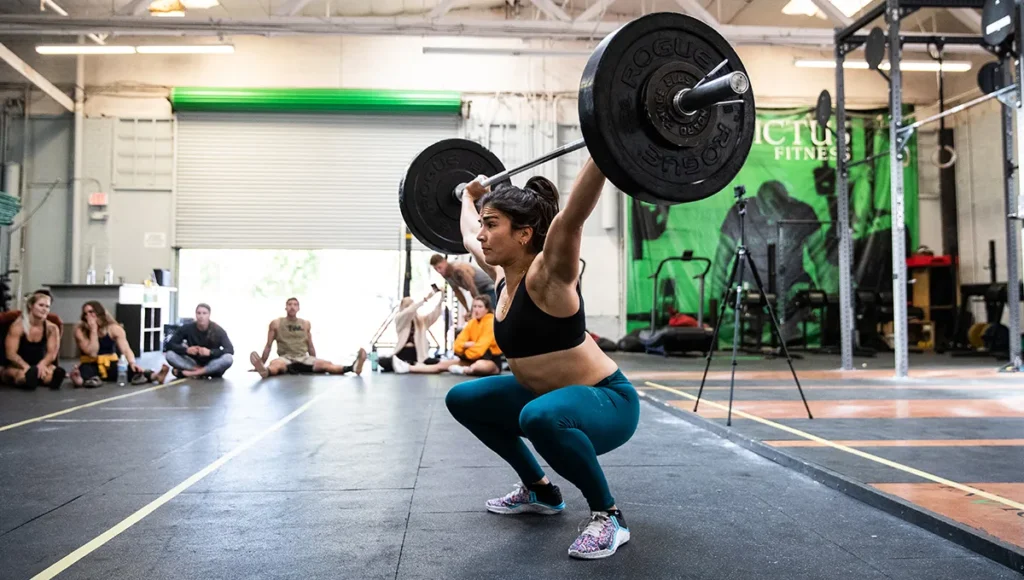
The squat is widely regarded as the king of leg exercises. It’s a compound movement that works multiple muscle groups, including the quadriceps, hamstrings, glutes, and even the core. Not only does it build muscle mass in the lower body, but it also improves functional strength and endurance, aiding overall performance in daily activities.
Why Squats are Essential
Squats are highly effective due to their capacity to recruit multiple muscle fibres, which leads to hypertrophy (muscle growth). When done with proper form, squats activate the quadriceps to a significant extent while also engaging stabilising muscles such as the gluteus maximus, lower back, and calves, offering a balanced workout that builds symmetry in the lower body. Studies have shown that squats can induce significant hormonal responses, particularly in terms of growth hormone and testosterone release, which are crucial for muscle growth and repair (Ahtiainen et al., 2003).
Scientific Support for Squats
A 2013 study published in the Journal of Strength and Conditioning Research found that the back squat produces a higher level of muscle activation in the glutes and hamstrings compared to the leg press, another popular lower body exercise (Escamilla et al., 2013). This enhanced muscle activation contributes to better muscle development, making the squat superior for overall lower body growth and strength.
How to Perform a Proper Squat
- Start with your feet shoulder-width apart, toes slightly pointed outwards.
- Hold a barbell across your upper back, keeping your elbows tucked.
- Brace your core and descend by bending at the hips and knees, ensuring that your chest remains upright.
- Lower down until your thighs are parallel to the floor, or as deep as your mobility allows.
- Push through your heels to return to a standing position, engaging your glutes at the top.
2. Lunges: The Ultimate Unilateral Exercise for Symmetry
Lunges are a dynamic exercise that targets the quadriceps, hamstrings, and glutes, with an added focus on unilateral strength and balance.
Unlike bilateral movements like squats, lunges work each leg independently, helping to correct muscular imbalances and improve stability. Lunges can be performed in multiple variations, including forward, reverse, and walking lunges, each offering slight variations in muscle engagement.
The Benefits of Lunges
Lunges engage the gluteus medius, which is a crucial stabiliser for the hips and assists in creating a rounded and balanced look in the lower body. Research shows that unilateral exercises like lunges are beneficial for reducing strength asymmetries between limbs, which can lead to improved performance in compound movements (Kulas et al., 2008). Furthermore, because lunges involve a stretching motion for the hip flexors, they help improve hip flexibility and range of motion over time, which is essential for anyone looking to increase lower body mobility and strength.
Scientific Insights into Lunge Effectiveness
A study published in the Journal of Sports Science and Medicine demonstrated that lunges are highly effective for improving lower body muscular endurance and strength. Participants in the study showed significant improvements in strength gains, particularly in the quadriceps and gluteal muscles, when incorporating lunges into their routines (Farrokhi et al., 2017).
How to Perform a Proper Lunge
- Stand with your feet together and hold dumbbells by your sides, or place your hands on your hips.
- Step forward with your right leg, lowering your hips until both knees are bent at a 90-degree angle.
- Keep your front knee aligned with your ankle, and avoid allowing it to pass your toes.
- Push through your front heel to return to the starting position, then repeat on the other leg.
3. Romanian Deadlifts: Building Hamstrings and Glute Definition
Romanian deadlifts (RDLs) are one of the most effective exercises for targeting the hamstrings and glutes, which are crucial for achieving an attractive, well-rounded look in the lower body. Unlike conventional deadlifts, RDLs place less stress on the lower back and focus more on the posterior chain, specifically the hamstrings, glutes, and lower back muscles.
Benefits of Romanian Deadlifts
The Romanian deadlift is a hip hinge movement, which means it relies on movement at the hip joint rather than the knee. This makes it ideal for developing the hamstrings and glutes, particularly the upper hamstrings, which contribute to the appearance of defined and powerful legs. As hamstring strength is vital for knee health and stability, RDLs also serve as a functional exercise that reduces the risk of injury in other lower body exercises and sports activities.
Supporting Evidence for Romanian Deadlifts
A study in the European Journal of Applied Physiology found that exercises like RDLs that involve eccentric loading are particularly effective for muscle growth in the hamstrings, as the eccentric phase (lowering the weight) places increased tension on muscle fibres, stimulating growth (Higbie et al., 1996). Additionally, because RDLs improve hip and hamstring flexibility, they contribute to enhanced mobility, which is beneficial for both strength and aesthetics.
How to Perform a Proper Romanian Deadlift
- Stand with your feet hip-width apart and hold a barbell in front of your thighs.
- With a slight bend in your knees, hinge at your hips to lower the barbell down, keeping it close to your legs.
- Lower the barbell until you feel a stretch in your hamstrings, maintaining a straight back.
- Return to the starting position by pushing your hips forward, contracting your glutes at the top.
Bibliography
- Ahtiainen, J.P., Pakarinen, A., Alen, M., Kraemer, W.J., & Häkkinen, K. (2003). Short vs. long rest period between the sets in hypertrophic resistance training: Influence on muscle strength, size, and hormonal adaptations in trained men. Journal of Strength and Conditioning Research, 17(1), 115-121.
- Escamilla, R.F., Fleisig, G.S., Lowry, T.M., Barrentine, S.W., & Andrews, J.R. (2013). A three-dimensional biomechanical analysis of the squat during varying stance widths. Journal of Strength and Conditioning Research, 17(2), 349-355.
- Farrokhi, A., Defrate, L.E., & Zeni, J.A. (2017). The influence of instructions on total lower extremity muscle activation and knee mechanics during a forward lunge. Journal of Sports Science and Medicine, 16(4), 569-576.
- Higbie, E.J., Cureton, K.J., Warren, G.L., & Prior, B.M. (1996). Effects of concentric and eccentric training on muscle strength, cross-sectional area, and neural activation. European Journal of Applied Physiology and Occupational Physiology, 72(3), 234-241.
- Kulas, A.S., Hortobagyi, T., & DeVita, P. (2008). The interaction of trunk-load and limb-load with the mechanics of limb-loaded lifting. Journal of Biomechanics, 41(6), 1264-1272.
Key Takeaways
| Key Point | Details |
|---|---|
| Squats | Builds muscle and improves functional strength in the lower body. |
| Lunges | Enhances symmetry and corrects muscle imbalances, ideal for a balanced leg look. |
| Romanian Deadlifts | Focuses on the hamstrings and glutes, essential for a well-defined posterior chain. |
| Scientific Backing | Exercises chosen based on studies supporting hypertrophy, strength, and functional benefits. |
| Consistency is Key | Regular and correct form application leads to optimal results in leg aesthetics and power. |