When it comes to building muscle, every detail matters: the types of exercises, volume, rest periods, and even the tempo of your repetitions. Yet, the ideal speed for lifting and lowering weights—often overlooked—can significantly influence your gains. This article will explore the science behind rep speed, how it affects hypertrophy (muscle growth), and the ideal tempo for optimal results.
The Science Behind Rep Speed and Muscle Growth
Research into the mechanics of muscle hypertrophy reveals that rep speed can alter the effectiveness of your workouts. The main components that impact growth include:


- Time under tension (TUT)
- Muscle fibre recruitment
- Metabolic stress
Each of these plays a role in stimulating the muscle fibres and promoting growth, but the speed at which you perform your reps influences them differently.
Time Under Tension (TUT)

TUT refers to the duration your muscles are under load during a set. This factor is crucial for muscle growth because longer tension periods can increase metabolic stress, a known trigger for hypertrophy. Studies have shown that increasing the time muscles spend under tension by controlling rep speed can maximise muscle growth.
Key study: Schoenfeld et al. (2015) highlighted that TUT contributes significantly to hypertrophy when reps are performed with controlled eccentric (lowering) and concentric (lifting) phases.
Muscle Fibre Recruitment
Rep speed also affects muscle fibre recruitment. Slow, controlled movements can engage type I (slow-twitch) and type II (fast-twitch) muscle fibres. Fast-twitch fibres are especially important for muscle growth as they have the greatest potential for hypertrophy. Slower reps may activate these fibres more thoroughly than fast, explosive movements.
Metabolic Stress
Slower reps help build metabolic stress by prolonging the time muscles spend under load. This stress results in the accumulation of metabolites like lactate, which can stimulate muscle growth through increased hormonal responses and cellular swelling.
Understanding Rep Tempo

Rep tempo refers to the pace at which you perform each phase of a rep. It’s generally divided into four parts:
- Eccentric phase (lowering the weight)
- Pause at the bottom
- Concentric phase (lifting the weight)
- Pause at the top
Each part of the tempo is measured in seconds, usually represented as a four-digit number. For example, a 3-1-3-0 tempo means:
- 3 seconds lowering the weight
- 1-second pause at the bottom
- 3 seconds lifting the weight
- 0 seconds pause at the top
Common Tempo Variations
- Fast tempo (1-0-1-0): Explosive lifts with no pausing. Useful for power training but not ideal for hypertrophy.
- Moderate tempo (2-1-2-1): Balanced speed for both power and muscle endurance.
- Slow tempo (4-1-4-1): Emphasises TUT and is highly effective for muscle growth.
3 Best Cable Exercises for Huge Biceps

Which Rep Speed Is Best for Muscle Growth?
To maximise muscle growth, a rep speed that balances TUT and fibre recruitment is key. Research suggests that the ideal tempo for hypertrophy typically falls between 3-5 seconds per rep (e.g., a 3-second eccentric and 2-second concentric phase).
Eccentric vs. Concentric Phases
Eccentric phase: The lowering part of the rep, where muscles lengthen. Slowing down this phase can create more muscle damage, which is essential for growth.
Concentric phase: The lifting part of the rep, where muscles shorten. While the speed of this phase should still be controlled, a faster, powerful lift can engage more fast-twitch fibres.
Key study: Wirth et al. (2016) found that a 4-second eccentric phase resulted in greater muscle activation and growth compared to a 2-second eccentric phase.
Benefits of Slower Reps
Choosing a slower tempo can provide specific advantages for hypertrophy:
- Increased TUT: A longer time under tension leads to greater muscle protein synthesis.
- Better Form: Slower reps make it easier to maintain proper technique, reducing the risk of injury.
- Enhanced Mind-Muscle Connection: More time spent on each phase allows for a better focus on the working muscle group.
When Fast Reps Are Effective
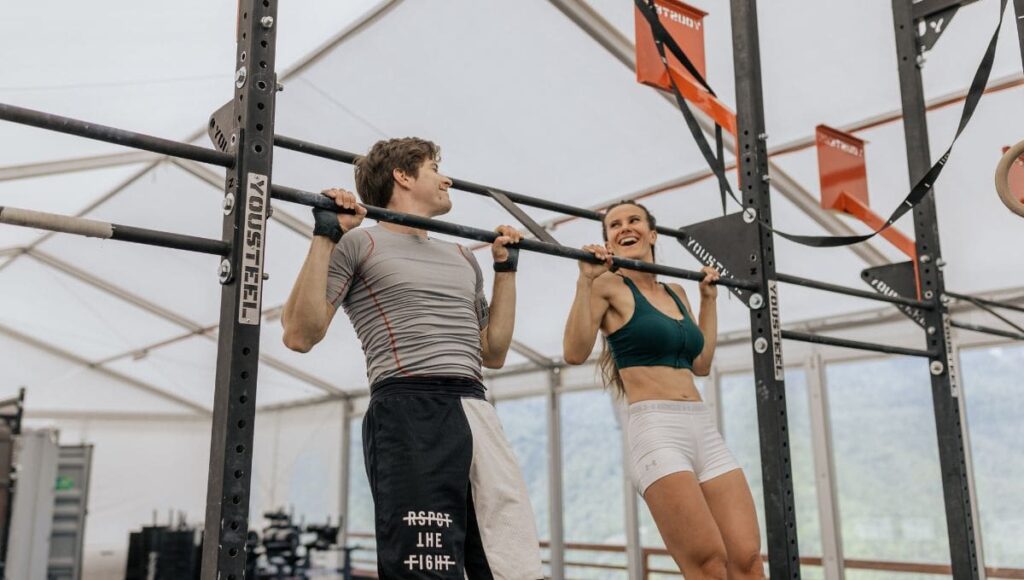
While slower reps are often best for hypertrophy, fast reps can have their place in a well-rounded training program. They are particularly useful for:
- Power training: Speeding up the concentric phase (e.g., 1-0-1-0 tempo) helps develop explosive strength.
- Neuromuscular training: Fast reps can improve muscle responsiveness and coordination.
How to Integrate Optimal Rep Speed Into Your Workouts
To maximise muscle growth, consider the following strategies:
Use a Tempo of 3-1-2-0 for Hypertrophy
A rep scheme of 3 seconds on the eccentric phase, a 1-second pause, 2 seconds on the concentric phase, and no pause at the top can effectively balance TUT and muscle fibre recruitment.
Top 3 Dumbbell Chest Exercises for Defined Pecs
Mix Slow and Fast Tempos
Periodically include fast rep sets to maintain neuromuscular adaptations and add variety to your routine. For example, you could use fast reps for compound lifts and slower reps for isolation exercises.
Examples of Effective Tempo Training
Here are examples of tempo variations that can be implemented for different exercises:
Squats (4-1-2-1)
- Eccentric phase: Lower down for 4 seconds.
- Pause: Hold at the bottom for 1 second.
- Concentric phase: Rise up for 2 seconds.
- Pause: Hold at the top for 1 second.
Bench Press (3-1-3-0)

- Eccentric phase: Lower the barbell for 3 seconds.
- Pause: Hold just above the chest for 1 second.
- Concentric phase: Press up for 3 seconds.
- Pause: No pause at the top.
The Role of Muscle Type in Rep Speed
Different muscle groups may respond differently to tempo adjustments due to their fibre composition. For instance:
- Quads and hamstrings: High in fast-twitch fibres and benefit from moderate to slow reps.
- Calves and forearms: High in slow-twitch fibres and may respond better to higher rep counts and moderate tempo.
Common Mistakes to Avoid
Going Too Fast
Speeding through reps diminishes TUT and leads to less muscle activation. This habit also increases the risk of using momentum, reducing the effectiveness of the exercise.
Neglecting the Eccentric Phase
The eccentric phase can produce more significant muscle gains due to the higher level of tension it generates. Skipping or shortening this phase can limit growth.

Scientific Support and Practical Recommendations
Multiple studies have confirmed the importance of rep speed in training. For example, a 2017 review by Schoenfeld and colleagues suggested that a tempo of approximately 2-4 seconds per rep is ideal for hypertrophy, provided the total set lasts 40-60 seconds.
Conclusion
Slowing down your reps can significantly impact muscle growth by increasing time under tension, promoting muscle fibre recruitment, and inducing greater metabolic stress. While fast reps have their place in training for power and performance, a controlled tempo that emphasises the eccentric phase is generally more effective for hypertrophy. By strategically incorporating different rep speeds into your routine, you can optimise your results and achieve balanced muscle development.
Table of Key Takeaways
| Factor | Optimal Approach |
|---|---|
| Best Tempo | 3-1-2-0 or 4-1-3-0 for hypertrophy |
| Time Under Tension | 40-60 seconds per set |
| Focus Phase | Emphasise a slow eccentric (3-5 seconds) |
| Muscle Fibre | Engage fast-twitch fibres with controlled reps |
| Variation | Mix slow and fast tempos for comprehensive benefits |
Bibliography
- Schoenfeld, B.J., Ogborn, D., Krieger, J.W. (2017). Effects of resistance training frequency on measures of muscle hypertrophy: A systematic review and meta-analysis. Sports Medicine.
- Wirth, K., Hartmann, H., Mickel, C., Szilvas, E., Keiner, M., Sander, A. (2016). The impact of eccentric training on muscle strength and hypertrophy. International Journal of Sports Physiology and Performance.
- Schoenfeld, B.J. (2015). Science and Development of Muscle Hypertrophy. Human Kinetics.