Building an explosive upper body requires a combination of strength, hypertrophy, and functional power. Compound lifts are the cornerstone of any effective upper body training programme, as they target multiple muscle groups simultaneously and generate high levels of muscle activation.
This article will detail the three best compound lifts for upper body growth, explaining why they are effective and how they should be performed for maximum results.


The Importance of Compound Lifts for Upper Body Growth
Compound lifts engage multiple joints and muscle groups, making them efficient for strength and muscle development. Research has shown that compound exercises stimulate higher levels of testosterone and growth hormone, which are essential for hypertrophy and recovery (Ahtiainen et al., 2003).
Additionally, these lifts enhance functional strength by mimicking real-world movements and improving intermuscular coordination. For individuals seeking to maximise upper body growth, compound lifts are indispensable.
Bench Press: The King of Upper Body Strength
Why the Bench Press is Effective
The bench press is a fundamental upper body lift that primarily targets the pectoralis major, anterior deltoids, and triceps brachii. It is a pressing movement that also activates stabilising muscles such as the rotator cuff and core. A study by Saeterbakken et al. (2011) found that the bench press produces greater activation of the pectorals compared to other pressing variations, making it ideal for chest development.
How to Perform the Bench Press
- Setup: Lie flat on a bench with your feet firmly planted on the ground. Grip the barbell slightly wider than shoulder-width apart.
- Execution: Lower the barbell to your chest, ensuring your elbows are at a 75-degree angle. Push the bar back to the starting position, locking out your elbows at the top.
- Tips: Maintain a tight arch in your lower back and keep your shoulder blades retracted throughout the lift to protect your shoulders and enhance chest activation.
Variations for Maximum Growth
To maximise the benefits of the bench press, incorporate variations such as the incline bench press to target the upper chest and the close-grip bench press to emphasise triceps development.
Pull-Ups: The Ultimate Vertical Pulling Exercise
Why Pull-Ups are Effective
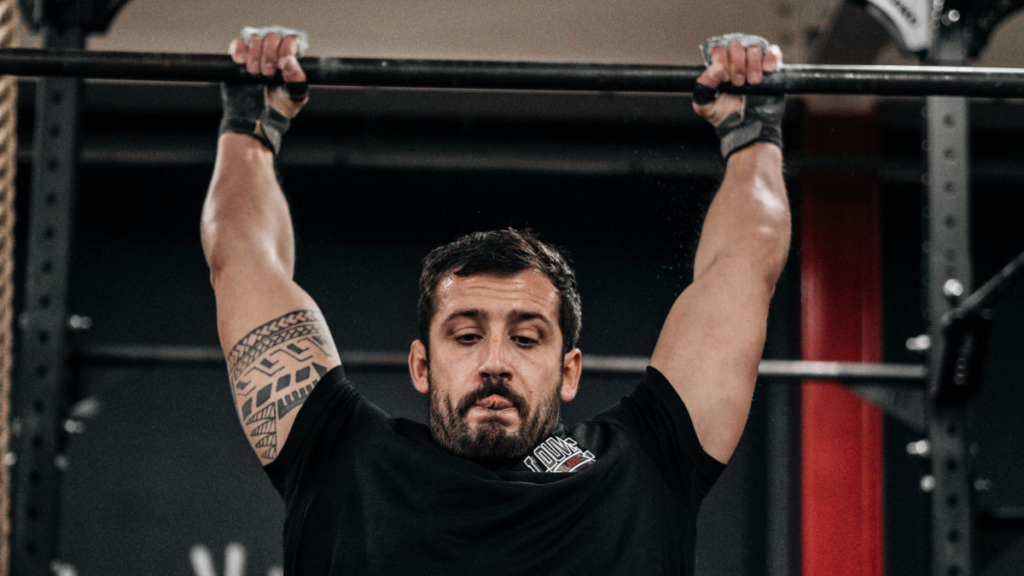
Pull-ups are a compound pulling exercise that targets the latissimus dorsi, trapezius, biceps brachii, and rhomboids. They are particularly effective for developing the back and biceps, while also engaging the core and improving grip strength. Research by Youdas et al. (2010) demonstrated that pull-ups activate more muscle fibres in the lats compared to other vertical pulling exercises like lat pulldowns.
How to Perform Pull-Ups
- Setup: Grip a pull-up bar with your palms facing away and hands slightly wider than shoulder-width apart.
- Execution: Pull yourself up until your chin is above the bar, keeping your elbows close to your body. Lower yourself back to the starting position with control.
- Tips: Avoid swinging or using momentum to ensure the lats and biceps do the majority of the work. Engage your core to prevent excessive arching of the lower back.
Variations for Progressive Overload
Add variety to your routine by incorporating weighted pull-ups, neutral-grip pull-ups, and chin-ups. These variations target different muscle groups and allow for progressive overload, which is essential for hypertrophy (Schoenfeld, 2010).
Overhead Press: Building Strength and Stability
Why the Overhead Press is Effective
The overhead press, or military press, is a pressing movement that targets the deltoids, triceps, and upper chest. It also engages the core and stabilising muscles in the shoulders and back. A study by Behm et al. (2002) found that the overhead press produces significant activation in the deltoids, making it one of the best exercises for shoulder development.
How to Perform the Overhead Press
- Setup: Stand with your feet shoulder-width apart and grip a barbell at shoulder height with your hands slightly wider than shoulder-width.
- Execution: Press the barbell overhead until your arms are fully extended. Lower the bar back to your shoulders in a controlled manner.
- Tips: Keep your core braced to prevent hyperextension of the lower back. Ensure your elbows are under the bar throughout the lift for optimal pressing mechanics.
Variations to Enhance Shoulder Growth
Incorporate variations such as the push press for added power and the seated overhead press for greater isolation of the shoulders.
Programming Tips for Compound Lifts
Volume and Intensity
Research by Schoenfeld et al. (2016) indicates that a combination of moderate to high volume (3–5 sets of 6–12 reps) is optimal for hypertrophy. For explosive growth, include heavier sets (3–5 reps) to build strength and power.
Rest Periods
For hypertrophy, rest periods of 60–90 seconds are effective, whereas longer rest periods (2–3 minutes) are better for strength-focused sets (Henselmans & Schoenfeld, 2014).
Progressive Overload
Consistently increase the weight or repetitions over time to ensure continued muscle adaptation and growth.
Balanced Training
Complement these compound lifts with accessory exercises to address muscle imbalances and enhance overall upper body development.
Conclusion
The bench press, pull-up, and overhead press are the three best compound lifts for explosive upper body growth. These exercises effectively target major muscle groups, promote hypertrophy, and improve functional strength.
Incorporating these lifts into a well-rounded training programme, along with progressive overload and proper technique, will yield significant results. Remember to balance your training with adequate rest, nutrition, and recovery to maximise gains.
References
- Ahtiainen, J.P., Pakarinen, A., Alen, M., Kraemer, W.J., & Häkkinen, K. (2003). Short vs. long rest period between the sets in hypertrophic resistance training: Influence on muscle strength, size, and hormonal adaptations in trained men. The Journal of Strength & Conditioning Research, 17(4), 635-641.
- Saeterbakken, A.H., & Fimland, M.S. (2011). Effects of bench press variations on the EMG activity of five shoulder muscles. The Journal of Strength & Conditioning Research, 25(6), 1827-1833.
- Youdas, J.W., Amundson, C.L., Cicero, K.S., Hahn, J.J., & Harezlak, D.T. (2010). Surface electromyographic activation patterns and elbow joint motion during a pull-up, chin-up, or perfect-pullup rotational exercise. Journal of Strength and Conditioning Research, 24(12), 3404-3414.
- Behm, D.G., Anderson, K.G., & Curnew, R.S. (2002). Muscle force and activation under stable and unstable conditions. The Journal of Strength & Conditioning Research, 16(3), 416-422.
- Schoenfeld, B.J. (2010). The mechanisms of muscle hypertrophy and their application to resistance training. Journal of Strength and Conditioning Research, 24(10), 2857-2872.
- Schoenfeld, B.J., Ogborn, D., & Krieger, J.W. (2016). Dose-response relationship between weekly resistance training volume and increases in muscle mass: A systematic review and meta-analysis. Journal of Sports Sciences, 35(11), 1073-1082.
- Henselmans, M., & Schoenfeld, B.J. (2014). The effect of inter-set rest intervals on resistance exercise-induced muscle hypertrophy. Sports Medicine, 44(12), 1635-1643.
Key Takeaways
| Key Takeaways |
|---|
| Compound lifts are essential for upper body growth as they target multiple muscle groups simultaneously. |
| The bench press is ideal for chest development, while pull-ups effectively target the back and biceps. |
| The overhead press is a powerful lift for building strong shoulders and upper chest. |
| Incorporating variations and progressive overload is crucial for sustained muscle growth. |
| Use a combination of moderate to heavy weights and balanced rest periods for optimal hypertrophy and strength. |