Intensifying your upper body workouts with advanced techniques can break through plateaus and stimulate new muscle growth. High-intensity techniques force your muscles to work beyond their typical capacity, recruiting additional muscle fibres and promoting hypertrophy.
This article explores three proven high-intensity training methods, supported by scientific research, to optimise your upper body muscle development.


Technique 1: Drop Sets
Drop sets involve performing an exercise until muscle failure, then immediately reducing the weight and continuing the set without rest. This technique increases time under tension (TUT), a key factor in muscle hypertrophy.
By depleting muscle fibres in a single set, drop sets force your body to recruit more motor units to continue the workload.
Scientific Backing
A study by Goto et al. (2003) found that drop sets significantly increased muscle activation compared to traditional training. The extended TUT during drop sets enhances metabolic stress, a primary driver of muscle growth (Schoenfeld, 2010). This combination of mechanical tension and metabolic stress creates an optimal environment for hypertrophy.
Implementation for Upper Body
- Bench Press: Perform a traditional set to failure, reduce the weight by 20–30%, and continue pressing until failure again. Repeat this process 2–3 times.
- Pull-Ups (Assisted): Use additional weight or resistance until failure, then switch to bodyweight or assisted pull-ups to extend the set.
- Dumbbell Shoulder Press: Drop the dumbbell weight incrementally, aiming for minimal rest between reductions.
Benefits
- Increases muscle fibre recruitment.
- Enhances metabolic stress and fatigue.
- Boosts upper body strength and size.
Caution
While effective, drop sets place significant stress on the central nervous system (CNS). Limit usage to 1–2 exercises per workout and avoid consecutive days of drop set training.
Technique 2: Rest-Pause Training
Rest-pause training involves dividing a single set into smaller segments with short rest intervals (10–15 seconds). This method allows you to exceed the repetitions you could achieve in a traditional set, increasing total volume and muscle activation.
Scientific Backing
A study by Prestes et al. (2016) demonstrated that rest-pause training effectively increases muscle strength and hypertrophy in trained individuals. By enabling you to lift near-maximal loads for an extended period, rest-pause training improves both mechanical tension and muscle endurance.
Implementation for Upper Body
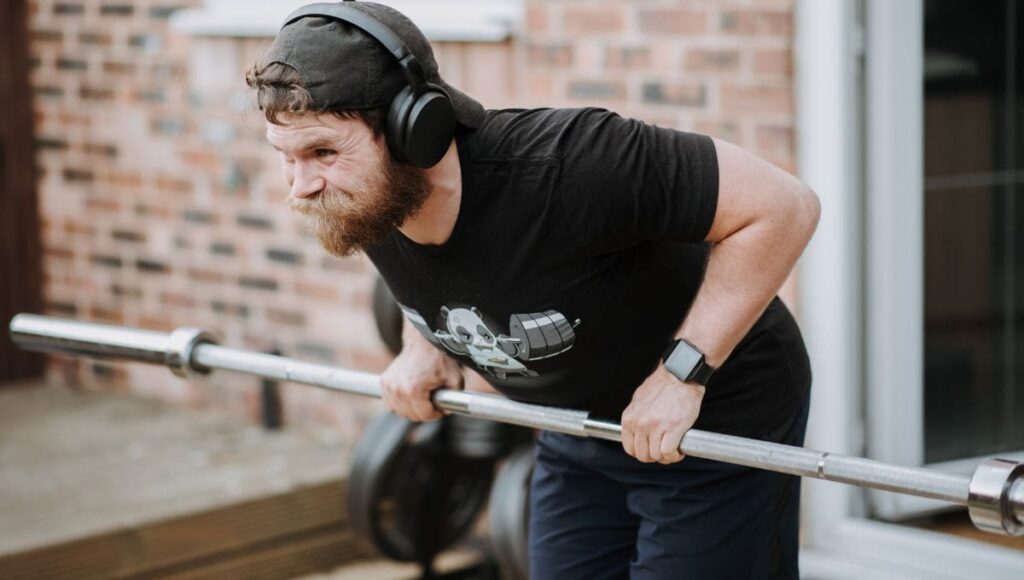
- Barbell Rows: Perform a set of 6–8 reps to failure, rest for 10 seconds, and repeat until achieving 3–4 mini-sets.
- Incline Dumbbell Press: Use the rest-pause method to extend the total reps beyond failure, maximising upper chest recruitment.
- Triceps Dips: Perform dips until failure, rest briefly, and continue for an additional 1–2 mini-sets.
Benefits
- Maximises time spent under heavy loads.
- Enhances strength and endurance.
- Boosts overall muscle hypertrophy.
Caution
Rest-pause training can lead to overtraining if overused. Incorporate it into your routine no more than twice per week and prioritise proper recovery.
Technique 3: Supersetting
Supersetting involves performing two exercises back-to-back with minimal rest. This method can target opposing muscle groups (antagonistic supersets) or the same muscle group (agonistic supersets) to maximise training efficiency and intensity.
Scientific Backing
A study by Robbins et al. (2010) found that supersets significantly increase training density, leading to greater calorie expenditure and muscular fatigue. Additionally, agonistic supersets enhance metabolic stress by targeting the same muscle group with different movement patterns, while antagonistic supersets improve recovery and performance within a workout.
Implementation for Upper Body
- Antagonistic Superset (Chest and Back): Pair bench press with pull-ups or rows to balance upper body development.
- Agonistic Superset (Chest): Combine incline dumbbell presses with cable chest flyes to fully fatigue the pectoral muscles.
- Biceps and Triceps: Alternate between barbell curls and close-grip bench presses for a comprehensive arm workout.
Benefits
- Reduces workout duration.
- Increases metabolic stress and fatigue.
- Enhances training volume and density.
Caution
Ensure proper form throughout each exercise to avoid injuries caused by fatigue. Start with lighter weights when incorporating supersets for the first time.
How to Incorporate High-Intensity Techniques

When adding these techniques to your routine, follow these guidelines to optimise results and prevent overtraining:
- Warm-Up Thoroughly: High-intensity methods demand a higher level of muscle readiness to avoid injury.
- Periodisation: Use these techniques for 4–6 weeks, then transition back to traditional training to allow recovery and adaptation.
- Recovery Focus: Increase protein intake and ensure 7–9 hours of sleep per night to facilitate muscle repair.
- Listen to Your Body: Monitor for signs of overtraining, such as prolonged soreness, decreased performance, or fatigue.
Conclusion
High-intensity training techniques like drop sets, rest-pause training, and supersets are powerful tools for shocking your upper body muscles into growth. Backed by science, these methods effectively increase mechanical tension, metabolic stress, and overall training volume. By strategically implementing them into your workouts, you can break through plateaus and achieve greater strength and hypertrophy.
Key Takeaways Table
| Technique | Benefits | Best Exercises | Caution |
|---|---|---|---|
| Drop Sets | Increases fibre recruitment and stress | Bench press, pull-ups, dumbbell shoulder press | Limit to 1–2 exercises per workout |
| Rest-Pause Training | Boosts strength and endurance | Barbell rows, incline dumbbell press, triceps dips | Use no more than twice per week |
| Supersetting | Enhances training density and volume | Bench press/pull-ups, incline press/cable flyes | Focus on form to avoid fatigue injuries |
References
Goto, K., Nagasawa, M., Yanagisawa, O., Kizuka, T., Ishii, N. and Takamatsu, K., 2003. The impact of metabolic stress on hormonal responses and muscle adaptations. Medicine and Science in Sports and Exercise, 35(8), pp.1239-1245.
Schoenfeld, B.J., 2010. The mechanisms of muscle hypertrophy and their application to resistance training. Journal of Strength and Conditioning Research, 24(10), pp.2857-2872.
Prestes, J., Tibana, R.A., De Araujo Rocha, P.O., De Sousa, N.M.F., and Maia, M.F., 2016. Strength and muscular adaptations after 6 weeks of rest-pause vs traditional multiple sets resistance training. Journal of Sports Medicine and Physical Fitness, 56(6), pp.695-703.
Robbins, D.W., Marshall, P.W. and McEwen, M., 2010. The effect of different rest intervals on metabolic stress and muscle activation during resistance exercise. Journal of Strength and Conditioning Research, 24(8), pp.2199-2207.