“You don’t even get into that awesome zone of really pushing your muscles to grow if you skip a proper warm-up.” Sound familiar? That’s because your warm-up isn’t just a footnote in your workout; it’s the foundation for maximizing strength, minimizing injury, and achieving peak performance. Whether you’re tackling a 400-lb deadlift or pushing for your PR on the leg press, nailing your warm-up is as important as the main event itself.
But who am I to teach you about the perfect warm-up to lift heavier weights? Actually, I’m not the one coming up with the strategies behind this awesome gimmick you can use to get stronger faster. That would be the work of Mike Israetel.


Dr Mike Israetel, PhD in Sport Physiology and co-founder of Renaissance Periodization, is a well-respected professor in the bodybuilding community. He doesn’t only talk about workouts and fitness tips, he often dives deep into health and nutrition.
Let’s dive into why and how to craft the perfect warm-up to lift heavier weights.
Why Warm-Up? The Science and the Stakes
Key Takeaways:
- Boost Performance: Prepares your energy and nervous systems.
- Reduce Injury Risk: Warms tissues and enhances joint fluidity.
- Perfect Your Form: Rehearse technique to avoid sloppiness.
A warm-up isn’t just a quick jog or some light stretches; it’s a strategic primer for your body. Think about waking up at 3 a.m. and trying to clench your fist as hard as you can—it’s underwhelming, right? That’s because your nervous system is like a car engine on a cold morning—it needs a ramp-up period to function optimally. When done right, warm-ups enhance energy system activation, fine-tune your nervous system, and get your joints and muscles ready for heavy lifts.
Components of an Effective Warm-Up
To warm up efficiently, focus on a mix of general activation and specific preparation. Forget wandering aimlessly on the treadmill; here’s how to structure it.
1. General Warm-Up: Optional but Helpful
- Purpose: Elevate body temperature and get blood flowing.
- Examples: 5–10 minutes on the treadmill, elliptical, or a brisk walk.
While general warm-ups aren’t mandatory, especially for advanced lifters, they can help ease into the routine. If it feels good, keep it light and short. A few arm and hip circles can work wonders, too.
2. Specific Warm-Up: The Real MVP
The specific warm-up is tailored to the first exercise in your routine. It primes the exact muscles, joints, and nervous system for what’s ahead.

Two-Step Specific Warm-Up:
- Light Warm-Up Sets:
- High reps (10–12) with very light weight.
- Focus on form and technique.
- Heavier Warm-Up Sets:
- Low reps (4–6) at ~50–70% of your working weight.
- Gradually ramp up intensity.
For example, warming up for squats? Start with 12 reps using just the barbell, followed by a set of 8 reps at 50% of your max, and finish with 4 reps close to your working weight. This progression ensures your body’s ready for the big lifts.
The Risks of Skipping or Overdoing Warm-Ups
Skipping a warm-up is like trying to sprint without lacing up your shoes—disastrous. Cold muscles and tight joints are more prone to injury. On the flip side, spending 30+ minutes warming up isn’t ideal either. Over-complicated warm-ups (e.g., excessive stretching or mobility drills) can eat into your actual workout time without adding much benefit.
Golden Rule: Warm-up until you’re ready, but not exhausted.
The Perfect Warm-Up for Compound Lifts
Squats
- Set 1: 12 reps with the barbell (focus on depth and form).
- Set 2: 8 reps at 50% of your working weight.
- Set 3: 4 reps at 75% of your working weight.
- Transition: Rest 2–3 minutes before starting your work sets.
Deadlifts
- Similar to squats, but prioritize hamstring mobility (e.g., Romanian deadlifts with an empty bar).
Bench Press
- Focus on shoulder activation:
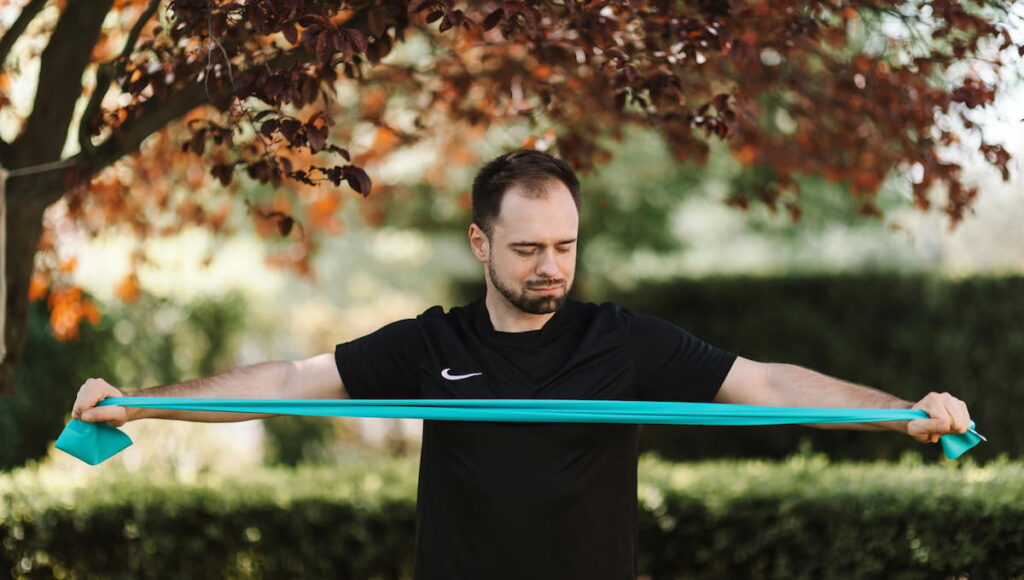
- Light band pull-aparts or push-ups.
- 2–3 warm-up sets with incremental weight.
Tips for Multiexercise Workouts
If your session includes multiple lifts for the same muscle group (e.g., squats, leg presses, hack squats), the warm-up for the first exercise usually carries over. For subsequent exercises:
- Perform 1–2 lighter sets with your working weight to acclimate to the movement.
5 Essential Rules for Training Beginners in the Gym
Common Mistakes and Fixes
Mistake 1: Rushing
Skipping warm-ups often leads to poor form and increased injury risk. Take your time.
Mistake 2: Overstretching
Static stretching for more than 30 seconds can reduce muscle power. Save deep stretches for after your workout.
Mistake 3: Ignoring Technique
Each warm-up rep should mimic your working set. Practicing good form early sets the tone for the rest of your workout.
Wrapping It Up: The 8-12-4 Warm-Up Rule
For most lifts:
- 8 Reps: Light load to cue technique.
- 12 Reps: Moderate load to prepare muscles.
- 4 Reps: Heavy load to prime the nervous system.
Remember, “warming up is as much about the mind-muscle connection as it is about the muscles themselves.” Stay mindful, listen to your body, and adapt your routine as needed.
Now, go crush that PR—your warm-up has your back.