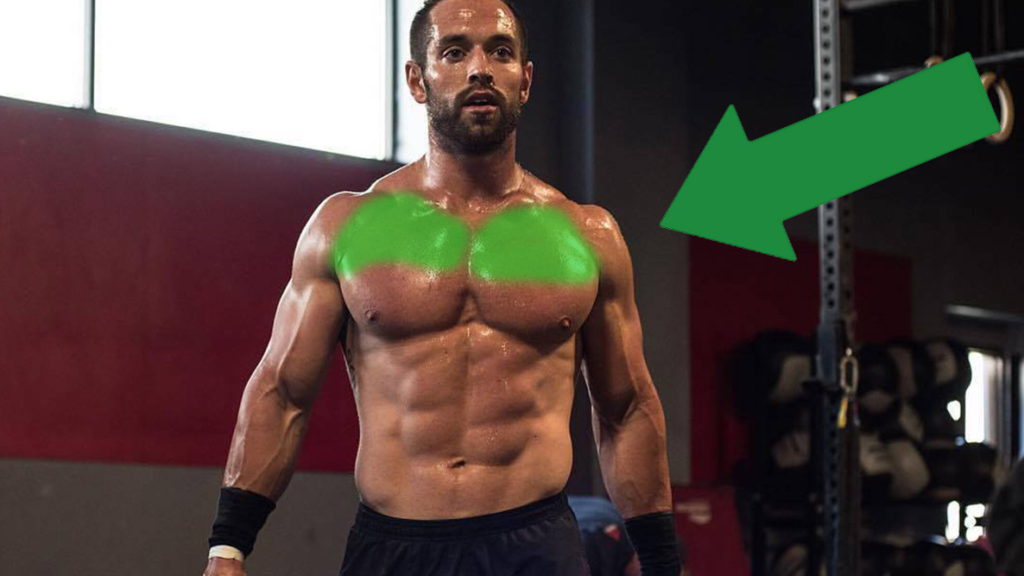
A strong core is fundamental for athletic performance, injury prevention, and overall functional strength. While many exercises target the rectus abdominis as a whole, specific lower ab movements are essential for full development.
The lower portion of the abs, which engages more in movements involving the legs, is often underdeveloped and difficult to isolate.


In this article, we will explore three of the most effective lower ab exercises, backed by scientific research, to help you build a stronger, more defined core.
Hanging Leg Raises
Hanging leg raises are one of the most effective exercises for activating the lower portion of the rectus abdominis. A study published in the Journal of Strength and Conditioning Research found that hanging leg raises elicit greater muscle activation in the lower rectus abdominis compared to traditional crunches (Escamilla et al., 2010). This is because the movement requires full engagement of the core to stabilise the pelvis and control leg movement.
How to Perform Hanging Leg Raises
- Hang from a pull-up bar with your arms fully extended and legs straight.
- Engage your core and lift your legs until they are parallel to the ground or higher.
- Lower them back down slowly to maintain tension on the abs.
- Repeat for 10-15 reps.
Benefits of Hanging Leg Raises
- Superior lower ab activation: Studies show that leg raises target the lower abs more effectively than sit-ups and crunches (Schoenfeld et al., 2014).
- Improves core stability: This exercise requires coordination and engagement of stabiliser muscles.
- Enhances hip flexor strength: Hanging leg raises also train the iliopsoas, which is critical for explosive movements such as sprinting and jumping.
Reverse Crunches
Reverse crunches provide an effective way to engage the lower abs while minimising strain on the spine. Research indicates that reverse crunches place less compressive force on the lumbar spine compared to standard crunches, making them a safer alternative (McGill, 2002).
How to Perform Reverse Crunches
- Lie on your back with your knees bent and feet off the ground.
- Place your hands by your sides or under your glutes for support.
- Engage your core and curl your hips off the ground, bringing your knees towards your chest.
- Lower back down with control.
- Perform 12-15 reps.
Benefits of Reverse Crunches
- Less spinal stress: Reduces compression on the lumbar region compared to traditional crunches (McGill, 2002).
- Highly effective for lower abs: Engages the lower rectus abdominis more than regular crunches (Schoenfeld et al., 2014).
- Increases control and stability: Requires core engagement to lift and lower the legs smoothly.
Ab Wheel Rollouts
While commonly viewed as a full-core exercise, ab wheel rollouts significantly engage the lower rectus abdominis due to the eccentric loading during the rollout phase. A study in the Journal of Orthopaedic & Sports Physical Therapy found that ab wheel rollouts generate high levels of rectus abdominis activation, particularly in the lower portion (Youdas et al., 2008).
How to Perform Ab Wheel Rollouts
- Kneel on a soft surface and grasp an ab wheel with both hands.
- Engage your core and slowly roll forward, extending your body while keeping your abs tight.
- Roll out as far as you can while maintaining control.
- Use your core strength to pull yourself back to the starting position.
- Perform 8-12 reps.
Benefits of Ab Wheel Rollouts
- Maximises core activation: Research confirms that rollouts activate the entire core effectively (Youdas et al., 2008).
- Develops anti-extension strength: Helps prevent spinal hyperextension, reducing injury risk.
- Functional carryover: Strengthens the core in a way that translates to athletic movements such as lifting and sprinting.
Conclusion
Strengthening the lower abs requires targeted exercises that engage the rectus abdominis with proper mechanics.
Hanging leg raises, reverse crunches, and ab wheel rollouts have been scientifically validated as some of the most effective movements for developing a strong and defined lower core. Incorporating these exercises into your training routine will improve core strength, enhance athletic performance, and contribute to a well-rounded, functional physique.
Key Takeaways
| Exercise | Benefits |
|---|---|
| Hanging Leg Raises | Maximises lower ab activation, improves core stability, strengthens hip flexors |
| Reverse Crunches | Reduces spinal stress, enhances lower ab engagement, improves core control |
| Ab Wheel Rollouts | Engages entire core, builds anti-extension strength, improves functional stability |
Bibliography
Escamilla, R.F., Babb, E., DeWitt, R., Jew, P., Kelleher, P., Burnham, T., Busch, J. and D’Anna, K. (2010) ‘Electromyographic analysis of traditional and non-traditional abdominal exercises: implications for rehabilitation and training’, Journal of Strength and Conditioning Research, 24(7), pp. 1925–1933.
McGill, S.M. (2002) Low back disorders: evidence-based prevention and rehabilitation. Champaign, IL: Human Kinetics.
Schoenfeld, B.J., Contreras, B., Tiryaki-Sonmez, G., Wilson, J.M., Kolber, M.J. and Peterson, M.D. (2014) ‘Regional differences in muscle activation during traditional crunch versus reverse crunch’, Journal of Strength and Conditioning Research, 28(10), pp. 2953–2958.
Youdas, J.W., Guck, B.R., Hebrink, R.C., Rugotzke, J.D., Madson, T.J. and Hollman, J.H. (2008) ‘Comparison of trunk muscle activity during bridging exercises using a portable abdominal drawing-in maneuver device versus traditional techniques’, Journal of Orthopaedic & Sports Physical Therapy, 38(10), pp. 561–568.