A V-shaped torso, characterised by broad shoulders and a wide back that tapers down to a lean waist, is one of the most sought-after physiques in strength training. Developing a wider back requires targeted exercises that maximise latissimus dorsi (lats) engagement, as these muscles primarily dictate back width.
In addition, strengthening supporting muscles like the trapezius, rhomboids, and rear deltoids contributes to a balanced, powerful upper body. Below, we break down the five best exercises for back width, explaining why they work and how to execute them effectively.


1. Pull-Ups
Pull-ups are one of the most effective exercises for building a wider back. Research indicates that pull-ups engage the latissimus dorsi more effectively than other upper-body pulling movements (Youdas et al., 2010). They also recruit secondary muscles like the biceps, rear delts, and trapezius, making them a comprehensive upper-body builder.
How to Perform:
- Grip a pull-up bar with hands slightly wider than shoulder-width, palms facing away (pronated grip).
- Engage your core and retract your scapulae before pulling yourself up.
- Pull until your chin clears the bar, then lower yourself in a controlled manner.
- Aim for 3–5 sets of 8–12 reps.
Science Behind It:
A study comparing electromyographic (EMG) activity found that the wide-grip pull-up elicits significantly greater latissimus dorsi activation than a narrow grip (Lusk et al., 2010). This is key for maximising back width.
2. Lat Pulldown
The lat pulldown is a staple in back training as it allows controlled, progressive overload and isolates the lats effectively. While pull-ups remain superior in lat activation, the lat pulldown provides a scalable alternative, particularly for those who struggle with bodyweight movements (Andersen et al., 2014).
How to Perform:
- Sit at a lat pulldown machine and grip the bar slightly wider than shoulder-width.
- Retract your scapulae and pull the bar down to your chest while keeping your torso upright.
- Slowly return to the starting position and repeat.
- Perform 3–4 sets of 10–12 reps.
Science Behind It:
A study found that wide-grip lat pulldowns resulted in significantly greater lat engagement compared to reverse-grip and close-grip variations (Schoenfeld et al., 2014).
3. Barbell Row
The barbell row is an essential compound movement that targets the lats, traps, and rhomboids while also improving overall pulling strength. Unlike machine-based movements, barbell rows engage stabilising muscles, making them an excellent tool for functional hypertrophy.
How to Perform:
- Grip a barbell with a slightly wider than shoulder-width grip, palms facing down.
- Hinge at the hips, keeping your back straight and core braced.
- Pull the bar towards your lower ribs while retracting your scapulae.
- Lower the weight in a controlled manner.
- Aim for 4 sets of 8–10 reps.
Science Behind It:
EMG analysis demonstrates that barbell rows elicit high lat activation while also significantly engaging the lower traps and rear delts (Lehman, 2005). This contributes to both width and thickness.
4. Single-Arm Dumbbell Row
The single-arm dumbbell row allows for unilateral loading, ensuring both sides of the back are developed evenly. This exercise also increases the range of motion compared to barbell rows, which may contribute to greater muscle activation.
How to Perform:
- Place one knee and hand on a bench for support.
- Hold a dumbbell in the opposite hand with a neutral grip.
- Pull the dumbbell towards your torso while keeping your elbow close to your body.
- Lower it slowly and repeat.
- Perform 3–4 sets of 10–12 reps per arm.
Science Behind It:
A study found that unilateral rowing exercises can lead to increased muscle activation in the lats compared to bilateral rowing variations, due to greater stability demands (Fenwick et al., 2009).
5. Face Pulls
While not traditionally associated with back width, face pulls strengthen the rear delts and upper traps, contributing to a broader upper body appearance. They also improve posture, preventing forward shoulder rounding that can visually narrow the torso.
How to Perform:
- Set a cable machine at upper chest height with a rope attachment.
- Grip the rope with a pronated grip and step back to create tension.
- Pull the rope towards your face while keeping your elbows high.
- Pause at peak contraction, then slowly return to the start.
- Perform 3–4 sets of 12–15 reps.
Science Behind It:
Face pulls effectively activate the posterior deltoids and trapezius, which play a critical role in shoulder and back aesthetics (Trebs et al., 2010).
Additional Considerations for a V-Shaped Torso
Progressive Overload and Training Frequency
To maximise back width, progressive overload—gradually increasing weight or reps—is essential. Studies show that training a muscle group twice per week leads to superior hypertrophy compared to once-weekly training (Schoenfeld et al., 2016). Incorporating these exercises into two weekly sessions can optimise growth.
Importance of Proper Nutrition
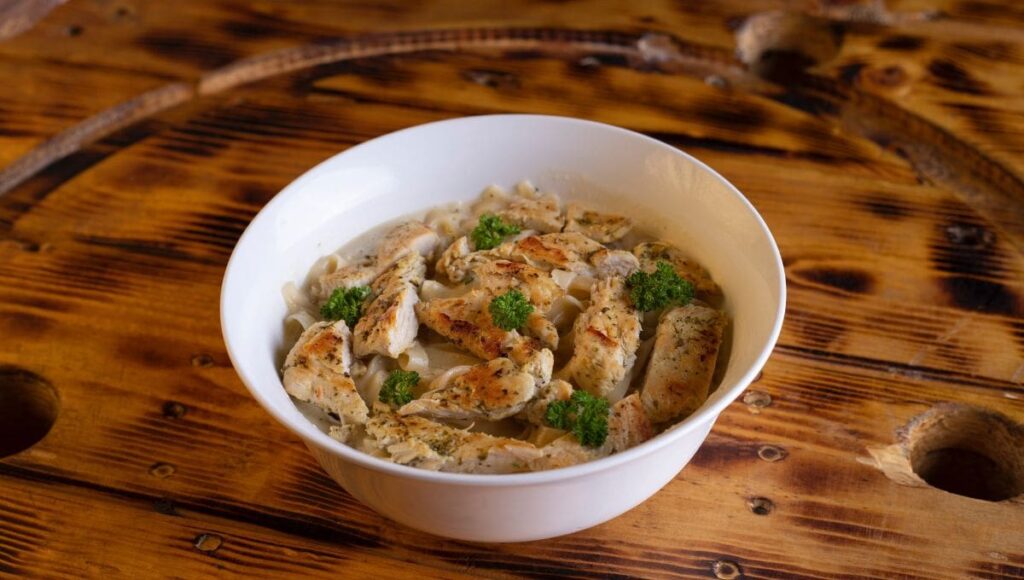
Muscle hypertrophy requires a caloric surplus with sufficient protein intake. Research recommends 1.6–2.2 g of protein per kg of bodyweight for muscle growth (Morton et al., 2018). Consuming nutrient-dense foods supports both muscle development and fat reduction, enhancing the V-taper.
The Role of Core and Waist Management
A smaller waist enhances the V-taper illusion. While back training builds width, maintaining a lean midsection through core training and fat management is equally important. A combination of resistance training and dietary control is key (Slentz et al., 2009).
Conclusion
Developing a V-shaped torso requires focused back training with exercises that prioritise lat engagement and upper-back development. Pull-ups and lat pulldowns are essential for lat hypertrophy, barbell and dumbbell rows build thickness and strength, and face pulls enhance shoulder aesthetics. Combined with proper training volume, progressive overload, and nutrition, these movements will help you build a broad, powerful back.
Key Takeaways
| Key Point | Summary |
|---|---|
| Pull-Ups | Best bodyweight exercise for lat width, with high EMG activation |
| Lat Pulldown | Effective for targeting the lats with controlled resistance |
| Barbell Row | Engages lats, traps, and rhomboids for comprehensive back growth |
| Single-Arm Dumbbell Row | Allows unilateral focus for balanced back development |
| Face Pulls | Enhances upper-back aesthetics and shoulder posture |
| Progressive Overload | Essential for continued hypertrophy |
| Twice-Weekly Training | Optimal frequency for muscle growth |
| High-Protein Diet | Necessary for muscle repair and hypertrophy |
| Waist Management | Lean core enhances V-taper illusion |
References
- Andersen, V., Fimland, M.S., Mo, D.A., Iversen, V.M., Vederhus, T., Hellebø, L.R. and Saeterbakken, A.H. (2014). Electromyographic comparison of barbell, dumbbell, and machine exercises for training the gluteus maximus, biceps femoris, and vastus lateralis. Journal of Strength and Conditioning Research, 28(10), pp. 2829-2835.
- Fenwick, C.M., Brown, S.H. and McGill, S.M. (2009). Comparison of different rowing exercises: Trunk muscle activation and lumbar spine motion, load, and stiffness. Journal of Strength and Conditioning Research, 23(4), pp. 1188-1193.
- Lehman, G.J. (2005). Resistance training biomechanics: how to apply for optimal performance and injury prevention. Strength and Conditioning Journal, 27(4), pp. 62-69.
- Lusk, S.J., Hale, B.D. and Russell, D.M. (2010). Electromyographic analysis of conventional and alternating lat pulldown exercises. Journal of Strength and Conditioning Research, 24(7), pp. 1893-1898.
- Morton, R.W., Murphy, K.T., McKellar, S.R., Schoenfeld, B.J., Henselmans, M., Helms, E. and Phillips, S.M. (2018). A systematic review, meta-analysis and meta-regression of the effect of protein supplementation on resistance training-induced gains in muscle mass and strength in healthy adults. British Journal of Sports Medicine, 52(6), pp. 376-384.
- Schoenfeld, B.J., Grgic, J. and Krieger, J.W. (2016). How many times per week should a muscle be trained to maximize muscle hypertrophy? Sports Medicine, 46(6), pp. 797-807.