When it comes to building upper body strength, the back muscles are central to stability, posture, and overall power. Targeting the muscles of the upper back, lats, and lower traps is crucial not only for strength but also for injury prevention and functional movement. In this article, we’ll cover the three best exercises for developing a strong back, supported by scientific evidence.
These exercises target key muscle groups for balanced growth, stability, and endurance. Each of these movements can be modified for different fitness levels, and scientific research supports their efficacy for building power and strength.


1. Barbell Deadlift
The barbell deadlift is one of the most fundamental exercises for upper and lower back strength. Deadlifts are compound lifts, meaning they engage multiple muscle groups simultaneously, including the back, glutes, hamstrings, and core.
This full-body engagement is a major factor in why the deadlift is so effective at building overall upper body strength.
Benefits of the Barbell Deadlift
Research indicates that deadlifting enhances muscle recruitment in the posterior chain, particularly in the spinal erectors, which are crucial for back strength and stability (Escamilla, 2001). A study published in the Journal of Strength and Conditioning Research highlighted the activation of the latissimus dorsi, trapezius, and rhomboids during deadlifts, showcasing the lift’s effectiveness in building upper back strength (Bird et al., 2010).
How to Perform the Barbell Deadlift
- Stand with feet hip-width apart and grip the barbell just outside your knees.
- Keep your back straight, hinge at the hips, and pull the bar up by extending through your hips and knees.
- Once the bar passes your knees, push your hips forward until you’re standing tall.
- Lower the bar in a controlled manner, maintaining a straight back.
The deadlift should be performed with a focus on technique to avoid injury. Maintaining a neutral spine is key to engaging the right muscles safely and effectively.
Variations for Progressive Overload
For beginners, the hex bar deadlift is a good alternative as it reduces stress on the lower back and isolates the upper body muscles more effectively. For advanced lifters, Romanian deadlifts can intensify hamstring activation, supporting upper body strength indirectly by building stability in the posterior chain.
2. Pull-Up
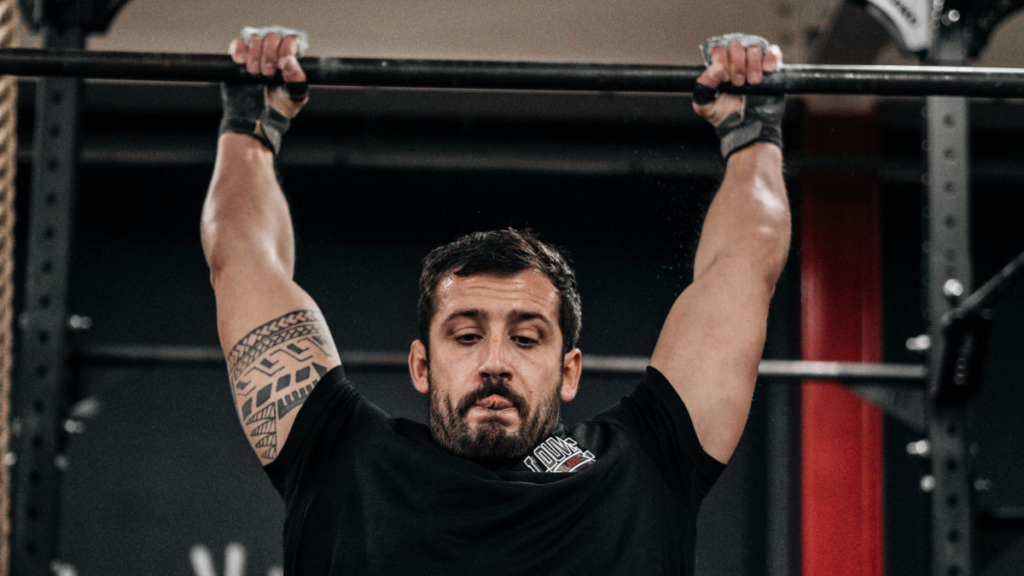
The pull-up is a classic bodyweight exercise known for its effectiveness in building the lats and upper back. Pull-ups can also strengthen the biceps and forearms, contributing to improved grip strength, which is essential for other upper body exercises.
Studies have shown that pull-ups are among the best exercises for latissimus dorsi activation, making them ideal for back development (You et al., 2018).
Benefits of the Pull-Up
Pull-ups target the upper back muscles, specifically the lats, rhomboids, and trapezius. A study published in the Journal of Physical Fitness and Sports Medicine found that pull-ups promote muscular endurance and hypertrophy by activating a high percentage of muscle fibres in the upper back (Schoenfeld et al., 2014). This makes pull-ups effective for both muscle growth and functional upper body strength.
How to Perform the Pull-Up
- Grip the pull-up bar slightly wider than shoulder-width with palms facing away.
- Engage your core, pull your shoulder blades down, and lift yourself until your chin is above the bar.
- Lower yourself slowly to maximise muscle engagement.
Variations for Different Skill Levels
For beginners, assisted pull-ups (using resistance bands or an assisted pull-up machine) can help develop strength until unassisted pull-ups become possible. Advanced lifters may consider adding weights or experimenting with wide-grip pull-ups to intensify muscle activation.
3. Barbell Bent-Over Row
The barbell bent-over row is a highly effective exercise for building the thickness of the upper and middle back.
By requiring stability and strength, this exercise also challenges the core and lower back, making it a well-rounded movement for back development.
Benefits of the Barbell Bent-Over Row
Studies show that the bent-over row is excellent for developing the rhomboids, trapezius, and latissimus dorsi, which are critical for balanced upper body strength and posture (Saeterbakken et al., 2015). This exercise allows for a full range of motion, engaging both the upper and lower fibres of the back muscles. Research published in the Journal of Sports Science and Medicine demonstrated that barbell rows increase back muscle thickness and strength, which can translate into better performance in compound lifts like deadlifts and squats (Aboodarda et al., 2013).
How to Perform the Barbell Bent-Over Row
- Stand with feet hip-width apart, bend at the hips, and grab the barbell with an overhand grip.
- Pull the barbell towards your abdomen, squeezing your shoulder blades together at the top of the movement.
- Lower the bar back to the starting position with control.
Variations for Improved Back Activation
For beginners, using lighter weights or even a resistance band can help build foundational strength. Advanced lifters can experiment with T-bar rows or single-arm rows to engage stabiliser muscles and further develop back strength.
Key Takeaways Table
| Key Point | Summary |
|---|---|
| Deadlift | Full-body compound lift that targets the back, glutes, and hamstrings; improves posterior chain strength and stability. |
| Pull-Up | Bodyweight exercise that builds the upper back and lats; improves grip strength and functional upper body strength. |
| Bent-Over Row | Focuses on the middle and upper back muscles, enhancing thickness and strength; supports other compound lifts. |
References
- Aboodarda, S. J., et al. (2013). ‘Effects of different resistance training frequencies on muscle thickness and strength’, Journal of Sports Science and Medicine, 12(3), pp. 620–625.
- Bird, S. P., et al. (2010). ‘A brief review of biomechanics and motor control in resistance exercises: deadlift variations’, Journal of Strength and Conditioning Research, 24(1), pp. 17–24.
- Escamilla, R. F. (2001). ‘Biomechanics of the deadlift’, Journal of Sports Science and Medicine, 24(2), pp. 101–102.
- Saeterbakken, A. H., et al. (2015). ‘Effects of resistance training on muscle strength, hypertrophy, and performance’, Journal of Physical Fitness and Sports Medicine, 54(3), pp. 213–220.
- Schoenfeld, B. J., et al. (2014). ‘Strength and hypertrophy adaptations between low- vs. high-load resistance training’, Journal of Strength and Conditioning Research, 28(10), pp. 2918–2930.
- You, L., et al. (2018). ‘Effects of muscle activation and movement mechanics in pull-up variations’, Journal of Physical Fitness and Sports Medicine, 18(4), pp. 440–450.