Many gym-goers unknowingly waste time on exercises that provide little benefit and may even increase the risk of injury. With a plethora of research on biomechanics and muscle activation, it is now easier than ever to separate effective movements from those that should be avoided.
This article highlights three pointless gym exercises that should be removed from your routine entirely and provides science-backed reasoning for these recommendations.


1. Smith Machine Squats
Why Smith Machine Squats Are Ineffective
The squat is a fundamental compound exercise that engages the quadriceps, glutes, hamstrings, and core. However, performing squats on a Smith machine alters natural biomechanics and reduces effectiveness. Unlike a free-weight squat, where the bar moves freely and requires stabilisation, the Smith machine forces a fixed bar path, which does not align with the body’s natural movement pattern.
Research has shown that Smith machine squats activate fewer stabiliser muscles compared to barbell squats (Schwanbeck, Chilibeck and Binsted, 2009). The artificial movement pattern can also place excessive stress on the knees and lower back, increasing the risk of injury (Cotterman, Darby and Skelly, 2005).
A Better Alternative
A superior alternative is the barbell back squat, which engages a greater number of muscle fibres and improves overall functional strength. If stability is a concern, the goblet squat or Bulgarian split squat can be excellent replacements that promote balance and joint integrity.
2. Behind-the-Neck Lat Pulldowns
Why Behind-the-Neck Lat Pulldowns Are Dangerous
Behind-the-neck lat pulldowns are often performed under the misconception that they better isolate the lats. However, this movement places the shoulders in excessive external rotation, which increases the risk of impingement and rotator cuff injuries (Wiemann and Tidow, 1995). Additionally, this position forces the cervical spine into an unnatural forward posture, which can lead to neck strain and long-term spinal issues.
A Better Alternative
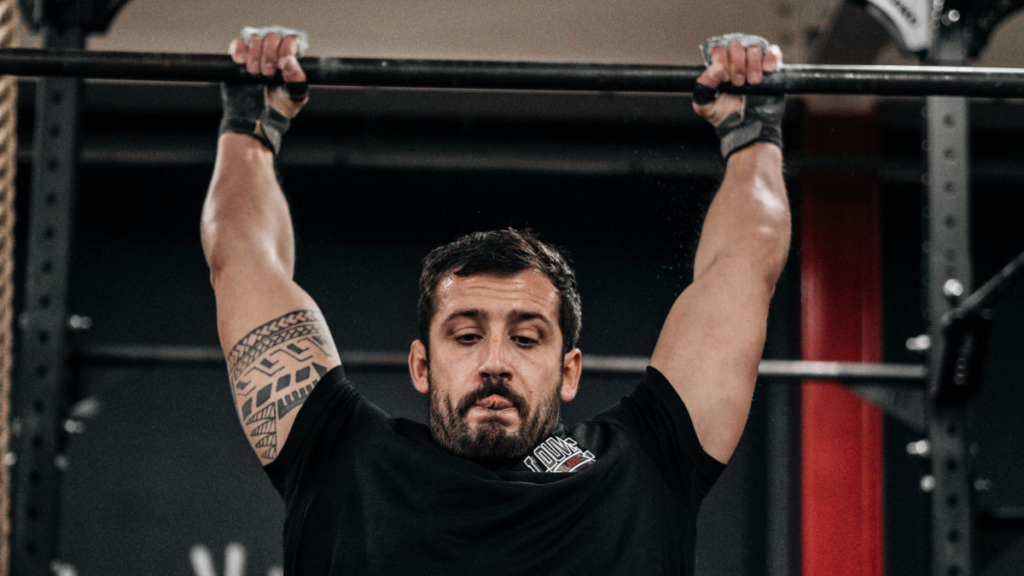
The front lat pulldown is a far safer and more effective alternative. Research has demonstrated that lat activation does not significantly differ between front and behind-the-neck variations, but the front pulldown places the shoulders in a more biomechanically advantageous position (Signorile et al., 2002). Alternatively, pull-ups or weighted pull-ups offer superior engagement of the lats, traps, and biceps while enhancing overall upper-body strength.
3. Standing Upright Rows
Why Standing Upright Rows Should Be Avoided
The standing upright row is a common exercise performed to target the deltoids and traps. However, this movement places the shoulders in a position known as internal rotation while under load, which is associated with a high risk of shoulder impingement (McClure, Michener and Karduna, 2006). Lifting the barbell or dumbbells close to the chin exacerbates strain on the rotator cuff and increases the likelihood of developing shoulder pain over time.
A Better Alternative
Lateral raises and face pulls serve as superior alternatives for targeting the deltoids and traps while reducing the risk of shoulder injury. Face pulls, in particular, help strengthen the rotator cuff and rear delts, improving shoulder stability and reducing injury risk (Reinold et al., 2009).

Conclusion
Avoiding ineffective and potentially harmful exercises is crucial for long-term progression and injury prevention. Smith machine squats fail to engage stabilising muscles and can lead to knee strain. Behind-the-neck lat pulldowns increase the risk of shoulder impingement and spinal misalignment. Standing upright rows place undue stress on the shoulder joint, increasing the likelihood of rotator cuff injuries.
By replacing these movements with safer and more effective alternatives, you can enhance muscle engagement, strength development, and overall longevity in the gym.
Key Takeaways Table
| Exercise | Reason to Avoid | Better Alternative |
|---|---|---|
| Smith Machine Squats | Reduces stabiliser activation, unnatural movement pattern, increases knee stress | Barbell back squats, goblet squats, Bulgarian split squats |
| Behind-the-Neck Lat Pulldowns | Causes shoulder impingement, risks cervical spine strain | Front lat pulldown, pull-ups |
| Standing Upright Rows | Increases risk of shoulder impingement, strains rotator cuff | Lateral raises, face pulls |
Bibliography
Cotterman, M. L., Darby, L. A. and Skelly, W. A. (2005) ‘Comparative muscle activation during Smith machine and free weight bench press’, Journal of Strength and Conditioning Research, 19(1), pp. 169-176.
McClure, P., Michener, L. and Karduna, A. (2006) ‘Shoulder function and 3-dimensional scapular kinematics in people with and without shoulder impingement syndrome’, Physical Therapy, 86(8), pp. 1075-1090.
Reinold, M. M., Gill, T. J., Wilk, K. E., Dugas, J. R. and Andrews, J. R. (2009) ‘Evaluation of the baseball pitcher’s shoulder: clinical examination and functional assessment’, Journal of Orthopaedic & Sports Physical Therapy, 39(2), pp. 80-108.
Schwanbeck, S., Chilibeck, P. D. and Binsted, G. (2009) ‘A comparison of free weight squat to Smith machine squat using electromyography’, Journal of Strength and Conditioning Research, 23(9), pp. 2588-2591.
Signorile, J. F., Zink, A. and Szwed, S. (2002) ‘Differential muscle activation patterns during front and behind-the-neck lat pull-downs’, Journal of Strength and Conditioning Research, 16(4), pp. 539-546.
Wiemann, K. and Tidow, G. (1995) ‘Relative activity of hip and knee extensors in sprinting—implications for training’, New Studies in Athletics, 10(1), pp. 29-49.