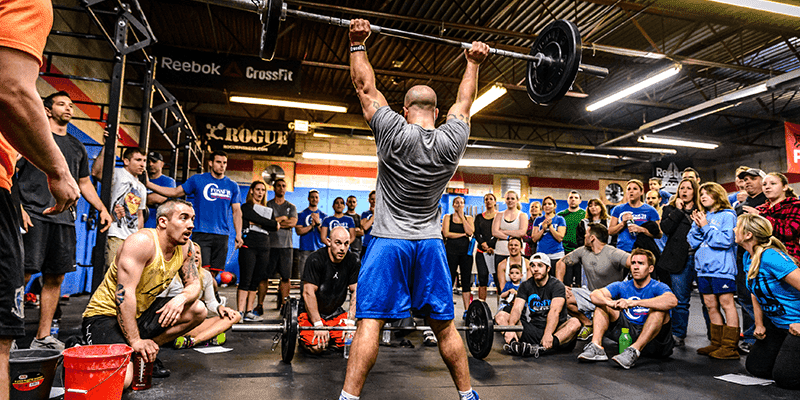
Get ready for the Open this year!
1. Periodise Your Training for Peak Performance
Training periodisation is crucial for ensuring optimal performance at the 2025 CrossFit Open. Research supports the efficacy of structured periodisation, which consists of macrocycles, mesocycles, and microcycles (Issurin, 2010).


Athletes should aim for progressive overload while incorporating deload weeks to prevent overtraining. A systematic review by Harries, Lubans, and Callister (2015) found that periodised resistance training leads to superior strength gains compared to non-periodised training.
Athletes should gradually shift their training from general strength and endurance work towards more Open-specific high-intensity efforts in the weeks leading up to the competition.
2. Enhance Your Aerobic and Anaerobic Conditioning
The CrossFit Open demands both aerobic and anaerobic capacity. High-intensity interval training (HIIT) and long-duration aerobic work should be programmed strategically. Research by Laursen and Jenkins (2002) demonstrates that HIIT enhances both VO2 max and anaerobic threshold.
Additionally, a study by MacInnis and Gibala (2017) indicates that short, high-intensity sessions yield comparable aerobic benefits to traditional endurance training. CrossFit athletes should balance these modalities to optimise performance in time-domain-diverse Open workouts.
3. Improve Your Gymnastic Efficiency
Gymnastics-based movements such as toes-to-bar, muscle-ups, and handstand push-ups are a staple in the Open. Studies indicate that improving movement efficiency reduces overall energy expenditure (García-Pinillos et al., 2019).
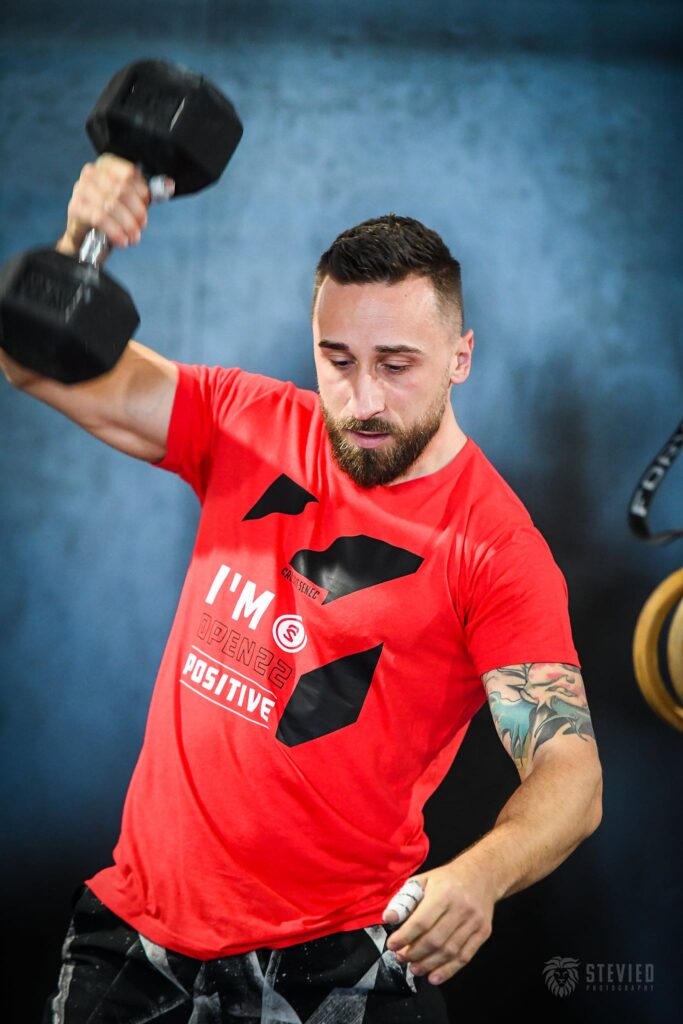
Athletes should incorporate skill-focused sessions that prioritise technique, volume accumulation, and positional strength. Eccentric training has been shown to enhance muscular control and reduce injury risk (Roig et al., 2009), making it a valuable addition to a CrossFit athlete’s preparation.
4. Develop Barbell Cycling and Strength Endurance
Efficient barbell cycling is essential for maximising performance in Open workouts. A study by Haff and Triplett (2015) emphasises the importance of muscular endurance in weightlifting movements. Training protocols should include both heavy lifting to improve absolute strength and moderate-load, high-rep work to enhance endurance. Athletes should also focus on barbell cycling drills to optimise efficiency and reduce unnecessary energy expenditure.
5. Dial in Nutrition for Optimal Performance
Nutrition plays a critical role in maximising performance and recovery. Research by Helms, Aragon, and Fitschen (2014) highlights the importance of adequate protein intake (1.6-2.2 g/kg/day) for muscle repair. Additionally, carbohydrate timing can significantly impact workout performance, with Burke et al. (2011) demonstrating that pre-workout carbohydrate consumption enhances endurance and strength output. Athletes should experiment with nutrient timing and hydration strategies to sustain high-intensity efforts across multiple workouts.
6. Improve Mental Resilience and Strategy
Mental toughness is a key determinant of success in the CrossFit Open. A study by Connaughton, Hanton, and Jones (2010) found that elite athletes employ cognitive strategies such as goal setting, self-talk, and imagery to enhance performance under pressure. Athletes should implement mindfulness techniques and breathing drills to maintain composure and optimise decision-making during workouts.
7. Master Pacing Strategies for Different Workout Types
Efficient pacing can be the difference between a top score and burnout. Studies on endurance sports show that negative-split pacing strategies improve overall performance by delaying fatigue (Abbiss & Laursen, 2008). CrossFit athletes should practice different pacing strategies in workout simulations to determine the most effective approach for their individual physiology and movement efficiency.

8. Optimise Recovery and Sleep Quality
Recovery is just as important as training. Research by Vitale et al. (2019) confirms that sleep quality significantly affects performance and muscle recovery. Athletes should aim for 7-9 hours of sleep per night and incorporate active recovery techniques such as foam rolling, mobility drills, and contrast therapy. Additionally, protein ingestion before sleep has been shown to enhance overnight muscle protein synthesis (Snijders et al., 2015), further supporting muscle recovery.
9. Prepare for the Unknown and Unexpected
The Open consistently introduces new challenges, requiring athletes to be adaptable. Incorporating varied movement patterns and non-traditional implements into training can enhance adaptability. Studies on skill acquisition indicate that exposure to diverse stimuli improves neuromuscular adaptation and movement efficiency (Magill & Anderson, 2017). Athletes should simulate Open-like conditions, including judging standards and unfamiliar workout formats, to reduce stress and improve readiness.
10. Build a Competition Mindset Through Simulated Open Workouts
Performing workout simulations under competition settings can significantly enhance performance. Research by Cook and Beaven (2013) found that competitive environments elicit greater effort and higher power outputs. Athletes should replicate Open conditions, including workout announcements, warm-up routines, and video submissions, to familiarise themselves with the pressure of the competition. By rehearsing strategies, athletes can build confidence and execute workouts more effectively on game day.
Key Takeaways
| Tip | Summary |
|---|---|
| 1. Periodisation | Implement structured training cycles for peak performance. |
| 2. Conditioning | Balance aerobic and anaerobic work to maximise endurance. |
| 3. Gymnastics | Focus on movement efficiency to reduce energy expenditure. |
| 4. Barbell Cycling | Train for strength endurance and efficiency in lifts. |
| 5. Nutrition | Optimise protein intake and carbohydrate timing for performance. |
| 6. Mental Resilience | Use cognitive strategies to improve focus and performance. |
| 7. Pacing | Develop pacing strategies to sustain high-intensity efforts. |
| 8. Recovery | Prioritise sleep, mobility, and active recovery for muscle repair. |
| 9. Adaptability | Train for varied movements to prepare for unexpected challenges. |
| 10. Competition Mindset | Simulate Open workouts to build confidence and execution. |